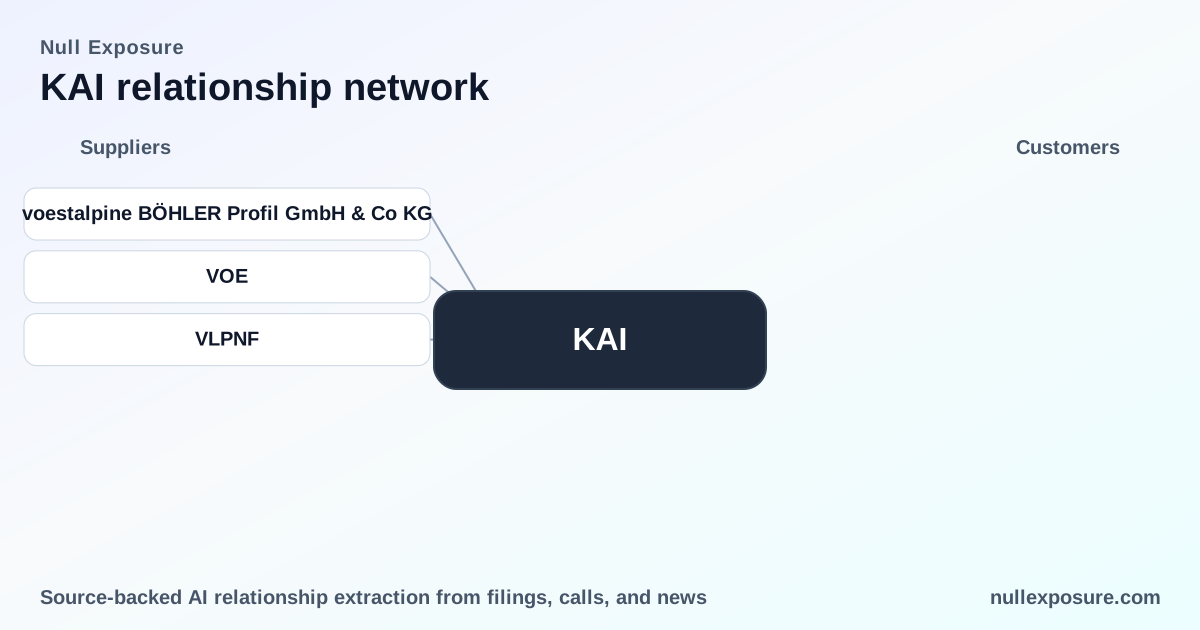
Kadant (KAI): Strategic supplier move tightens engineered‑systems footprint
Kadant is a global supplier of critical components and engineered systems to industrial end markets, monetizing through a mix of capital equipment sales, aftermarket parts and long-term service contracts. Revenue growth is driven by equipment replacement cycles and aftermarket attachment rates, while profits are sustained by engineering content and recurring service revenue. For investors and operators evaluating supplier relationships, the company’s recent purchase of a long-standing European supplier alters both its sourcing posture and its vertical footprint. Learn more or run a deeper supplier exposure check at https://nullexposure.com/.
How Kadant makes money and why suppliers matter
Kadant sells specialized machinery and consumable components to pulp, paper, and other heavy industries, capturing value at initial equipment sales and through aftermarket consumables and services that deliver higher gross margins. The business combines engineered capital goods (which drive large, lumpy bookings) with stable aftermarket revenues (which smooth cash flow). Kadant’s scale—Revenue TTM $1.052B; EBITDA $215.8M; Market Cap $3.56B—supports M&A and selective vertical integration as a tool to protect margins and secure supply chains.
Quick financial context:
- Revenue (TTM): $1.05B; EBITDA: $215.8M
- Operating margin (TTM): 14.9%; Profit margin: 9.69%
- Trailing P/E: 34.96; Forward P/E: 24.1
A decisive supplier acquisition — what the headlines say
Kadant announced the acquisition of voestalpine BÖHLER Profil, a long-time supplier to Kadant businesses, in a sequence of public reports in early 2026. This is a supplier-to-owner transaction that reduces single-source risk and internalizes a key metallurgical capability, useful where material specifications and profile tolerances matter for OEM and aftermarket parts. CityBiz highlighted Kadant’s multi-decade relationship with BÖHLER Profil and framed the deal as a natural extension of existing collaboration. (CityBiz, March 2026).
What the voestalpine BÖHLER Profil deal means for supply continuity
The acquisition accomplishes three operational goals simultaneously: remove a potential bottleneck for specialized metal profiles, capture aftermarket margin previously paid to a supplier, and secure technical IP tied to component manufacturing. For an equipment-and-aftermarket business like Kadant, bringing a trusted supplier in‑house improves quality control and reduces potential disruption to aftermarket fulfillment—a direct lever on margin stability.
All supplier relationships referenced in the public feed
Below are every supplier-related item surfaced in the data feed with concise, plain-English summaries and source citations.
-
Kadant is acquiring voestalpine BÖHLER Profil GmbH & Co KG, and the vendor has been a valued supply partner for more than three decades to several Kadant businesses; the report highlights deep familiarity with the supplier’s capabilities. According to CityBiz (reported March 2026), this purchase formalizes a long-standing supplier relationship and brings manufacturing capability in‑house. Source: https://www.citybiz.co/article/799818/kadant-to-acquire-voestalpine-bohler-profil/
-
An industry news site reported that Austrian metallurgical company voestalpine agreed to sell voestalpine BÖHLER Profil—part of its High Performance Metals division—to Kadant Inc., describing the transaction as a sale to a U.S.-based engineered solutions provider. This frames the transaction as part of voestalpine’s portfolio optimization while signaling Kadant’s intent to expand manufacturing capability (GMK Center, March 2026). Source: https://gmk.center/en/news/voestalpine-sells-bohler-profil-to-us-company-kadant-as-part-of-business-optimization/
-
Pulp & Paper News covered Kadant’s acquisition of voestalpine BÖHLER Profil and reiterated the supplier’s three-decade relationship with Kadant businesses, emphasizing continuity and operational familiarity that underpinned the deal rationale (Pulp & Paper News, February–March 2026). Source: https://www.pulpapernews.com/20260204/17420/kadant-acquire-voestalpine-bohler-profil
-
IndexBox published a brief noting that voestalpine sold BÖHLER Profil to Kadant, underlining that international buyers are acquiring targeted assets from European metals groups as part of strategic divestitures (IndexBox, March 2026). Source: https://www.indexbox.io/blog/voestalpine-sells-bohler-profil-to-us-based-kadant-inc/
Each of these items references the same supplier-turned-acquisition, and together they paint a consistent picture: Kadant is internalizing a supplier relationship that has supported its businesses for decades.
Operational and business-model constraints investors should weigh
The data feed contained no supplier‑specific constraints; this absence is itself a signal: no regulatory blocks, forced divestiture clauses, or disclosed supply covenants were flagged in the relationship excerpts provided. At the company level, the following operating characteristics are relevant to risk and partner strategy:
- Contracting posture: Kadant’s revenue mix—capital equipment plus aftermarket—favors long-term OEM and service agreements and justifies vertical moves when suppliers are strategic to aftermarket continuity.
- Concentration: The purchase of a long-standing supplier reduces supplier concentration risk for specific metallurgical profiles, but investors should still monitor geographic and customer concentration in end markets (pulp & paper exposure).
- Criticality: Components produced by BÖHLER Profil are mission-critical for Kadant’s engineered systems; bringing that capability in-house increases operational control and reduces single-point failure risk.
- Maturity: Kadant is a mature, profitable public company with a market cap of approximately $3.56B, which supports selective bolt-on acquisitions to secure supply and margin.
If you want a supplier exposure snapshot that maps these operating signals to portfolio holdings, start with a targeted search at https://nullexposure.com/.
Risk and upside for investors
The acquisition reduces outsized supplier dependency and is accretive to control over supply chain quality—both positive risk-mitigants for an aftermarket-driven business. Offsetting considerations: integration execution risk, potential capex to scale the acquired facility to Kadant standards, and the usual M&A timing risk for realizing synergies. Financially, Kadant’s margins and EBITDA profile provide headroom to absorb integration costs, and the company’s Forward P/E of 24.1 suggests the market expects continued earnings growth.
What investors and procurement leaders should do next
- For investors: Track integration milestones and aftermarket fill‑rates for the acquired business; those operational metrics will be the first leading indicators of margin improvement.
- For operators/procurement teams: Use supplier-to-owner transitions as a template—map your own critical suppliers to see where vertical integration would reduce risk or create margin capture.
For deeper supplier mapping and to translate these signals into actionable exposure reports, visit https://nullexposure.com/.
Bottom line
Kadant’s acquisition of voestalpine BÖHLER Profil converts a decades‑long supplier relationship into owned capability, improving control over a mission‑critical input for its engineered systems and aftermarket businesses. This move strengthens supply continuity and enhances margin protection, but integration execution will determine the ultimate value realization. For investors and procurement leaders evaluating KAI, the acquisition is a strategic play that aligns with Kadant’s mixed capital‑equipment and recurring‑revenue business model. Explore further supplier intelligence and exposure analysis at https://nullexposure.com/.