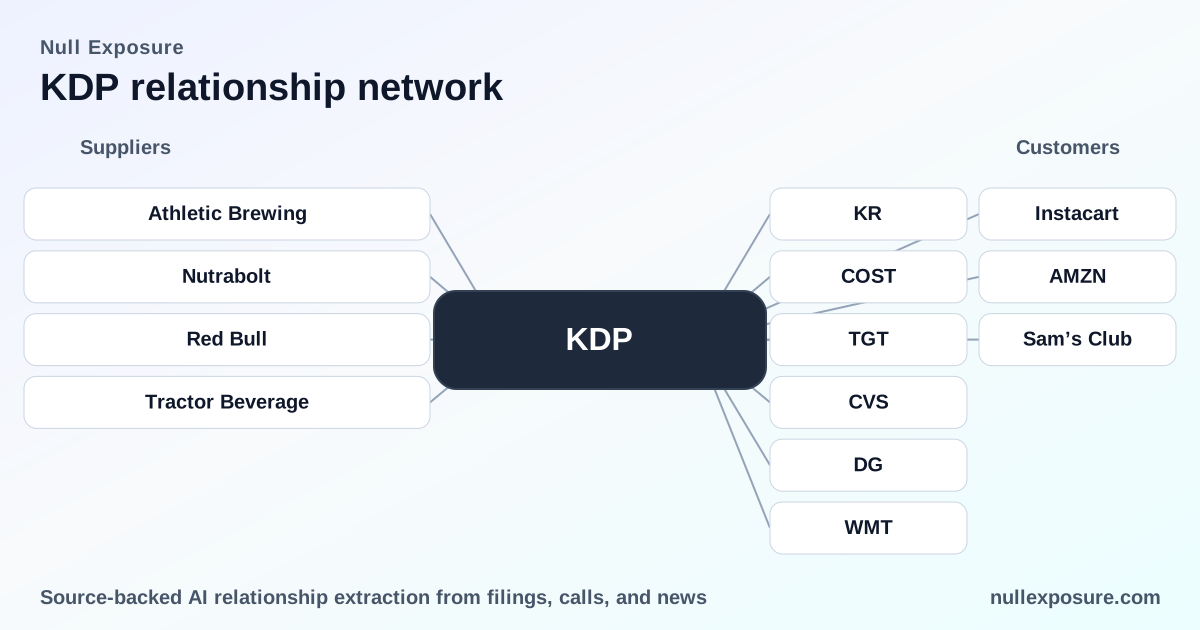
Keurig Dr Pepper (KDP): Supplier relationships that determine shelf access and input risk
Keurig Dr Pepper monetizes a two-pronged branded-beverage and single-serve appliance model: it sells packaged drinks and recurring consumables (K-Cups, cans, bottles) while capturing higher-margin hardware-adjacent revenue through single-serve brewers and licensing. Revenue is driven by branded shelf presence, recurring pod/can volumes, and control of key packaging and commodity inputs—a structure that converts distribution breadth into predictable cash flow and exposure to commodity cycles. For an investor or operator evaluating supplier exposure, the critical items are commodity sourcing, manufacturing footprint, and strategic partner agreements that shape category access.
Explore supplier intelligence and supplier risk profiles at https://nullexposure.com/ for deeper diligence.
Quick snapshot: what the numbers say for a supply-focused read
Keurig Dr Pepper generated roughly $16.6 billion in trailing revenue with $4.465 billion EBITDA and a ~22.6% operating margin (TTM). Valuation measures such as EV/EBITDA ≈ 12.5 and Forward P/E ≈ 12.2 suggest the market prices the business for steady cash flow and cyclically sensitive margins. Institutional ownership is high at ~98%, indicating concentrated analyst and fund coverage that tracks supplier and commodity risk closely. These financials amplify the importance of supplier continuity and input-cost hedging for near-term earnings stability.
Supplier relationships called out in recent coverage
The following relationships were named in a March 2026 Food Business News article and matter for both shelf strategy and input risk.
Athletic Brewing
Keurig Dr Pepper referenced an investment in Athletic Brewing, signaling participation in the non-alcoholic craft beer category through minority stakes rather than pure distribution. This positions KDP to extend low-/no-alcohol offerings alongside its core beverage portfolio. According to Food Business News (March 10, 2026), KDP highlighted its investment in Athletic Brewing.
Nutrabolt (C4 Energy)
KDP described a strategic relationship with Nutrabolt for C4 Energy, indicating KDP’s role in marketing or distributing the C4 energy-brand within its channels, enhancing KDP’s exposure to functional beverage growth segments. This was noted in Food Business News reporting on KDP’s channel strategy (March 10, 2026).
Red Bull (Mexico agreement)
KDP referenced a Red Bull agreement in Mexico, reflecting territorial commercial arrangements that extend KDP’s reach into energy beverage distribution in Mexico, and implying complexity around co-packing, shelf allocation, and regional exclusivity. Food Business News documented the Red Bull arrangement on March 10, 2026.
Tractor Beverage
KDP confirmed a partnership with Tractor Beverage, which aligns with a strategy of partnering with fast-growing niche brands to capture incremental retail shelf and on-premise demand. Food Business News captured this mention on March 10, 2026.
All four items were reported in the same Food Business News article covering KDP’s commentary on at-home coffee consumption and strategic brand relationships.
What the contract excerpts and company disclosures tell investors
Company-level signals drawn from KDP’s public disclosures and the excerpts provided paint a clear operating posture:
- Contracting posture — framework agreements and hedging: KDP uses commodities derivative instruments and supplier pricing agreements to hedge commodity exposure for limited periods, which indicates reliance on short-to-medium term framework contracts rather than long-term fixed supply deals (company filings, Form 10-K disclosures).
- Manufacturing footprint — APAC third‑party manufacturing: KDP engineers and designs most single-serve brewers but outsources appliance manufacturing to third-party contract manufacturers in Asia, creating geographic concentration in Asia-Pacific for hardware supply chains (company filings).
- Materiality — input cost dominance: Ingredients and materials represent ~55% of cost of sales, covering coffee, PET, aluminum, sweeteners and packaging—making supplier continuity and commodity pricing central to margin stability (Form 10-K disclosures).
- Relationship roles — buyer and service integrations: KDP’s principal commodities risks come from its role as a large buyer of raw inputs (coffee, PET, aluminum, corn for HFCS), while its corporate operations rely on third-party service providers (auditors, banks) for financial controls and financing (Form 10-K, audited controls; Term Loan Credit Agreement).
These are company-level constraints and should be read as strategic risk exposures rather than attributes of any single supplier.
Explore how supplier constraints map to your investment thesis at https://nullexposure.com/.
Investment implications: concentration, criticality, and maturity
- Concentration and criticality: The raw-materials intensity (55% of cost of sales) makes commodity suppliers highly critical; a disruption or unexpected price shock in coffee, PET, or aluminum will move margins materially. The APAC manufacturing concentration for brewers increases operational risk in hardware supply continuity.
- Contract maturity and flexibility: The use of framework supplier pricing agreements and time-limited hedges implies KDP favors flexibility over locked long-term pricing, which supports margin management in favorable commodity cycles but increases earnings volatility if commodities spike.
- Strategic partnerships: Investments and branded partnerships (Athletic Brewing, Nutrabolt/C4, Red Bull Mexico agreement, Tractor Beverage) are designed to expand category presence without always assuming full manufacturing or ownership burdens, lowering capital intensity but adding complexity to distribution contracts and co-marketing terms.
- Financial resilience: Low beta (~0.3) and solid operating margins provide a degree of downside protection, yet EV/EBITDA ≈ 12.5 prices in steady earnings; supplier shocks would therefore be visible quickly in valuation multiples.
Practical next steps for investors and operators
- For investors: prioritize due diligence on KDP’s commodity hedge book, counterparty concentration for PET and aluminum, and contingency plans for APAC manufacturing disruptions.
- For operators: secure alternate co-packers and verify regional exclusivity clauses in distribution agreements (especially for energy and craft-brand partnerships).
- For both: monitor the commercial performance of each branded partnership to assess whether relationships drive incremental retail velocity or simply shift shelf share.
Learn more about supplier concentration scoring and supplier-level diligence at https://nullexposure.com/.
Bottom line
Keurig Dr Pepper’s monetization combines recurring consumables with hardware-enabled distribution, which creates both steady revenue streams and pronounced exposure to commodity and manufacturing supply risks. The Athletic Brewing, Nutrabolt (C4), Red Bull Mexico, and Tractor Beverage relationships broaden category exposure while keeping capital intensity moderate. Investors should weigh the upside from branded partnerships against the high materiality of input costs and APAC manufacturing concentration when assessing near-term earnings volatility and strategic resilience.
If you evaluate supplier risk for portfolio companies or operating partners, start with targeted supplier mapping and hedge-book review—visit https://nullexposure.com/ to access supplier-focused intelligence and contractual constraint analysis.