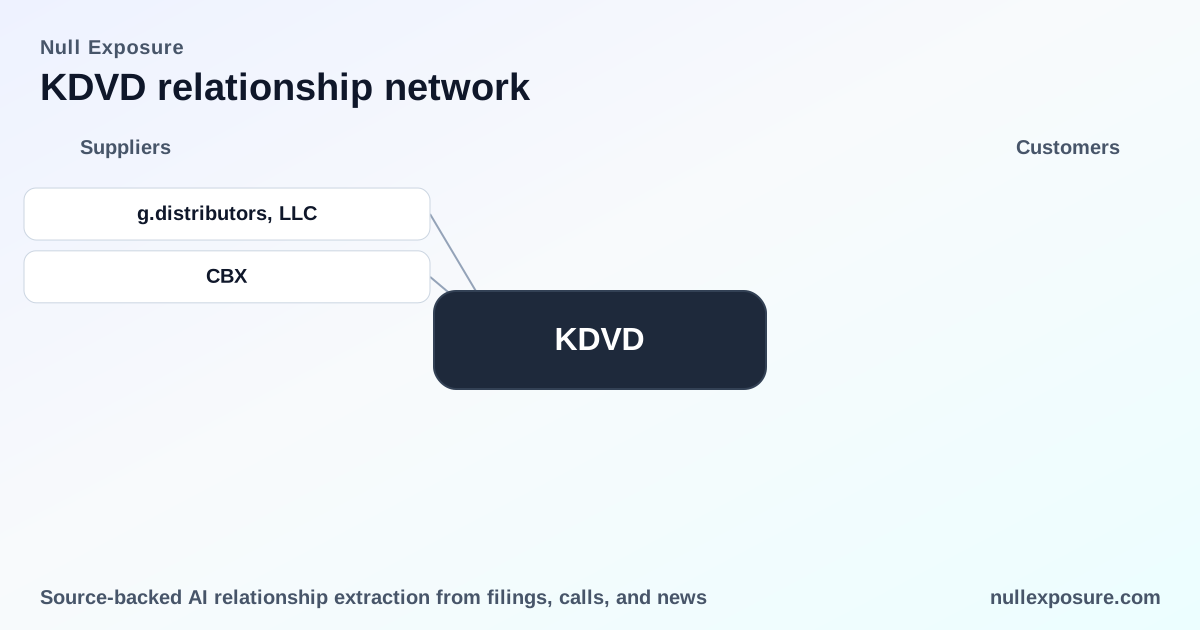
KDVD supplier relationships — distribution and listing characterized
Gabelli’s Keeley Dividend ETF (ticker KDVD) operates as a traditional sponsor-distributed, exchange-listed ETF: Gabelli Funds launches and manages the ETF, monetizing through management and distribution economics inherent to ETFs while relying on an exchange listing for liquidity and a broker-dealer for primary distribution. For investors and operators assessing supplier risk, the immediate dependencies are clear: an exchange venue (NYSE) for trading and a registered broker-dealer (g.distributors, LLC) for distribution and compliance flows. If you need a concise, commercial view of how these supplier ties translate to counterparty and operational risk, explore more at https://nullexposure.com/.
What KDVD’s supplier map tells investors about how it runs
KDVD’s operating model is straightforward: asset manager sponsorship plus third-party distribution and exchange access. That simple architecture drives three practical consequences for supplier risk and negotiating posture:
- Contracting posture: Standard asset-management contracts govern the relationships — exchange listing agreements and distributor/selling-agent agreements that follow industry templates and regulatory norms. These contracts create well-understood service-level expectations rather than bespoke operational dependencies.
- Concentration and criticality: The supplier set is concentrated but functionally split: the exchange (critical for liquidity and price discovery) and the broker-dealer distributor (critical for initial placement, fund accounting handoffs and regulatory compliance). Each supplier is critical for different operational vectors.
- Maturity and counterparty stability: An NYSE listing implies mature market infrastructure and predictable clearing/settlement channels; an established FINRA-registered distributor implies regulated distribution controls and compliance capabilities. Both signal lower operational novelty and higher resilience than bespoke, unregulated providers.
These company-level signals are derived from the supplier roster and public launch disclosures rather than internal filings; they inform how investors should weigh operational versus credit risk when allocating to or servicing KDVD. For deeper supplier intelligence and comparative scoring, visit https://nullexposure.com/.
The relationships you need to know — concise, sourced summaries
g.distributors, LLC
g.distributors is the registered broker-dealer and FINRA member firm named as the distributor for KDVD, responsible for fund distribution and regulatory compliance touchpoints with intermediaries. According to a Yahoo Finance report announcing the fund launch on March 10, 2026, the ETF is “Distributed by g.distributors, LLC, a registered broker-dealer and FINRA member firm.” Source: Yahoo Finance, March 10, 2026 — https://finance.yahoo.com/news/gabelli-launches-keeley-dividend-etf-130000831.html.
NYSE (exchange listing)
The Keeley Dividend ETF (KDVD) was launched on the NYSE, providing the primary venue for secondary trading, liquidity formation, and price discovery for the fund’s ETF shares. Gabelli Funds announced the launch and listing on the NYSE in the same March 10, 2026 disclosure. Source: Yahoo Finance, March 10, 2026 — https://finance.yahoo.com/news/gabelli-launches-keeley-dividend-etf-130000831.html.
How each supplier drives value and where risk concentrates
Both suppliers perform discrete and non-overlapping roles that together define KDVD’s market delivery:
- The exchange listing (NYSE) is the risk gateway for market liquidity and settlement. Liquidity providers, market makers and exchange rules determine intraday spreads, order-handling and trading resiliency. For institutional counterparties, the NYSE link is a high-quality signal that secondary-market risk is low relative to unlisted vehicles.
- The distributor (g.distributors) controls the primary market and regulatory interface — prospectus distribution, registered representative routing, and initial share creation/redemption facilitation. This relationship places operational and compliance risk concentrated in a single FINRA-registered intermediary; however, registered dealer status also imposes standard regulatory oversight and capital/operational norms.
Both relationships are necessary but not singularly sufficient: the exchange enables trading while the distributor ensures the fund reaches intermediated channels and meets regulatory disclosure and selling constraints.
Operational takeaways for investors and operators
For underwriting counterparty exposure or structuring service-level agreements with KDVD, prioritize the following:
- Validate exchange provisions: Confirm NYSE trading rules, listing standards and market-maker commitments applicable to the ETF. These define liquidity backstops and delisting thresholds.
- Confirm distributor agreement mechanics: Verify the distributor’s role in creation/redemption workflows and how order routing, NAV calculation timing and transfer agency handoffs are governed.
- Assess concentration mitigation: Because the supplier set is compact, investors should insist on contractual clauses covering continuity plans, substitute counterparties and regulatory escalation for both exchange and distributor services.
- Regulatory and reputational overlays: Both suppliers are regulated entities — NYSE as a national securities exchange and g.distributors as a FINRA member — which reduces idiosyncratic risk and increases enforceability of operational covenants.
If you want tailored analysis comparing KDVD’s supplier posture to peer funds and mapping remediation options, start with our supplier profiles at https://nullexposure.com/.
Final assessment and action items
KDVD’s supplier relationships reflect standard ETF architecture: a reputable exchange listing and a regulated distributor as principal counterparties. That structure delivers predictable liquidity channels and compliance continuity while concentrating certain operational dependencies. For investors and operations teams, the focus should be on contractual robustness around creation/redemption mechanics, market-making commitments, and contingency plans for supplier disruptions.
- Primary conclusion: KDVD’s supplier footprint is limited but composed of regulated, market-standard partners that reduce exotic operational risk while concentrating certain single-point exposures.
- Recommended next steps: Review the NYSE listing schedule and market-maker commitments, and secure transparency on g.distributors’ creation/redemption procedures and escalation protocols.
For practitioner-ready supplier intelligence, comparison matrices, and scenario planning tied to funds like KDVD, visit NullExposure’s research hub at https://nullexposure.com/ — the fastest route to operational due diligence and counterparty scoring.