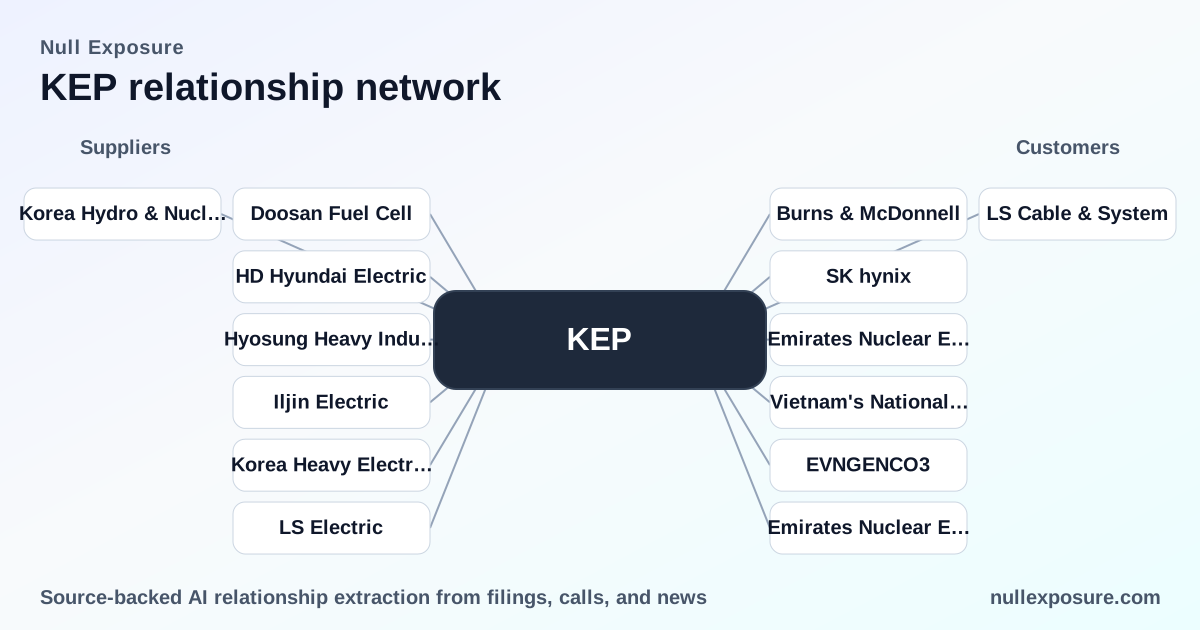
KEPCO supplier relationships: what investors need to know
Korea Electric Power Corporation (KEPCO) is an integrated, state-linked electric utility that monetizes through regulated generation, transmission and distribution services, long-term project contracts, and incremental revenues from overseas power projects and ancillary businesses. For investors and operators evaluating supplier risk, the relevant signal is less about short-term revenue volatility and more about long-duration procurement, concentrated vendor pools for critical equipment, and heightened regulatory oversight. For a deeper supplier-risk view, visit https://nullexposure.com/.
How KEPCO buys equipment and why supplier relationships matter
KEPCO centrally manages large capital programs and competitive tenders for generation and grid equipment. This centralized contracting posture drives volume concentration—large Korean suppliers win multi-year orders for critical items such as gas-insulated switchgear, nuclear plant components, and emerging hydrogen power solutions. That structure creates two investment realities: counterparty concentration risk (a handful of suppliers account for bulk of critical supply) and regulatory/legal exposure (state procurement attracts close enforcement scrutiny).
There are no explicit contractual constraint excerpts in the dataset provided, which is itself a signal: public reporting in this sample emphasizes market and legal events rather than granular long-form contract disclosures. For a supplier-focused view of KEPCO’s counterparty network, see https://nullexposure.com/.
What recent coverage reveals about individual suppliers
The following captures every supplier relationship surfaced in the feed and gives a one- to two-sentence plain-English summary with source context.
Doosan Fuel Cell
Doosan signed a long-term hydrogen power supply agreement valued at ₩96.4 billion to provide hydrogen fuel cell power to KEPCO over 20 years, signaling KEPCO’s move into hydrogen generation contracts and long-dated technology partnerships. According to FuelCellsWorks (Nov. 17, 2025), this is a 20-year strategic supply deal that ties a technology provider to KEPCO’s decarbonization rollout. (fuelcellsworks.com/2025/11/17)
HD Hyundai Electric
HD Hyundai Electric was among the firms subject to search and seizure as part of investigations into bid collusion related to KEPCO gas-insulated switchgear tenders spanning 2015–2022, reflecting intense regulatory scrutiny on major equipment suppliers. Local reporting noted search operations at HD Hyundai Electric’s offices in connection with alleged collusion to inflate bids and stabilize supply volumes. (AlphaBiz, reported March 2026)
Hyosung Heavy Industries
Hyosung Heavy Industries was also targeted in search-and-seizure actions and later included among firms and employees indicted for allegedly rigging KEPCO bids worth roughly ₩670 billion, raising direct corporate governance and contract-performance risk for counterparties. The Korea Times reported multiple companies and staff referred to trials in January 2026 on Fair Trade Act charges tied to KEPCO tenders. (The Korea Times, Jan. 20, 2026)
Iljin Electric
Iljin Electric appears in the same enforcement sweep and indictment reporting tied to alleged bid-rigging for KEPCO supply contracts, which places its future eligibility for KEPCO tenders and its reputational capital under immediate pressure. The Korea Times documented the prosecution’s referral to trial and arrests in January 2026. (The Korea Times, Jan. 20, 2026)
Korea Heavy Electrical Equipment Cooperative
The Korea Heavy Electrical Equipment Cooperative—an association representing medium- and small-sized suppliers—was subject to search operations in the probe into gas-insulated switchgear procurement, underlining the system-wide nature of enforcement that reaches beyond blue-chip names to cooperative supply sources. AlphaBiz reported the cooperative’s offices were searched as part of the investigation into collusion across 2015–2022 tenders. (AlphaBiz, reported March 2026)
LS Electric
LS Electric was among the major suppliers whose offices were searched and whose employees were indicted in relation to alleged bid-rigging for KEPCO parts contracts; this raises potential near-term disruption to supply chains for switchgear and other grid components. The Korea Times’ January 2026 coverage named LS Electric in the group referred to trial. (The Korea Times, Jan. 20, 2026)
Korea Hydro & Nuclear Power (KHNP)
KEPCO proposed a division of labor with KHNP in which KEPCO would handle marketing and financing while KHNP would take responsibility for nuclear plant construction—an operational split that centralizes financial and market risk at KEPCO while delegating construction execution to the nuclear subsidiary. Pulse Korea reported on the proposed role division in early 2026 coverage of KEPCO’s nuclear strategy. (Pulse Korea, March 2026)
What these relationships imply for KEPCO’s operating model
No explicit contractual constraints were supplied in the dataset; that absence is meaningful: public reporting emphasizes legal events and strategic project allocations rather than detailed contract clauses. From the relationship evidence, KEPCO’s operating model displays these characteristics:
- Centralized, high-volume procurement: KEPCO issues large tenders that create concentration around a small set of domestic suppliers for critical equipment.
- High criticality of supplier performance: components such as gas-insulated switchgear and nuclear-construction partners are mission-critical to grid reliability and project timelines.
- Regulatory and enforcement sensitivity: recent enforcement actions and indictments signal elevated legal and reputational risk in the supplier ecosystem.
- Maturity and embedded incumbency: legacy Korean manufacturers and cooperatives play established roles that are not easily substitutable in the short run.
For investors focused on supplier counterparty risk or potential operational disruption, these signals should be prioritized. Explore a supplier-centric view of KEPCO’s ecosystem at https://nullexposure.com/ to model exposure paths.
Investment implications and risk framework
The net takeaway for investors and operators is straightforward: KEPCO’s procurement concentration and the regulatory environment create asymmetric downside from supplier failures or enforcement actions, while long-term strategic deals (such as hydrogen contracts) offer revenue stability but increase lock-in. Key risk and opportunity vectors:
- Concentrated supplier base: disruption or legal exclusion of a major supplier would have outsized operational impact.
- Legal/regulatory risk: bid-rigging investigations can lead to fines, contract cancellations, and delays in critical upgrades.
- Contract duration and capital intensity: long-term deals (20-year hydrogen contracts) stabilize cash flows but lengthen counterparty dependence.
- Strategic delegation (nuclear): KEPCO’s split with KHNP shifts execution risk to a specialized entity but consolidates financing and market risk at KEPCO.
Practical next steps for investors
- Map KEPCO exposure to named suppliers and stress-test scenarios where one or two major vendors are suspended from tenders.
- Monitor Korean prosecutorial updates and KEPCO tender outcomes for changes to supplier eligibility and contract awards.
- For active managers, consider engaging portfolio companies in the supply chain on compliance upgrades and alternative sourcing strategies.
For a focused supplier-risk model and ongoing alerts on KEPCO counterparties, visit https://nullexposure.com/. For portfolio-level supplier analytics and bespoke exposure reports, start here: https://nullexposure.com/.
KEPCO’s supplier story is a mix of long-term demand stability and short-term legal volatility; investors should price in both the resilience of regulated cash flows and the execution risk embedded in a concentrated, highly regulated procurement environment.