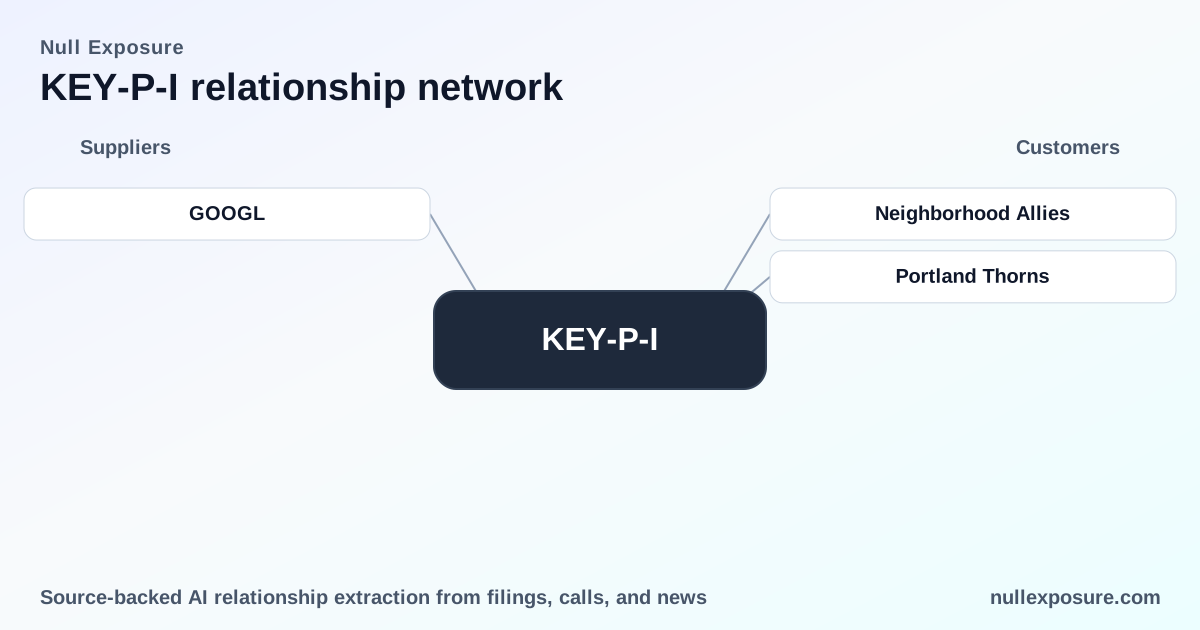
KeyCorp Depositary Shares Series E (KEY-P-I): The supplier picture investors need
KEY-P-I is a depositary share representing a slice of KeyCorp’s preferred-stock capital stack, giving holders a fixed-income–like claim on a regional-bank franchise whose operating economics are driven by net interest income, fee businesses, and capital management. Investors in KEY-P-I receive periodic distributions paid out of the issuer’s preferred dividend stream and are exposed to the underlying banking franchise’s credit profile and operational dependencies, including third‑party technology suppliers that underpin day‑to‑day delivery. For investors assessing counterparty and operational risk, supplier relationships that support KeyBank’s infrastructure materially influence the stability of earnings and operational continuity. Read more about supplier exposure at https://nullexposure.com/.
Why a cloud supplier matters for a preferred-holder
KeyBank’s digital backbone is not a peripheral expense; it is essential infrastructure that preserves deposit access, payments flow, and transaction processing — all of which underwrite a bank’s ability to service preferred obligations. The record here shows a clear engagement with Google Cloud technologies in KeyBank’s data center operations. That relationship signals a strategic, enterprise-grade cloud posture rather than ad-hoc outsourcing, which has consequences for contract terms, concentration risk, and operational continuity for holders of KEY-P-I.
Key takeaway: The presence of Google Cloud tooling inside KeyBank’s stack elevates the relationship to critical infrastructure status. Investors should treat cloud counterparty risk as part of the issuer’s operational credit profile.
Every supplier relationship in the record (concise, investor-focused)
- Google Cloud — A Technology Magazine report covering KeyBank’s FY2020 infrastructure initiatives noted that KeyBank deployed Google Cloud’s Cloud Services Platform and integrated Istio open-source service mesh components into its data center operations, making those elements fundamental parts of the bank’s platform architecture. Source: Technology Magazine article on KeyBank’s Kubernetes/digital transformation (report referencing FY2020; first reported March 10, 2026).
What the Google Cloud relationship implies for KEY-P-I holders
The documented use of Google Cloud technologies inside KeyBank’s environment is a strategic, platform-level commitment rather than a small peripheral contract. According to the Technology Magazine coverage (first reported March 10, 2026, referencing FY2020 deployment), KeyBank’s adoption of Google Cloud’s Cloud Services Platform and Istio service mesh indicates an architecture designed for resilience, scalability, and modern service orchestration. That posture has three practical investor implications:
- Contracting posture: Enterprise-grade cloud integrations typically involve multi-year commercial agreements with defined SLAs, support commitments, and pricing schedules. For creditors and preferred holders, this translates to predictable operational support but also to multi-year vendor dependence that can be costly to unwind.
- Concentration risk: The record identifies Google Cloud as a core supplier in KeyBank’s stack; vendor concentration elevates the single-point-of-failure risk if outages, pricing shifts, or geopolitical/regulatory constraints affect that provider.
- Operational criticality and maturity: Deployment of service mesh technology such as Istio signals a mature DevOps and microservices approach, which improves fault isolation and recovery — a risk mitigation positive for continuity of bank operations and, by extension, for the stability of distributions to preferred holders.
For a deeper supplier exposure view, consult the supplier coverage page at https://nullexposure.com/.
Operational and counterparty risks investors should track
Key supplier signals translate directly into measurable risk vectors for fixed‑income style claimants. Monitor the following:
- Vendor outages and incident history — cloud provider incidents can disrupt transactions and deposit access, pressuring liquidity and reputational capital.
- Contract terms and supplier SLAs — examine whether KeyBank’s agreements include robust incident remediation and portability options that limit vendor lock-in.
- Regulatory and data residency exposure — large banks face regulatory scrutiny on cloud use; any enforcement action or compelled changes can generate transition costs.
- Concentration vs. diversification — a single major cloud relationship increases systemic exposure; diversification across providers reduces that risk.
These are operational realities that affect the bank’s ability to pay preferred dividends under stress. For further reporting and supplier-specific analysis, visit https://nullexposure.com/.
Constraints and company-level signals
The supplier relationship record for KEY-P-I contains no extracted constraints. This absence is itself a company-level signal: there are no flagged contractual disclosures or constraint excerpts in the presented results that limit or condition the supplier relationship information. Investors should interpret this as a gap in the public traceable constraint metadata rather than evidence of an unconstrained vendor posture. In practical terms:
- Treat the current record as an affirmative note of supplier usage (Google Cloud) without accompanying constraint text (e.g., no snapshot of specific termination penalties, exclusivity clauses, or quantified cost commitments).
- Use issuer filings, vendor press releases, or direct counterparty confirmations to uncover contractual constraints where necessary for underwriting risk.
Practical investor actions
- Request relevant vendor contract disclosures or risk summaries in diligence to understand SLA remedies, termination rights, and portability options.
- Stress-test dividend coverage and liquidity plans against a scenario with a major cloud incident or abrupt supplier pricing increase.
- Maintain active monitoring: cloud providers’ operational posture and regulatory exposure change faster than traditional suppliers.
If you want a concise supply‑chain risk brief tailored to KEY-P-I, start here: https://nullexposure.com/.
Bottom line
The supplier information on record identifies Google Cloud as a strategic infrastructure partner in KeyBank’s technology stack, deployed at platform level and integrated with service mesh tooling. That relationship elevates both the operational capabilities and the single‑vendor concentration risk that directly inform the credit and operational profile supporting KEY-P-I distributions. Investors should combine this supplier signal with issuer-level credit metrics and contract diligence to form a complete view of preferred‑stock risk.
For ongoing supplier monitoring and deeper counterparty briefing on banking infrastructure, visit https://nullexposure.com/.