Kestrel Group (KG): supplier landscape and operational signals for investors
Kestrel Group Ltd. operates as a niche fronting carrier: it issues insurance paper for program managers, MGAs, reinsurers and reinsurance brokers and monetizes by collecting premiums and fronting fees while transferring actuarial risk to reinsurers. For investors and operators evaluating supplier and counterparty posture, the company’s business is defined less by commodity underwriting and more by contractual access (fronting capacity), counterparties for reinsurance placement, and governance concentration that affects strategic decisions.
If you want a consolidated, machine-readable view of KG’s commercial relationships and supplier signals, start here: https://nullexposure.com/
How the fronting model shapes supplier exposure and contracting posture
Kestrel’s entire operating model is a services-first insurance play: the company provides paper, underwriting governance and regulatory presence, and captures a margin through administrative fees, premium collection and placement spreads. That implies a contracting posture where Kestrel’s commercial counterparts—program managers, MGAs and reinsurers—are the functional customers and the true risk-bearers. As an investor, treat the company as a services platform whose value is concentrated in contractual access and counterparty networks rather than scale of on-balance-sheet risk retention.
From the company profile and filings through FY2025 (latest quarter 2025-12-31) the balance of signals is clear: small market capitalization (≈$82.7M), limited public float, and concentrated insider ownership—factors that materially influence supplier negotiation leverage and strategic optionality. For a deeper dive into relationship discovery and supplier mappings, visit https://nullexposure.com/.
Supplier and third‑party relationships surfaced in the records
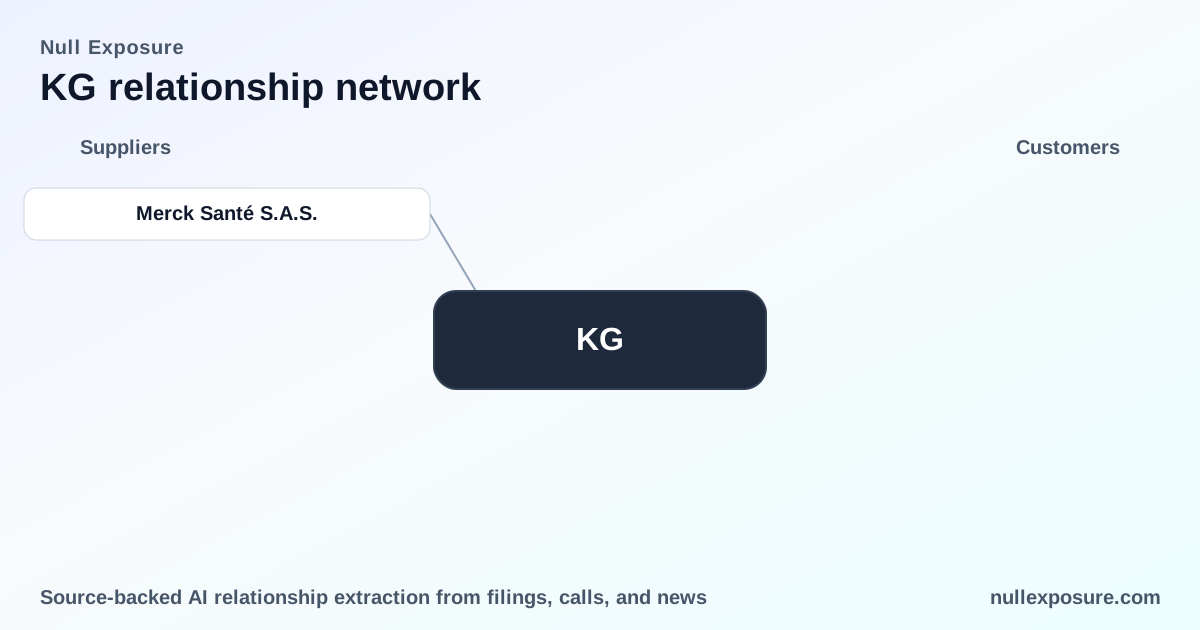
The supplier-scope results provided a single relationship mention. Every relationship in the dataset is covered below.
Merck Santé S.A.S.
- A news item surfaced records that King Pharmaceuticals received an exclusive license to market and sell CYANOKIT from Merck Santé S.A.S. in a transaction publicized in October 2009; the item is captured in the feed and tagged as FY2010. Source: JEMS article reporting the October 2009 announcement, referenced in the feed (first seen 2026-03-10). (https://www.jems.com/ems-operations/rescue-operations/king-pharmaceuticals-launches/)
Note: the single mention is a historical licensing item involving Merck Santé and King Pharmaceuticals; the entry was surfaced under the supplier search for KG. Use that as a signal that the scraping/sentiment feed pulled a cross-industry pharmaceutical licensing mention into the supplier graph — it does not create evidence of a direct commercial fronting or reinsurance relationship between KG and Merck Santé unless corroborated by other filings.
What the absence of broader supplier hits tells an investor
The limited supplier mentions in the available feed are an information signal in themselves. Either Kestrel operates a deliberately compact, contract-driven vendor footprint, or external records are thin and publicly-disclosable supplier connections are modest. For investors and operators this translates into three operational characteristics:
- Concentration: The company profile shows insiders control ~71% of shares with a float of roughly 3.93M shares versus 7.74M shares outstanding; that level of insider ownership compresses public liquidity and concentrates decision-making. (Company profile, latest quarter 2025-12-31)
- Criticality of relationships: The fronting business is inherently dependent on a small number of counterparties (program managers, reinsurers). Those relationships are operationally critical—even if not highly visible in public supplier feeds—because fronting cannot be executed without placement capacity and reinsurance terms.
- Maturity and disclosure: Kestrel’s small market capitalization (~$82.7M) and limited analyst coverage combined with a patchy supplier feed mean counterparty concentration and operational counterparty risk can be under-disclosed. Investors must rely on contractual diligence, not public mentions alone.
If you need a consolidated, enterprise-grade relationship map to validate counterparties and supplier exposure, check the platform: https://nullexposure.com/
Financial and governance signals that affect supplier dynamics
A quick read of Kestrel’s profile provides relevant supplier-risk context:
- Size and liquidity: Market cap ~$82.7M; shares outstanding ~7.74M, float ~3.93M.
- Profitability and margins: Revenue TTM ~$34.05M, operating margin TTM negative (-0.287) while reported EPS and ROE are elevated; these mixed profitability signals indicate earnings volatility, which translates into variable negotiating leverage with reinsurers and vendors.
- Valuation and coverage: Trailing P/E is very low (1.223) and price-to-book ~0.575, while analyst coverage appears effectively absent—factors that influence how counterparties price credit and term risk when contracting.
These are not discrete constraints in the supplier feed; they are company-level realities that shape contracting posture, counterparties’ credit expectations, and the strategic trade-offs Kestrel can make with suppliers and reinsurers.
Risk/Opportunity checklist for investors and operating counterparts
Kestrel’s structure creates a distinct profile for suppliers and investors:
- Risk — counterparty dependence: Fronting requires dependable reinsurers; a small, concentrated entity can face abrupt pricing shifts if reinsurers demand higher terms.
- Risk — governance concentration: High insider ownership can accelerate strategic decisions but also reduce transparency for external suppliers and minority investors.
- Opportunity — specialized value: Kestrel’s role as a fronting provider gives it hard-to-replicate regulatory and contractual value for MGAs and program managers who need paper to scale quickly.
- Operational leverage: Improving reinsurance economics or expanding program volume would directly lift fee-based earnings with limited capital deployment.
Actionable next steps
For underwriting teams, counterparty risk managers and investor analysts evaluating KG:
- Request full reinsurance placement schedules and active program manager lists to assess supplier concentration and term risk.
- Verify contractual assignment and termination provisions that govern the fronting relationships—those clauses determine operational resiliency more than headline financials.
- Consider governance and liquidity when negotiating commercial terms: high insider control and small float reduce negotiating flexibility.
For a consolidated, actionable relationships report and supplier verification, visit https://nullexposure.com/ — it’s the fastest way to move from public signals to diligence-grade counterparty maps.
Conclusion Kestrel Group is a compact fronting platform whose value is concentrated in contractual access and reinsurance relationships, not in broad public supplier footprints. The supplier feed returned a single historical mention tied to Merck Santé S.A.S., but the absence of broader public supplier records increases the importance of direct contractual due diligence. Investors and operators should treat KG as a highly contract-dependent business with concentrated governance and limited public disclosure—risks that must be addressed through bespoke counterparty verification and direct document review.