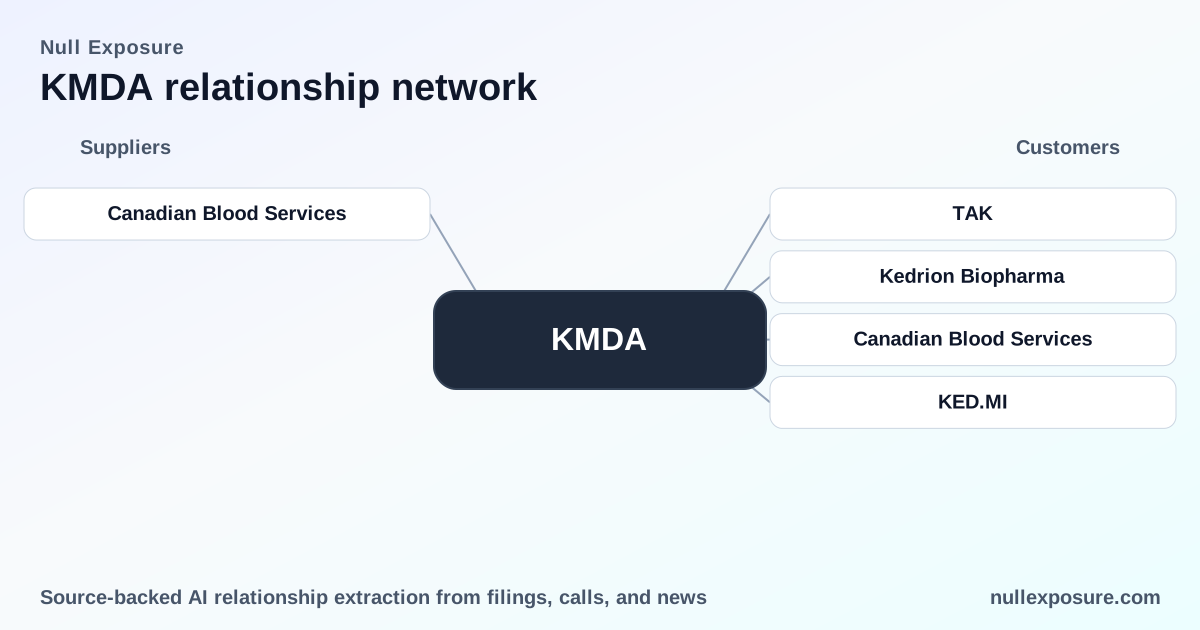
Kamada (KMDA) Supplier Landscape: Why a Two‑Year Extension with Canadian Blood Services Matters
Kamada develops, manufactures and sells plasma‑derived protein therapies for orphan indications and monetizes through direct product sales to health systems, national blood services and specialty distributors. Revenue is driven by repeat, contract‑based supply of plasma‑derived products and geographic rollout of orphan indications, with steady cash generation at a modest scale (Revenue TTM $180M, EBITDA $41M). For investors and operators assessing supplier relationships, the company’s contracts with institutional purchasers determine revenue visibility, inventory planning and regulatory leverage.
For a consolidated view of supplier exposures and to track contract developments, visit https://nullexposure.com/.
The headline relationship: a two‑year extension that secures revenue visibility
Kamada secured a two‑year supply extension with Canadian Blood Services for plasma‑derived products, reinforcing an institutional demand anchor for the company through FY2027. According to a MarketScreener news report dated March 10, 2026, the extension formalizes continued purchases by Canada’s national blood authority and supports Kamada’s FY2025 guidance profile published alongside the announcement. This contract is a clear example of how Kamada converts clinical manufacturing capability into recurring institutional revenue.
How supplier and customer contracts shape Kamada’s operating posture
Kamada operates with a contracting posture typical of specialty biologics manufacturers: multi‑year institutional agreements that prioritize supply continuity, regulatory compliance and inventory predictability. The Canadian Blood Services extension highlights three structural characteristics of Kamada’s commercial model:
- Contracted demand is mission‑critical: Plasma‑derived therapies are essential for clinical care, so national blood services and health systems prioritize secure suppliers. This gives Kamada leverage on volume planning but also raises the bar for regulatory and quality compliance.
- Concentration of institutional buyers: Kamada’s business model depends on a relatively small number of large institutional purchasers; each contract materially affects near‑term revenue. The Canadian Blood Services agreement exemplifies this concentration risk and reward dynamic.
- Operational maturity with scale constraints: The company is an established NASDAQ‑listed specialty manufacturer with market capitalization ~$513M and positive margins (operating margin ~8%, profit margin ~11%). That scale supports multi‑year contracting but requires careful capital allocation to expand capacity and meet institutional demand.
The public constraint feed returned no supplier‑specific contractual caveats; therefore these operating posture observations are company‑level signals drawn from Kamada’s commercial pattern and financial profile rather than from explicit constraint disclosures.
All disclosed supplier relationships (complete list)
- Canadian Blood Services — Kamada received a two‑year supply extension for its plasma‑derived products, providing renewed institutional demand and supporting FY2025 revenue guidance. Reported by MarketScreener on March 10, 2026.
Each listed relationship above is included in the public sourcing returned for supplier coverage and should be considered in revenue and procurement stress tests.
Financial context that underpins supplier risk and negotiating leverage
Kamada’s financials present a middle‑market specialty manufacturer profile that influences supplier dynamics and counterparty negotiations:
- Revenue scale and profitability: Revenue TTM $180M with EBITDA ~$41M yields operating leverage but limited free cash compared to large global plasma suppliers. These economics support multi‑year supply deals but constrain aggressive capacity expansion without external capital.
- Valuation and analyst view: Trailing P/E ~24.7 and forward P/E ~16.3, with three Buy analyst recommendations and an analyst target price of $13, suggest the market prices a combination of growth potential and execution risk into the stock.
- Ownership and governance: Institutional ownership near 49% and insiders roughly 7% provide mixed signals of external scrutiny and management skin‑in‑the‑game; shareholders will expect contracted revenue stability from counterparties such as national blood services.
Taken together, Kamada’s financial position gives it credibility as a supplier to national health bodies while exposing it to revenue concentration and capacity constraints—factors operators must quantify when modeling downside scenarios or negotiating renewal terms.
Operational risks and policy levers investors should model
For investors and operations managers, the Canadian Blood Services extension reduces short‑term demand uncertainty but does not eliminate structural risks:
- Capacity and scale risk: Multi‑year institutional contracts require consistent manufacturing throughput; any production disruption or regulatory action would have immediate revenue impact given buyer concentration.
- Regulatory and quality risk: Plasma products face elevated regulatory scrutiny; compliance failures materially impair contract performance and customer confidence.
- Pricing and reimbursement pressure: National purchasers exert strong price discipline over long‑term contracts; margin compression is possible if product mix shifts toward lower‑priced tenders.
Key monitoring items for both investors and operators:
- Renewal cadence and length of institutional contracts.
- Production capacity utilization and capital plans for expansion.
- Regulatory inspection history and corrective actions.
- Geographic diversification of institutional customers beyond single‑country reliance.
For a structured supplier risk matrix and ongoing contract monitoring, see https://nullexposure.com/.
Practical takeaways for investors and procurement leads
- The Canadian Blood Services extension is a positive de‑risking event: it secures institutional demand and supports the company’s near‑term revenue guidance.
- Concentration remains a structural risk: a small number of institutional contracts drive a large share of predictable revenue, increasing sensitivity to renewals and operational continuity.
- Kamada’s financial position is supportive but not immune: margins and EBITDA demonstrate operational viability, but capacity expansion and regulatory compliance will determine the company’s ability to convert contract wins into durable growth.
If your investment or procurement thesis depends on supplier continuity, track contract lengths, production metrics and regulatory reports as leading indicators. Visit https://nullexposure.com/ to integrate this supplier signal into your broader counterparty due diligence.
Conclusion: what the extension signals for the market
The two‑year supply extension with Canadian Blood Services is a concrete reinforcement of Kamada’s institutional customer base and a practical uplift to revenue visibility. For investors, it reduces short‑term demand risk; for operators, it raises the importance of capacity planning and regulatory resilience. Continue to monitor renewal timelines, production reporting, and any additional institutional agreements that would broaden Kamada’s revenue footprint. For deeper supplier maps and ongoing contract alerts, return to https://nullexposure.com/.