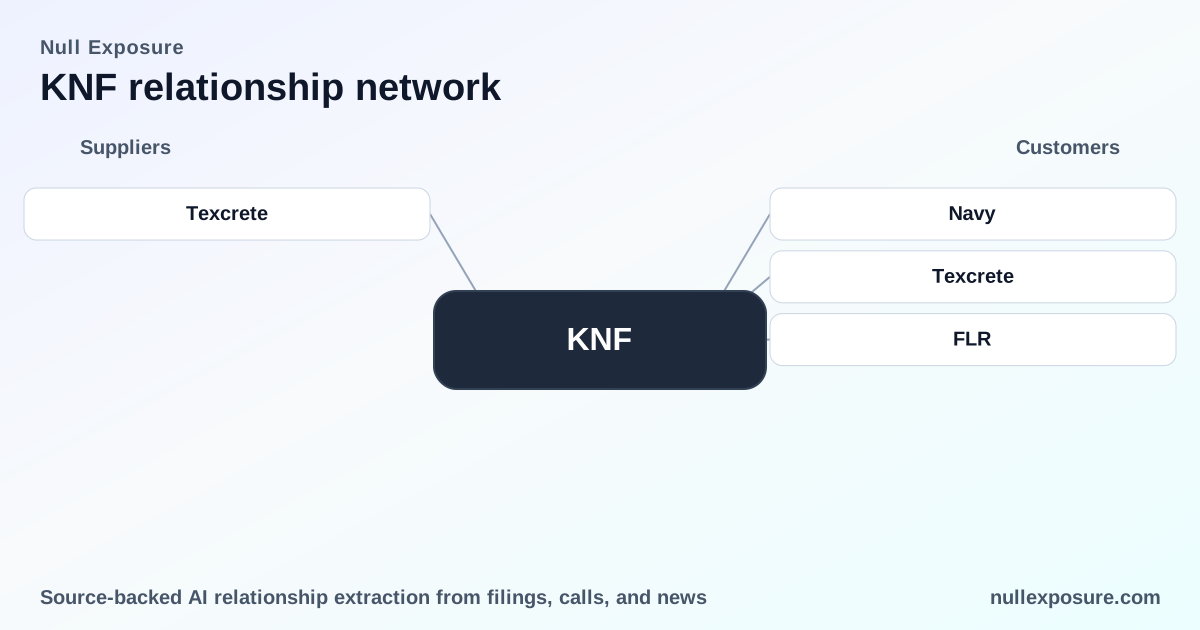
KNF (Knife River) — Supplier relationships and what the Texcrete deal tells investors
Knife River (ticker KNF) is a vertically integrated aggregates, asphalt and ready‑mix platform that monetizes through materials sales, contracting services and fuel/energy inputs sold both internally and to external customers. The company captures margin by combining upstream aggregate supply with downstream ready‑mix and asphalt products, leveraging long‑term purchasing commitments and large scale to optimize working capital and logistics. Investors should value KNF as a capital‑intensive supplier with high revenue visibility from integrated product flows and meaningful contractual stickiness.
Explore deeper supplier intelligence at https://nullexposure.com/ to monitor counterparties and contract signals.
How Knife River’s operating model converts to cash flow
Knife River operates as a vertically integrated manufacturer and service provider: aggregates, ready‑mix concrete, asphalt and contracting services are bundled across geographies, while an Energy Services unit produces and supplies liquid asphalt that feeds road construction and internal segments. According to the company’s disclosures, “Each geographic segment offers a vertically integrated suite of products and services, including aggregates, ready‑mix concrete, asphalt, and contracting services, while the Energy Services segment produces and supplies liquid asphalt, primarily for use in asphalt road construction, and is a supplier to some of the other segments.” This integrated posture reduces input spread volatility and allows the firm to capture both materials margin and contracting margin.
The company’s procurement and contractual posture is consequential for counterparties and investors:
- Long‑term commitments are material: The firm states, “We have entered into various commitments, largely purchased cement, liquid asphalt, minimum royalties and fuel. The commitment terms vary in length, up to 24 years,” signaling extended supplier relationships that lock in costs and supply.
- Large absolute spend: Amounts purchased under these commitments were $128.3 million in 2024, $128.7 million in 2023, and $167.6 million in 2022, indicating sustained high single‑hundred‑million procurement exposure.
- Dual role as manufacturer and service provider: The filing language positions Knife River both as a manufacturer of construction materials and a service provider with formal vendor due diligence processes for third‑party services and cybersecurity review.
These characteristics create highly predictable input flows for Knife River but also establish concentration risk around major long‑term suppliers and contractual obligations that limit flexibility.
The Texcrete relationship: two coverage notes and what they mean
Texcrete appears as a near‑term and market‑visible partner in Knife River’s Texas expansion. The public reporting on that relationship is captured in two articles.
- Knife River’s arrangement with Texcrete was reported by Pit & Quarry in March 2026, noting that Knife River expects its ready‑mix plants to “pull through aggregates from our existing Knife River operations, in addition to leveraging Texcrete’s own supply.” Source: Pit & Quarry, March 2026 — https://www.pitandquarry.com/knife-river-makes-deal-with-texcrete-in-texas/
- A parallel report in ConcreteProducts (January 29, 2026) described the same operational intent: Knife River expects ready‑mixed plants to combine supply from Knife River and Texcrete, extending Knife River’s Lone Star footprint. Source: ConcreteProducts, January 29, 2026 — https://concreteproducts.com/index.php/2026/01/29/texcrete-deal-extends-knife-rivers-lone-star-state-footprint/
Both articles convey the same commercial dynamic: Texcrete expands Knife River’s geographic reach and provides complementary local supply that Knife River will integrate into its existing distribution and plant network. For investors, that implies near‑term revenue synergies from better plant utilization and longer‑run margin benefits from vertical pull‑through of aggregates.
What the Texcrete tie‑up signals for capital allocators and operators
The Texcrete relationship is not simply a one‑off customer win; it is a strategic extension of Knife River’s integrated model. Expect three practical investor takeaways:
- Revenue leverage through asset utilization. Integrating Texcrete supply with Knife River plants increases throughput and reduces per‑unit fixed costs at ready‑mix operations.
- Supply redundancy and local sourcing. Using Texcrete plus existing Knife River aggregates reduces haul distances and logistics cost, improving gross margins in Texas projects.
- Contractual and commercial stickiness. Given Knife River’s tendency toward long‑term contracts and large committed purchases, this deal likely feeds into existing procurement and contracting frameworks that raise switching costs for local customers and suppliers.
If you are tracking counterparty concentration or bidding behavior in regional public works, this is an operationally material relationship. For ongoing monitoring and supplier diligence, visit https://nullexposure.com/ to set alerts and track changes to KNF’s supplier footprint.
Procurement posture, risk profile and operating constraints
Knife River’s public statements reveal a conservative procurement posture oriented toward long maturities and vendor oversight. Key company‑level signals:
- Contract type: Long‑term commitments up to 24 years, which supports stable supply but locks forward obligations and pricing exposure.
- Spend scale: Purchases under commitments exceed $100 million annually in recent years, underscoring the firm’s bargaining leverage but also supplier concentration risk.
- Relationship roles: The company functions as both manufacturer and service provider, requiring due diligence and cybersecurity clauses for third‑party vendors.
- Maturity: The business exhibits characteristics of a mature industrial operator — steady capital intensity, integrated product flows and formalized vendor management.
Operationally, long‑dated supplier commitments reduce procurement volatility but also create balance‑sheet and operational inflexibility if market prices shift. For investors, the key risk trade‑off is between margin stability from locked supply and the burden of long‑term fixed commitments that limit nimbleness in adverse input‑price environments.
Final verdict and recommended next steps
Knife River’s model is scale‑driven, vertically integrated and contractually disciplined. The Texcrete arrangement is a concrete example of how the company extends geography and pulls additional volume through its asset base, reinforcing both revenue visibility and operating leverage. Key takeaway: Knife River’s supplier footprint and long‑term commitments make it a lower‑volatility industrial exposure with meaningful procurement concentration that requires active monitoring.
If you manage exposure to construction materials or municipal contracting, take two immediate actions:
- Review KNF’s contract disclosures and procurement commitments to quantify long‑term obligations relative to free cash flow.
- Subscribe to ongoing supplier monitoring for Knife River at https://nullexposure.com/ to capture new deals, regional expansions and changes in counterparty concentration.
For bespoke supplier intelligence and to integrate these signals into investment or operational workflows, visit https://nullexposure.com/ and sign up for enterprise monitoring.