Kiniksa (KNSA) supplier relationships: what investors need to know
Kiniksa operates as a small-cap biopharmaceutical company that monetizes through product sales (primarily ARCALYST) and selective intellectual‑property transactions, while relying on external manufacturers and logistics partners to deliver product to patients. Its commercial model combines specialty drug revenue with periodic licensing and asset acquisitions that reshape the portfolio; supplier contracts therefore drive both cost structure and operational risk. For investors evaluating supplier exposure, the critical facts are concentration of manufacturing, the role of third‑party logistics and specialty pharmacies in revenue realization, and recent contract actions affecting pipeline programs.
Research more supplier profiles on Null Exposure
The supplier map that matters for valuation
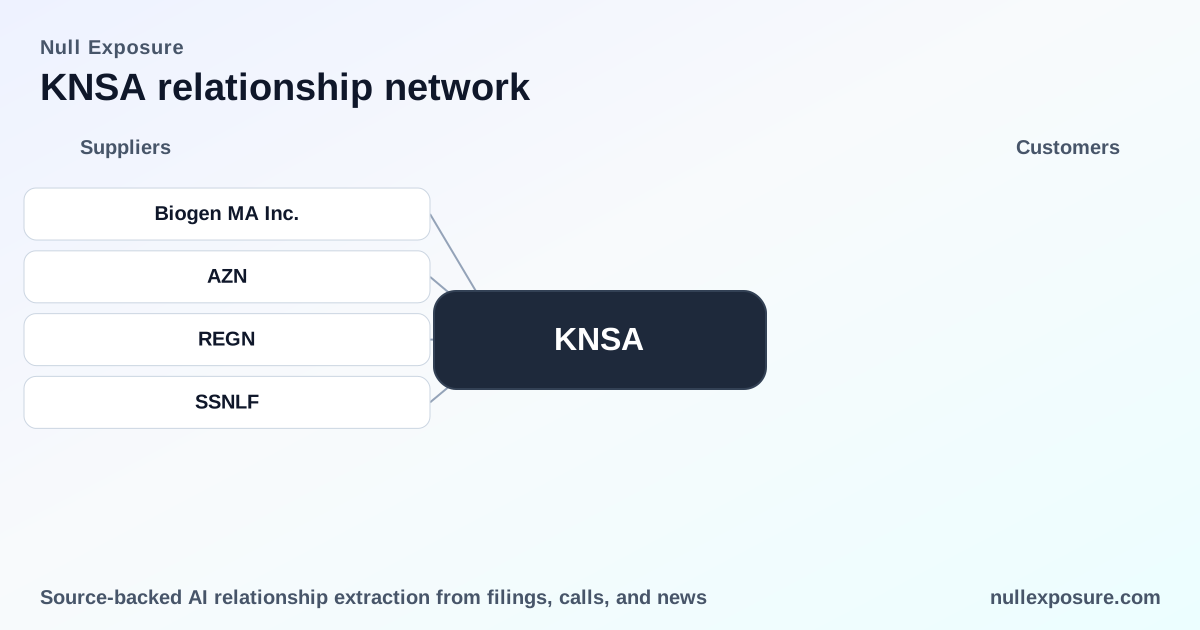
Kiniksa’s supplier footprint is compact and high‑impact: a small number of counterparties are central to drug manufacturing and distribution. That compactness lowers fixed‑cost complexity but raises single‑point operational and regulatory risk — a core value driver for premium finance and partner‑selection decisions.
Biogen MA Inc.
Kiniksa acquired rights to certain antibody assets, including vixarelimab, via an asset purchase agreement with Biogen MA Inc. executed in September 2016, giving Kiniksa ownership of patents, clinical data and clinical supply associated with those programs. According to Kiniksa’s FY2024 Form 10‑K, the Biogen Agreement transferred intellectual property and clinical drug supply that underpinned development options for those molecules.
MedImmune (AstraZeneca / AZN)
Kiniksa exercised its contractual right to terminate an exclusive license for mavrilimumab with MedImmune, a move announced in company press releases in February 2025; the termination signals a deliberate portfolio reprioritization away from that program. The GlobeNewswire releases dated February 25, 2025, state that Kiniksa has exercised termination rights under the license agreement with MedImmune.
Regeneron (REGN)
Regeneron is disclosed as the company’s current sole‑source manufacturer of ARCALYST drug substance under an existing supply agreement, supplying all requirements for development and commercial activities until a replacement CDMO is qualified. Kiniksa’s FY2024 Form 10‑K explicitly states Regeneron currently manufactures and supplies all ARCALYST drug substance pursuant to the Supply Agreement.
Samsung (SSNLF)
Kiniksa expects Samsung to become its sole‑source manufacturer of ARCALYST drug substance once Samsung is qualified as a replacement CDMO, reflecting a planned manufacturing transition intended to reduce dependence on the incumbent. In its FY2024 Form 10‑K, the company notes the expectation that Samsung will be the sole source following qualification.
What the constraints tell you about operating posture
Kiniksa’s filings and disclosures reveal a supplier posture that is concentrated and contractually heavy. One explicit excerpt names Regeneron as a key manufacturer, confirming a single‑source manufacturing relationship that is material to both development and commercial supply obligations. This is a high‑criticality arrangement: when manufacturing is sole‑sourced, contract performance, qualification timelines, and regulatory inspections are immediate value drivers.
At the company level, Kiniksa also signals dependency on third‑party service providers (CDMOs, CROs, specialty pharmacies, third‑party logistics providers). The 10‑K warns that failures or cyberattacks affecting these parties could materially disrupt development programs or commercialization, and it describes ARCALYST sales through a third‑party logistics provider that distributes via authorized specialty pharmacies. Those excerpts function as a company‑level constraint: distribution and IT/service resilience are essential to revenue realization and patient access.
- Concentration: Manufacturing is concentrated with Regeneron today and a planned single‑source with Samsung post‑qualification — this creates execution‑sensitive risk.
- Criticality: Third‑party logistics and specialty pharmacy distribution are central to cash receipts for ARCALYST.
- Maturity: The relationship network reflects a mix of legacy asset acquisitions (Biogen) and active contract reshaping (MedImmune termination, Samsung qualification) consistent with a company transitioning portfolio focus.
See broader supplier intelligence on Null Exposure
How these relationships change the risk/return profile
The supplier mix amplifies both upside and downside:
- Upside: Tight supplier relationships can yield predictable supply and negotiated economics when performance holds; securing Samsung as a qualified CDMO could lower unit cost and reduce reliance on an external incumbent.
- Downside: Sole‑source manufacturing and reliance on third‑party logistics are single points of failure that directly threaten revenue continuity and regulatory compliance. The termination of the MedImmune license also reduces potential upstream upside from that program, focusing value capture more heavily on existing commercial products and other pipeline assets acquired from Biogen.
For investors, monitor three operational triggers: (1) progress and timeline for Samsung qualification, (2) any amendments/renewals to the Regeneron supply agreement, and (3) stability and performance of the third‑party logistics and specialty pharmacy network that collects ARCALYST revenue.
Quick checklist for diligence
- Confirm manufacturing qualification milestones for Samsung and any backlog or bridging supply arrangements from Regeneron. (10‑K FY2024 disclosures provide the baseline.)
- Reconcile the financial terms and duration of the Regeneron supply agreement where available; single‑source economics and termination rights materially affect downside protection.
- Track pipeline redeployment and licensing activity post‑MedImmune termination to understand how Kiniksa plans to replace foregone optionality.
Bottom line — what investors should do next
Kiniksa’s supplier profile is compact, consequential, and actively changing: an incumbent sole‑source with Regeneron, an anticipated replacement path with Samsung, a past asset purchase from Biogen, and a terminated license with MedImmune that reshapes pipeline optionality. These dynamics make supplier diligence essential for any valuation or underwriting exercise. For a deeper supplier‑by‑supplier view and continuous monitoring, visit Null Exposure and review the full supplier profiles.
Analyze Kiniksa’s suppliers on Null Exposure
Maintain attention to manufacturing qualification milestones and distribution integrity as your primary operational risk indicators; that focus will separate routine execution from event‑driven valuation moves.
Explore more supplier intelligence at Null Exposure