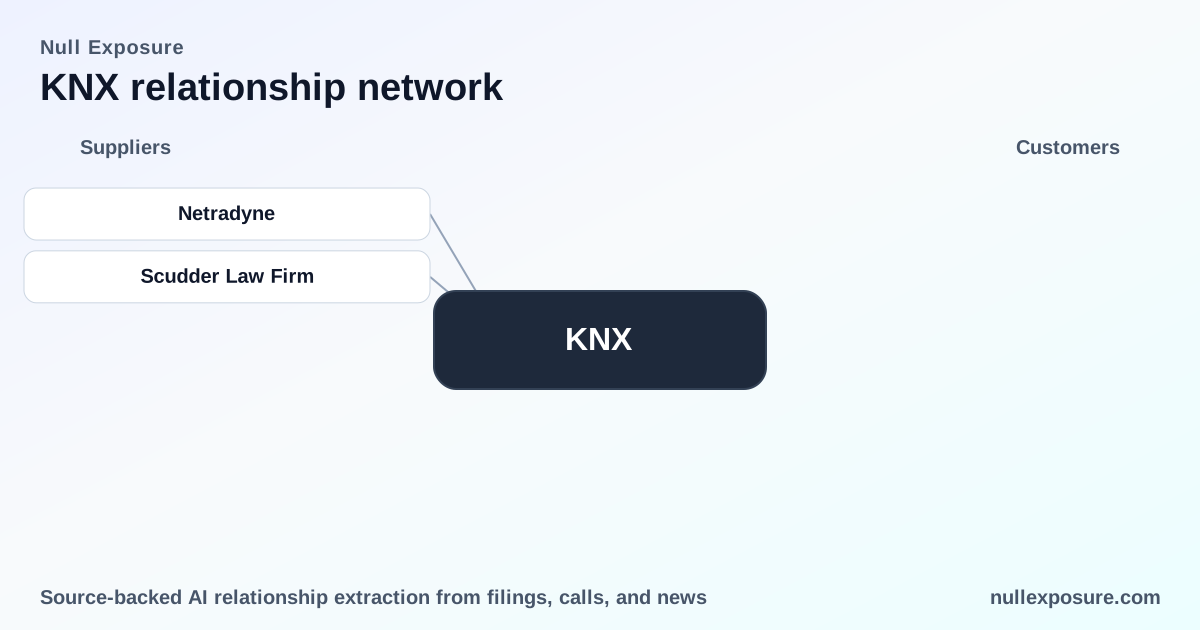
Knight‑Swift (KNX) — supplier relationships and what they tell investors
Knight‑Swift operates as one of North America’s largest truckload carriers and monetizes through asset‑backed freight hauling, third‑party capacity brokerage and recurring terminal/real‑estate operations. Revenue derives from a mix of owned fleet operations and contracted carriers, while margins are driven by fleet utilization, short‑cycle pricing and control of terminal network costs. For investors evaluating supplier risk, the company’s supplier posture — short‑term capacity contracts paired with long‑dated property leases — defines both operational flexibility and a distinct set of counterparty exposures.
Explore Knight‑Swift supplier intelligence on NullExposure
Two supplier relationships that reflect a hybrid operating model
Knight‑Swift’s supplier footprint in the available records shows both technology/service suppliers and professional advisers. The two named relationships are operationally complementary: one adds safety hardware across the fleet, the other provided legal counsel for a major M&A transaction. Below I summarize each relationship and what it signals for procurement, operations and risk.
Netradyne — fleet safety camera provider
Knight‑Swift contracted Netradyne to equip 15,500 Knight and Swift trucks with Driver•i D‑450 and D‑215 fleet safety dash cameras, expanding in‑cab safety and telematics coverage across a material portion of the fleet. According to The Trucker (March 2026), this deployment is framed as a safety and fleet‑performance initiative tied to FY2025 activity and operational rollout. This relationship shows direct investment in safety and visibility technology that supports utilization and insurance outcomes.
Scudder Law Firm — transaction and legal adviser
Scudder Law Firm acted as the transaction and legal adviser to Knight‑Swift in the US Xpress acquisition process reported in connection with FY2023 activity. Transport Topics noted Scudder’s role during the acquisition, underscoring Knight‑Swift’s reliance on outside counsel for large M&A and regulatory matters. This relationship highlights strategic use of external legal talent during transformational deals rather than building that capability fully in‑house.
What the supplier relationships collectively reveal
These relationships, though few in this sample, map cleanly to Knight‑Swift’s dual priorities: operational scale and deal execution. The Netradyne engagement is an example of capex linked to operational KPIs (safety, utilization, claims reduction), while the Scudder engagement is an example of episodic, high‑criticality professional services used for discrete corporate actions. Together they show a procurement posture that blends ongoing operational suppliers with specialist advisers for strategic events.
Explore Knight‑Swift supplier intelligence on NullExposure
Company‑level constraints and operating model implications
The company disclosures underlying these relationships contain several telling constraints that shape supplier risk and contracting strategy:
- Contracting posture: short‑term capacity contracts. Knight‑Swift states that most third‑party capacity provider transportation services contracts are cancelable on 30 days’ notice or less. This confers operational flexibility to scale capacity quickly but also creates revenue and service continuity exposure if market capacity tightens or rates spike.
- Geographic scope: North America (US and Mexico) coverage. Knight‑Swift operates a nationwide network across the United States and Mexico and contracts third‑party carriers to serve those markets. This national footprint necessitates suppliers who can match geographic reach and regulatory competence.
- Relationship role: service provider reliance. The company explicitly characterizes many suppliers as service providers supplying a broad range of transportation services, indicating third‑party carriers are an integral part of revenue delivery rather than ancillary vendors.
- Spend profile and lease maturity: meaningful, ongoing real‑estate spend. Company disclosures show aggregate monthly rent across leased properties at approximately $5.3 million as of December 31, 2024, with lease terms varying through December 2053. This creates a material fixed‑cost base and a contrast between short‑term capacity contracting and long‑dated property commitments.
Taken together, these signals describe an operating model that is operationally flexible on capacity, geographically broad, reliant on third‑party service providers for core delivery, and encumbered by significant fixed real‑estate costs with long maturity. For suppliers, this means transactions can be short in term but strategically important; for investors, it means counterparty risk is concentrated in the availability and price of short‑notice capacity plus the fixed burden of facility leases.
What investors and operators should watch next
- Counterparty availability and pricing cycles. Because capacity contracts are cancelable on short notice, monitor market tightness indicators such as driver supply, fuel and spot freight rates; those directly affect margins and service resilience.
- Supplier criticality versus contract tenor. Differentiate suppliers that are episodic (e.g., legal advisers for M&A) from those that are persistent and critical to operations (e.g., third‑party carriers and fleet safety technology). The Netradyne relationship is operationally persistent and affects day‑to‑day risk; Scudder was episodic but high impact during a transaction.
- Real‑estate leverage and fixed cost sensitivity. The company’s material monthly rent commitment through long‑dated leases elevates fixed cost risk during freight downturns and increases the importance of achieving utilization targets that suppliers help deliver.
Actionable investor takeaways
- Risk‑adjust revenue expectations for short‑notice capacity exposure. The 30‑day cancelable contract posture creates faster sensitivity to market swings than a portfolio of long‑term outsourced contracts would.
- Prioritize monitoring of operational suppliers that affect safety and utilization. Deploy signals that track telematics deployments, insurance outcomes and claims trends tied to partners like Netradyne.
- Treat professional services as episodic but value‑creating. Legal and advisory relationships such as Scudder’s are high‑leverage for M&A and should be tracked around deal windows rather than as recurring spend.
Explore Knight‑Swift supplier intelligence on NullExposure
Final assessment
Knight‑Swift’s supplier mix in the records combines operationally critical service providers who support daily freight delivery with specialist advisers used for significant corporate transactions. The company’s short‑tenor capacity contracts provide flexibility but raise earnings volatility and counterparty risk in tight markets, while long‑dated property leases lock in fixed costs that amplify the importance of consistent utilization. For investors and operators, the practical focus is dual: ensure visibility into short‑notice capacity supply and measure the return on safety and telematics investments that directly affect margins and insurance costs.