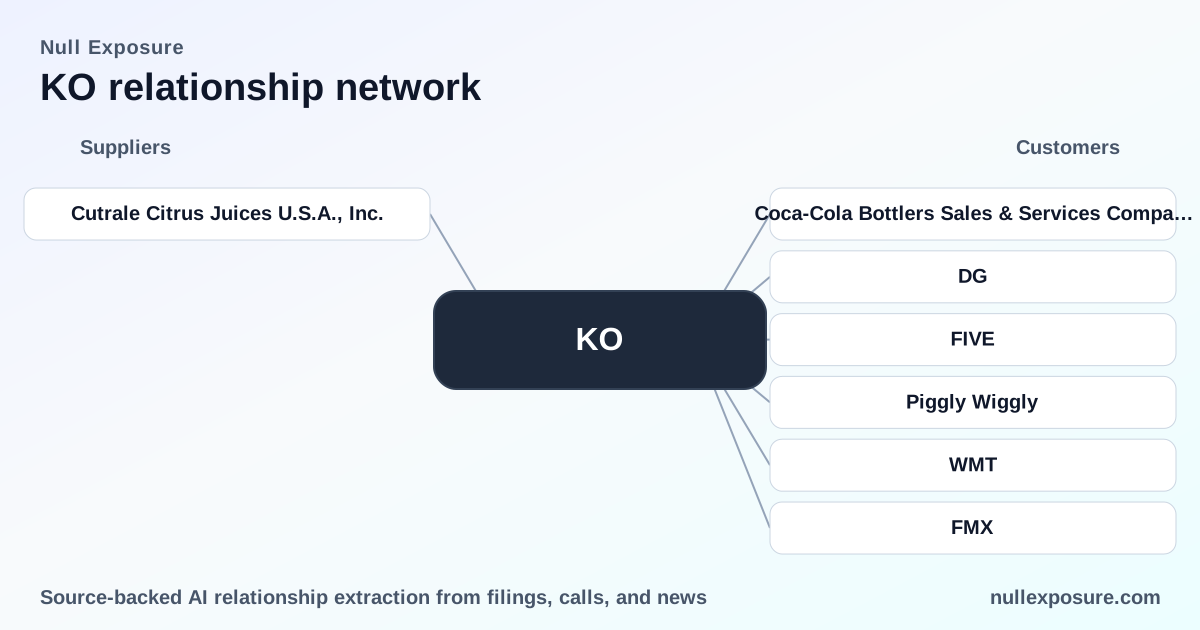
Coca‑Cola’s supplier map: what investors need to know about KO’s orange‑juice sourcing and vendor controls
The Coca‑Cola Company operates as a global beverage concentrates, syrups and finished‑goods marketer that monetizes brand strength and distribution through concentrate sales, franchise bottling relationships and finished‑product sales. Its durable margins and steady dividends are supported by global scale—KO reported trailing revenue of roughly $47.9 billion and a market capitalization north of $334 billion—while profit and operating margins remain high by consumer staples standards. For investors assessing counterparty risk, the company’s supplier footprint, agricultural sourcing and third‑party control posture are central inputs to downside scenarios for specific product lines and reputational exposure.
Want regular supplier intelligence and supplier‑risk signals? Visit https://nullexposure.com/ for detailed coverage and supplier relationship scoring.
The commercial reality: why a single supplier mention matters to investors
Coca‑Cola’s business model relies on two distinct supplier dynamics: (1) raw agricultural inputs for juice and other beverage ingredients, which are often concentrated and exposed to weather and commodity cycles, and (2) service providers and bottling partners that handle production, distribution and digital services. The 10‑K language around working “closely” with suppliers signals longstanding commercial relationships and defined quality standards, not spot purchases.
The company’s disclosure highlights the geography of input risk: the orange juice supply for relevant product lines comes from suppliers in Florida and Brazil, jurisdictions with distinct climate and regulatory risk profiles. Investors should view such supplier relationships as operationally critical to specific categories, but not uniformly critical to Coca‑Cola’s entire revenue base given the firm’s diversified beverage portfolio and global bottling network.
All supplier relationships disclosed in the filings (one entry)
Cutrale Citrus Juices U.S.A., Inc.
Cutrale is identified in Coca‑Cola’s FY2024 Form 10‑K as the company’s primary supplier of orange juice from Florida and Brazil, responsible for meeting Coca‑Cola’s quality standards for orange juice and orange juice concentrate. According to the 2024 Form 10‑K, Coca‑Cola “works closely with Cutrale…to ensure an adequate supply of orange juice and orange juice concentrate that meets our Company’s standards.” This is a focused, supplier‑level disclosure tied to agricultural sourcing and product quality oversight (Company 2024 Form 10‑K).
What the filings say about third‑party controls and what investors should infer
Coca‑Cola’s FY2024 filing also describes a formal third‑party risk management program used to oversee cybersecurity and other risks associated with bottlers, distributors, retailers and third‑party service providers. The filing explicitly notes procedures for initial and periodic security assessments of key third‑party service providers, which indicates a structured contracting posture and operational maturity in vendor oversight. This is a company‑level control signal: Coca‑Cola has institutionalized vendor governance to reduce supply‑chain and information‑security exposures rather than relying on ad‑hoc arrangements (Company 2024 Form 10‑K).
- Contracting posture: The language implies Coca‑Cola negotiates contractual requirements and conducts ongoing assessments of critical suppliers and service providers. That is consistent with a centralized, programmatic approach to vendor risk management.
- Maturity: Periodic security assessments point to a mature control environment for cybersecurity and operational continuity, reducing tail risk from service‑provider failures.
- Criticality and concentration: While company controls are mature, the designation of a single primary supplier for orange juice reveals a concentration risk for that input: disruption to this supplier—or to Florida/Brazil production—would disproportionately affect Coca‑Cola’s juice product lines.
- Geographic exposures: Florida and Brazil have different climate, labor and trade dynamics; investors must price country‑level and commodity volatility into scenario analysis for juice‑dependent SKUs.
Explore deeper supplier intelligence and contract‑level signals at https://nullexposure.com/ to see how counterparties map to financial impact.
How to think about leverage, risk transfer and mitigation
Coca‑Cola’s scale creates substantial negotiating leverage with agricultural suppliers and service providers, which typically translates into long‑term supply agreements and standardized quality provisions. At the same time, agricultural supply is inherently lumpy and weather‑dependent, so even well‑negotiated relationships can produce commodity price exposure or temporary shortages. The 10‑K wording—working “closely” with Cutrale—suggests a collaborative supply relationship focused on continuity and standards rather than pure spot sourcing.
Operational mitigation already in place includes structured third‑party risk management, but investors should watch for five risk signals: supplier concentration for key ingredients, country‑level production shocks (Florida freezes, Brazilian crop disease or trade restrictions), contract renewal terms and price pass‑through mechanics, the robustness of alternative suppliers, and the integration between raw‑material supply and the bottling network.
Investor takeaways — what matters for valuation and operational stress tests
- Single‑supplier concentration for orange juice (Cutrale) is a material, product‑line risk; model scenarios should include crop shocks and temporary margin compression for juice categories. (Source: Coca‑Cola 2024 Form 10‑K.)
- Company controls for third‑party cyber and operational risk are formalized, reducing tail risk from service‑provider failures but not eliminating agricultural supply volatility. (Source: Coca‑Cola 2024 Form 10‑K.)
- Scale provides leverage, but climate and geopolitical exposures in Florida and Brazil require active monitoring and stress‑testing in downside cases.
- For operators and procurement teams, the disclosure signals opportunities: contract terms, diversification of concentrate sources and forward hedging can drive tangible P&L resilience.
If you’re building an investor risk model or assessing counterparty exposure, detailed supplier mapping and the full text of supplier disclosures are essential; get prioritized supplier coverage at https://nullexposure.com/.
Final perspective and action items
Coca‑Cola’s disclosure of Cutrale as its primary orange‑juice supplier is a concise but actionable data point: it identifies a concentrated input, clarifies geography and signals a collaborative supplier relationship managed under a mature vendor‑risk program. For investors, the next steps are clear—stress test juice‑category margins under adverse weather, review contract renewal timelines if available, and monitor any public reporting from Cutrale or regional crop reports that could affect supply.
For a focused supplier risk scan tailored to your portfolio or operations team, visit https://nullexposure.com/ for additional supplier intelligence and relationship scoring.