Kodak (KODK) supplier relationships: what investors need to know
Kodak operates today as a manufacturer of advanced materials and chemicals alongside legacy imaging and brand licensing; it monetizes through product sales (materials, coatings, printing plates), licensing and branded product collaborations, and by managing capital structure through secured credit facilities. Supplier relationships and outsourcing decisions drive unit-level margins, operational continuity in manufacturing, and long-term liability management, so scrutinizing partners — from co‑brand collaborators to pension outsourcers and commodity suppliers — is essential for investment due diligence. For a deeper view of supplier and counterparty exposure, visit https://nullexposure.com/.
Why supplier posture matters for Kodak's P&L and balance sheet
Kodak’s operating model mixes manufacturing cadence with episodic consumer collaborations and corporate finance actions. That combination creates a set of operating constraints: long-term contractual commitments coexist with commodity purchasing (aluminum coils) and outsourced specialist services (cybersecurity, pension CIO). The company’s contracting posture is therefore a hybrid: structured long‑term financing and supplier contracts underpin capital-intensive manufacturing, while targeted outsourcing reduces administrative overhead and concentrates execution risk with third parties.
- Concentration and criticality: Materials such as lithographic aluminum coils are direct input costs and difficult to substitute quickly; supplier disruption transmits immediately to production and margins.
- Contract maturity and leverage: Kodak’s amended credit agreements indicate multi-year lender relationships and financial covenants that influence procurement flexibility and liquidity.
- Outsourcing trade-offs: Shifting functions like pension investment oversight to third parties reduces internal fixed costs and governance burden but places strategic control with external consultants.
What the data shows about Kodak’s named relationships
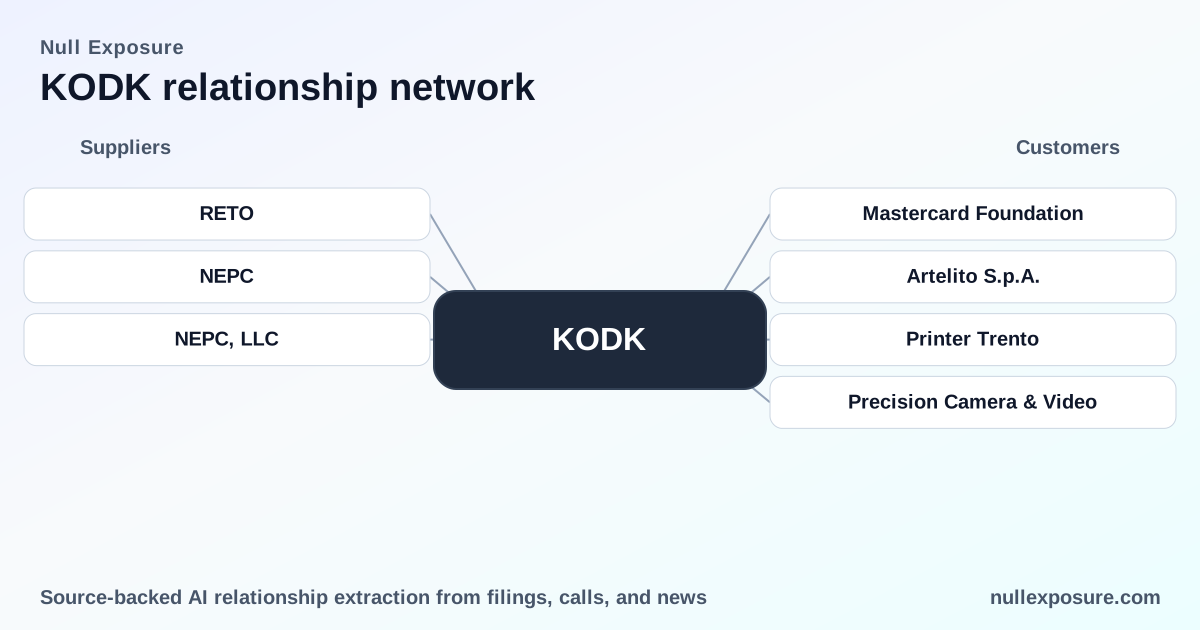
Reto — Kodak executed a branded product collaboration for a palm-sized point‑and‑shoot camera that sold out quickly on Kodak’s site, illustrating consumer-facing, co‑brand product monetization and short-cycle retail revenue generation (CNBC, Sept 11, 2025: https://www.cnbc.com/2025/09/11/kodak-vintage-style-toy-camera-chamera.html).
NEPC / NEPC, LLC — Kodak has engaged NEPC as an Outsourced Chief Investment Officer and fiduciary for its U.S. pension plan after closing its internal investment office; this represents a deliberate shift of pension oversight to a large independent adviser and is documented in filings and press coverage (PlanSponsor, FY2024 filing and coverage; InvestmentNews reporting, FY2024: https://www.plansponsor.com/per-sec-filing-kodak-preparing-to-terminate-pension-plan/; https://www.plansponsor.com/kodak-outsources-management-of-overfunded-u-s-pension-plan/; https://www.investmentnews.com/retirement-planning/kodak-to-outsource-oversight-of-pension-investments/250180).
How each relationship affects investor risk and upside
Reto collaboration: positive for brand, limited for scale. The Reto partnership demonstrates Kodak’s ability to leverage the brand in capped, high‑margin product runs that generate PR and short-term sales without material capital commitment. This activity enhances consumer relevance while leaving manufacturing risk largely on contract partners (CNBC, Sept 2025).
NEPC engagement: governance and liability management move. Outsourcing pension CIO functions to NEPC signals a corporate decision to externalize investment governance and fiduciary responsibility, reducing internal headcount and operational complexity while concentrating long‑term fiduciary risk with a large adviser; that action materially changes how pension assets and liabilities are managed and will influence future pension expense and funded status reporting (PlanSponsor and InvestmentNews, FY2024).
Constraints that define Kodak’s supplier risk profile
The public excerpts and filing references produce several company‑level signals investors should treat as operating constraints:
- Long‑term contracting posture: Kodak’s First Amendment to its credit agreement and referenced amended term loan agreement show multi-year, bank‑backed financing that constrains short-term procurement flexibility and ties working capital decisions to lender terms (company Form 8‑K exhibits, 2023 amendment referenced).
- Buyer of commodity inputs: Kodak purchases lithographic aluminum coils with pricing tied to prevailing market levels, creating margin sensitivity to raw‑material price swings and exposure to single‑source or limited‑source supplier disruption.
- Reliance on third‑party service providers: The company engages third parties for cybersecurity monitoring, incident response and policy guidance, which means operational resilience depends on vendor performance and contractually defined service levels.
- Manufacturing supply chain vulnerability: Kodak’s production model requires third‑party performance for parts and components; geopolitical events, trade policy shifts, and supply concentration can adversely affect production continuity.
None of these constraints are theoretical abstractions: they combine to shape Kodak’s negotiation leverage, supplier selection criteria, and capital allocation choices.
For a practical, line‑by‑line perspective on supplier and counterparty exposure, explore additional supplier intelligence at https://nullexposure.com/.
Key risk and value drivers investors should track
- Pension outsourcing reduces internal complexity but centralizes fiduciary risk — track NEPC’s investment mandates and fee schedules disclosed in subsequent filings and proxy materials.
- Commodity exposure is a hidden margin lever — monitor aluminum coil prices and supplier diversification disclosures; contract terms that index to market prices create direct gross‑margin volatility.
- Short‑cycle co‑brand product wins support revenue but not scale — collaborations like the Reto camera create publicity and episodic revenue without committing working capital to large capex projects.
- Credit agreement covenants limit financial optionality — the amended term loan and guarantee increase the importance of meeting covenant tests to retain procurement flexibility.
Concrete next steps for investors and operators
- Review Kodak’s next 10‑K/8‑K filings for updated disclosures on NEPC mandates, pension funded status and any supplier concentration metrics.
- Monitor commodity purchase terms and any supplier diversification initiatives in subsequent earnings calls; ask management about single‑source aluminum suppliers and contingency plans.
- Evaluate the runway and margin contribution from branded collaborations versus core materials businesses to assess sustainable revenue mix.
For continuous monitoring of supplier exposure and to access a curated view of counterparties, visit https://nullexposure.com/.
Kodak’s supplier picture blends conservative financing, commodity buying power, and targeted outsourcing. Investors should treat supplier and outsourcing moves as strategic levers that directly affect margins, governance, and operational resilience, and should watch contractual disclosures and adviser mandates closely in upcoming filings. For a company‑wide supplier risk score and relationship tracking, learn more at https://nullexposure.com/.