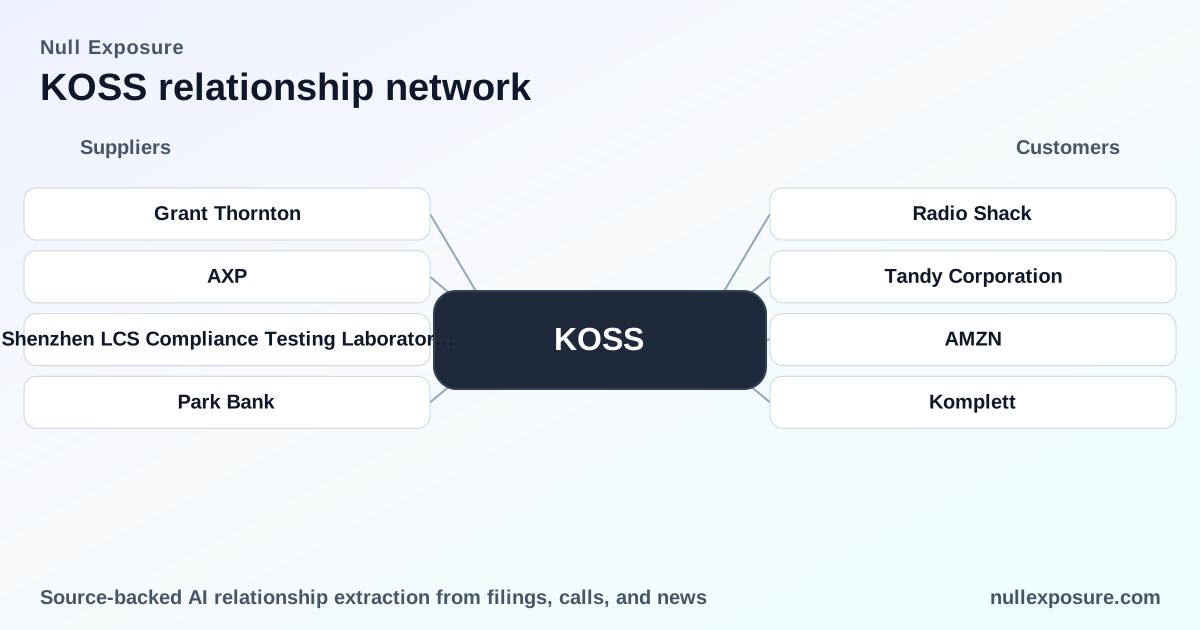
Koss (KOSS) supplier profile: audit, banking and manufacturing relationships that shape risk
Koss Corporation sells consumer and professional headphones and sources the bulk of its finished goods from third‑party manufacturers in Asia while operating a smaller manufacturing footprint in Milwaukee; the company monetizes through product sales and distribution channels, and its cost of goods and margin profile are highly sensitive to outsourced manufacturing economics and supplier continuity. For investors, the critical axis is supplier concentration and operational control: Koss outsources manufacturing to Asia, relies on a small number of vendors for most volumes, and has legacy service relationships — auditors, banks and compliance labs — that have influenced past loss recovery and reputational outcomes.
If you want a concise supplier risk scorecard and relationship map for underwriting or counterparty diligence, start here: https://nullexposure.com/
Quick takeaways investors need on the supplier posture
- Geography and sourcing: Koss uses contract manufacturers in the People’s Republic of China and Taiwan while maintaining a Milwaukee plant, positioning the company squarely in APAC manufacturing networks and global supply chains. (Company disclosures.)
- Concentration and criticality: Two vendors account for the majority of contract manufacturing; one vendor represented approximately 68% of manufacturing costs in FY2025 and 65% in FY2024, establishing a single‑vendor concentration that is material to margins. (Company disclosures.)
- Relationship maturity and role: The vendor relationships are long‑term and mature, and Koss classifies them as manufacturer partners providing finished product to spec — an active operational relationship rather than ad‑hoc sourcing. (Company disclosures.)
These structural points drive the risk profile: high supplier concentration, APAC operational exposure, and mature long‑term manufacturing relationships that are operationally critical to Koss’s ability to deliver product and protect margins.
The relationships on the record (what the filings and press show)
Grant Thornton — auditor involvement and litigation history
Grant Thornton served as Koss’s auditor during periods tied to major internal control failures and subsequent litigation; reporting across the 2010–2019 period documents investor and board criticism of audit oversight and records a settlement — Grant Thornton agreed in 2013 to pay Koss $8.5 million in connection with auditing coverage during the theft period. Sources: Milwaukee Journal Sentinel/JSONline reporting across 2010–2019 (see 2017 and 2019 coverage). (https://www.jsonline.com/story/money/business/2019/01/29/koss-corp-loses-again-sachdeva-embezzlement-lawsuit/2709791002/; archived coverage 2010.)
American Express Company — fraud detection that uncovered internal theft
An American Express investigator alerted Koss to suspect corporate card activity in December 2009 that revealed approximately $14 million in questionable charges by a finance executive, triggering internal investigations and subsequent litigation. Source: Milwaukee Journal Sentinel/JSONline archive reporting on the Sachdeva embezzlement case (archive reporting citing the American Express investigator, FY2014 retrospective). (https://archive.jsonline.com/business/fired-koss-executive-sachdeva-once-seen-as-model-employee-by-ceo-b99361546z1-277501111.html)
Shenzhen LCS Compliance Testing Laboratory Ltd. — product compliance testing in Asia
Koss relied on Shenzhen LCS Compliance Testing Laboratory Ltd. for compliance testing on the wireless PORTA‑PRO headphone exhibits, showing use of local APAC testing labs to certify device standards for Asian‑manufactured product. Source: Ars Technica reporting on PORTA‑PRO‑BT exhibits and testing in 2018. (https://arstechnica.com/gadgets/2018/04/wireless-version-of-the-classic-koss-porta-pro-headphones-could-be-on-the-way/)
Park Bank — banking relationship and failed liability claim
Koss sued Park Bank alleging the bank should have flagged the misappropriation of funds by the same executive; the courts ruled against Koss in related appeals, recording a legal loss in the effort to recover those losses through the bank. Source: Milwaukee Journal Sentinel/JSONline reporting on the 2019 court decision and related litigation. (https://www.jsonline.com/story/money/business/2019/01/29/koss-corp-loses-again-sachdeva-embezzlement-lawsuit/2709791002/)
What these relationships collectively reveal about operating constraints
These relationship records and company statements establish several company‑level operating constraints that matter for underwriting, purchasing, and investor monitoring:
- Contracting posture: Koss operates with a supplier model that outsources finished‑goods manufacturing to Asia while retaining a domestic plant for some production and raw materials processing. This structure is deliberate and consistent with a branded‑hardware company that centralizes design and outsources scale manufacture. (Company disclosures.)
- Concentration and single‑point risk: One contract manufacturer accounted for roughly two‑thirds of manufacturing costs in the most recent fiscal periods, a concentration that makes margins and fulfillment vulnerable to pricing shifts, lead‑time shocks, or geopolitical disruptions. This is a material operational constraint on Koss’s earnings resilience. (Company disclosures.)
- Criticality and recovery posture: The vendor relationship is operationally critical — interruptions would have a material adverse effect on profits according to company language — and the relationship is described as long‑term and mature, increasing switching costs and vendor power. (Company disclosures.)
- Maturity and stability: Long‑standing relationships with a small set of vendors suggest negotiated stability but also embedded dependency; procurement playbooks should prioritize contingency suppliers or contractual protections given the concentration. (Company disclosures.)
Operational and investment implications
The combined picture is straightforward: Koss’s margin and delivery risk is concentrated in APAC manufacturing partners. Historical engagements with auditors and banks underline the importance of control environment and governance when assessing counterparty exposure. For investors and operators:
- Stress test earnings under vendor price escalation scenarios and extended lead times.
- Require visibility into vendor contract terms, rights to audit, and dual‑source feasibility for critical BOM items.
- Factor historical governance shortfalls and litigation outcomes into management quality and board oversight assessments.
If you’d like a supplier risk whitepaper or a tailored risk heat map for Koss’s manufacturing counterparties, start with an expert review at https://nullexposure.com/
Recommended next steps for diligence and monitoring
- Obtain recent contract schedules and the vendor concentration appendix for FY2024–FY2025 to validate the continuing 65–68% concentration claim.
- Request supply‑chain contingency plans and alternate‑sourcing timelines for critical components.
- Review audit committee minutes and prior settlements to assess residual legal and reputational exposures.
For a practical vendor risk scorecard template and monitoring playbook tailored to Koss’s profile, get the resource and analyst briefing here: https://nullexposure.com/
Bottom line
Koss is a small‑cap hardware brand whose economics are governed by high supplier concentration in APAC and legacy service‑provider interactions that have produced litigation and recovery outcomes. The primary investment risk is operational: supplier dependency and the governance controls that failed to prevent past internal losses. Active diligence on vendor contracts, pricing mechanics, and contingency sourcing is the most effective lever to quantify downside exposure and protect margins. For structured supplier diligence and ongoing monitoring, visit https://nullexposure.com/ for analyst tools and counterparty intelligence.