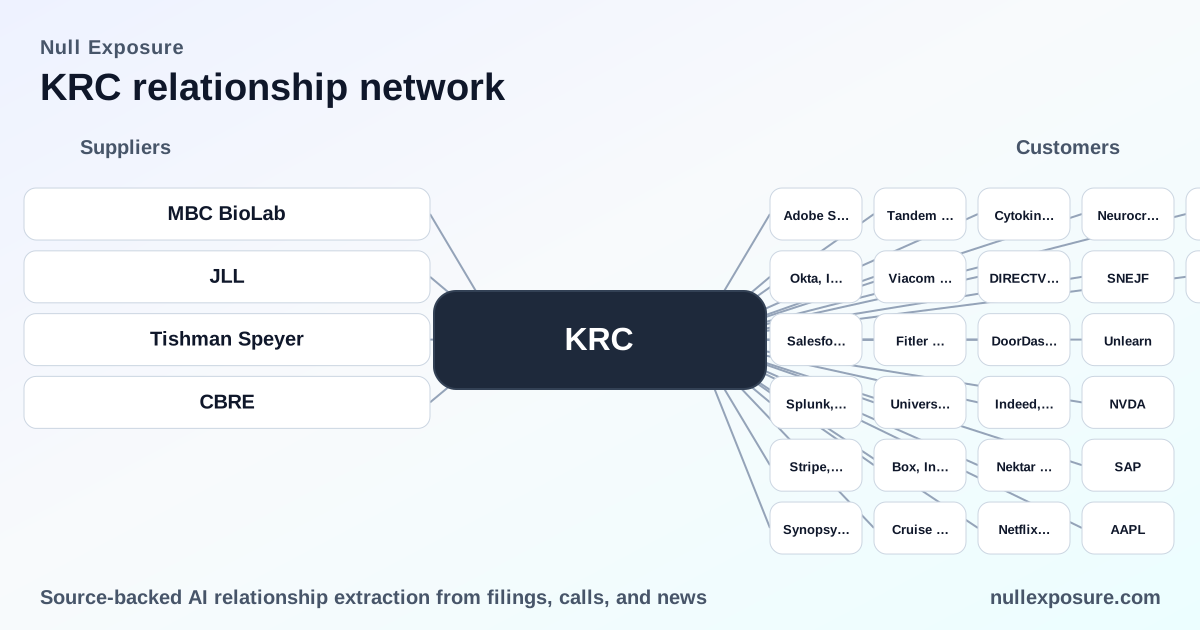
Kilroy Realty (KRC) — supplier and counterparty intelligence for investors
Kilroy Realty operates as a West Coast–focused REIT that monetizes through leasing, acquisitions, and selective development of office and life-science real estate; the business converts occupancy into recurring rental income while generating value from strategic property purchases and dispositions. With roughly $1.11B in trailing revenue, $631M of EBITDA, and a $3.43B market cap, management’s counterparty choices — landlords, brokers, and life‑science incubators — directly influence rent roll quality and near-term cash flows. For direct access to the underlying relationship data and transaction transcripts, visit https://nullexposure.com/.
Operational posture and what the relationships reveal
Kilroy behaves like an active acquirer and landlord: the company leases space to growth-stage life-science operators and buys operating office assets from institutional sellers, then leverages brokerage and capital-market partners to execute. This is supported by company disclosures that state Kilroy “acquired the operating properties listed below from unrelated third parties” during recent years, which signals a buyer contracting posture and an orientation toward portfolio rotation and tactical purchases.
- Concentration and maturity: Kilroy’s counterparties in the sample are well‑established institutional actors — national brokerages and major private-equity-grade sellers — indicating counterparty maturity and conventional transaction channels rather than ad hoc local deals.
- Criticality: Relationships with incubators and life‑science operators are strategically critical because clustered biotech tenancy can drive above-market rents and longer-term value capture in San Francisco and adjacent markets.
- Commercial implications: Leasing with incubators accelerates tenant density and future leasing upsides, while purchases from sellers improve scale and NOI when cap rates and pricing align with portfolio targets.
For a full view of counterparty exposures and context, see https://nullexposure.com/.
Counterparties and transaction notes — what to file in your model
Below are the reported relationships from Kilroy’s supplier scope, each summarized in plain English with source attribution.
MBC BioLab
Kilroy executed a strategic lease with MBC BioLab, a life‑science incubator in the San Francisco Bay Area, to capture exposure to fast‑growing early‑stage biotech firms and the rental upside that cluster demand generates. This was disclosed on Kilroy’s Q4 2025 earnings call in March 2026. (KRC Q4 2025 earnings call, first seen March 2026)
JLL (Jones Lang LaSalle)
JLL acted as the broker representing both Unlearn and Kilroy Realty in a San Francisco lease transaction, demonstrating Kilroy’s ongoing use of large national brokers to source and execute tenant deals. This was noted in a JLL newsroom posting in March 2026. (JLL newsroom, March 2026)
Tishman Speyer
Kilroy purchased Maple Plaza, an office campus in the Beverly Hills submarket, from Tishman Speyer for $205.3 million — an acquisitive move that added operating office square footage and reflects Kilroy’s willingness to buy institutional assets. The purchase was reported in a March 2026 ReBusinessOnline article covering fiscal‑year 2025 activity. (ReBusinessOnline, FY2025 / March 2026)
CBRE
Stephen Somer and Brooke Silver of CBRE brokered the Maple Plaza transaction, underlining Kilroy’s reliance on major brokerage channels for large asset acquisitions. The brokerage role was documented alongside the Maple Plaza coverage in ReBusinessOnline. (ReBusinessOnline, FY2025 / March 2026)
What those relationships imply for risk and return
These counterparties collectively create a transaction ecosystem that supports Kilroy’s asset strategy: life‑science leasing to drive rent growth, and institutional acquisitions to scale stabilized NOI. Key investor takeaways:
- Risk profile: Kilroy shows execution risk tied to leasing success in life‑science clusters and to timing acquisitions — Quarterly revenue growth is negative (-5% YoY) and quarterly earnings growth is down -79% YoY through the latest quarters, so transaction timing matters to earnings volatility.
- Valuation context: The stock trades at trailing P/E 12.35 and price-to-book 0.62, with an EV/EBITDA of ~10.05, indicating the market prices the company with a degree of value relative to book while expecting some near‑term earnings normalization; analysts set a target price of $37 (consensus leans to Hold).
- Income characteristics: Kilroy’s forward yield and dividend cadence are relevant for income investors — the company pays a dividend (next ex‑dividend 2026‑03‑31), and dividend per share stands at $2.16, translating to a yield of ~7.6% on current metrics.
- Counterparty concentration: Using national brokers (JLL, CBRE) and buying from large sellers (Tishman Speyer) reduces execution counterparty risk but creates exposure to the same marketplace dynamics and cycles that move pricing for all institutional players.
Mid‑article action: if you want the original filings and the conversation transcripts that support these relationship notes, review the full supplier mapping at https://nullexposure.com/.
Practical implications for operators and asset managers
Operators underwriting Kilroy — or negotiating with them — should prioritize the following:
- Negotiate lease terms that capture upside from life‑science densification (e.g., step rents, tenant improvement recapture) because incubator relationships like MBC BioLab change the tenant mix and growth trajectory.
- Anticipate broker-led deal execution on large assets; expect standard institutional diligence and timing when Kilroy buys from sellers such as Tishman Speyer.
- Monitor macro cap‑rate trends and occupancy drivers; Kilroy’s acquisitive posture means capital deployment timing will influence near-term NAV and cash flow.
What to watch next
- Track additional life‑science lease rollouts and renewals tied to incubators; these are primary drivers of organic rent expansion.
- Monitor Kilroy’s acquisition/disposition cadence and the brokers it engages — repeated patterns of working with JLL, CBRE, and other nationals indicate predictable execution windows.
- Follow quarterly leasing velocity versus same‑store NOI and analyst revisions; with negative recent revenue and earnings growth, leasing and transaction execution will determine the recovery path.
Closing and how to use this intelligence
Kilroy’s supplier relationships show a deliberate strategy of pairing life‑science tenant clustering with institutional asset rotation, using established brokerage channels to execute. For investors and operators, the immediate focus is on leasing execution and acquisition timing, both of which have direct implications for NOI, distributable cash, and valuation multiples. For the documented source material, transaction transcripts, and a consolidated supplier view, visit https://nullexposure.com/.