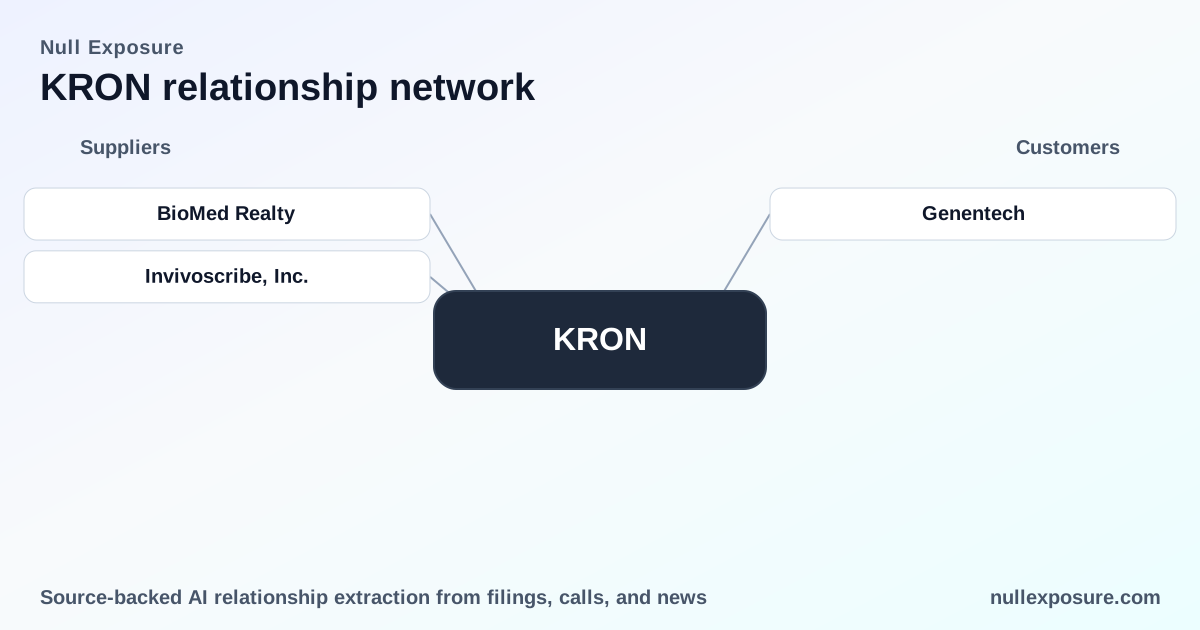
KRON supplier map: lease exits and a strategic diagnostic tie-up that reshape operational exposure
Kronos Bio (Nasdaq: KRON) operates as a development-stage oncology company that monetizes through clinical-stage asset progression, partnering for companion diagnostics, and managing an asset-light physical footprint via leased lab and office space. Recent supplier activity reflects a dual playbook: decisive real estate portfolio rationalization on one hand and targeted clinical partnerships on the other—each carrying distinct cash-flow and execution implications for investors and operators. For a concise supplier-risk snapshot and ongoing monitoring, visit https://nullexposure.com/.
What the two supplier events tell investors right now
Kronos’ supplier relationships in our sample split cleanly between a landlord counterparty and a diagnostic partner. Taken together, these relationships show active balance-sheet management (cash paid to exit leased space) and externalized capability for clinical development (outsourced diagnostic development). These are central to how Kronos deploys capital and de-risks clinical execution.
BioMed Realty — early lease termination and a material cash payment
Kronos agreed to terminate its Cambridge laboratory lease early and will pay approximately $22.5 million to landlord BioMed Realty to exit the space by June 30, 2025—more than five years ahead of the original February 2031 end date. This is reported in coverage citing Boston Business Journal reporting in March 2026 (source: Boston Business Journal reporting via BostonRealEstateTimes, March 2026: https://bostonrealestatetimes.com/kronos-bio-to-exit-cambridge-lab-returning-prime-space-to-market-amid-biotech-downturn-reports-bbj/).
Takeaway: this is a cash-forward decision that reduces ongoing lease commitments but creates a near-term cash outflow and signals a smaller on-site lab footprint going forward.
Invivoscribe, Inc. — companion diagnostic partnership for entospletinib
Kronos announced a partnership with Invivoscribe to develop a companion diagnostic (CDx) for use with its investigational therapy entospletinib, formalized in a PR Newswire release in FY2022 (source: PR Newswire, Kronos Bio and Invivoscribe announcement, 2022: https://www.prnewswire.com/news-releases/kronos-bio-and-invivoscribe-partner-on-companion-diagnostic-for-use-with-entospletinib-kronos-bios-investigational-compound-being-developed-for-patients-with-aml-301606955.html).
Takeaway: the CDx relationship assigns diagnostic development to a specialist supplier, aligning regulatory and commercialization pathways while keeping Kronos’ internal development organization focused on the therapeutic asset.
How these relationships translate into operating-model signals
Kronos’ supplier pattern shows mixed contracting postures tailored to supplier function:
- For real estate, Kronos demonstrates transactional, liability-aware contracting: the company is willing to execute an early termination and absorb a defined cash penalty to reduce long-term fixed costs and real-estate operational burden. The BioMed Realty exit is a concrete example of a cash-liberal decision to reconfigure operating scale.
- For partner services tied to clinical progress, Kronos pursues strategic, capability-driven partnerships: the Invivoscribe CDx agreement indicates reliance on established diagnostic suppliers to deliver regulatory-grade assays that are essential for later-stage clinical and commercial campaigns.
Concentration and criticality: the sample is small but informative. The diagnostic partner is high criticality for a therapy that will require patient selection; the landlord relationship is operationally important but replaceable through market leasing or outsourcing lab needs. Maturity is asymmetric: the lease had long-term legacy duration before termination, while the diagnostic partnership is program-specific and tied to clinical timelines.
For ongoing supplier monitoring, these signals imply operators should treat diagnostic relationships as execution-critical and real-estate as a flexible, cash-managed lever.
(If you want a structured supplier-risk scorecard and automatic alerts for similar supplier events, start a monitoring run at https://nullexposure.com/.)
Risk and financial impact investors should price in
- Near-term cash impact: the reported ~$22.5 million lease termination is a one-off cash outflow that reduces liquidity available for operations or R&D unless offset by cash on the balance sheet or financing. Investors should re-run liquidity projections to reflect this payment and any offsetting cost savings from the discontinued lease.
- Operational concentration risk: outsourcing CDx development concentrates a critical regulatory pathway with an external vendor; delivery timelines and diagnostic performance will materially affect clinical readouts and commercial readiness.
- Execution leverage: the combined approach—reducing fixed overhead while outsourcing specialized capabilities—supports a capital-efficient clinical strategy but increases dependency on third-party delivery and timely regulatory approvals.
What the dataset shows about supplier constraints
No formal supplier constraints were flagged in the relationship feed provided. That is a company-level signal: within this sample, the dataset records active supplier actions (lease termination and a diagnostic partnership) but does not surface contractual constraints, supplier disputes, or multi-party termination clauses. Operators should interpret the absence of flagged constraints as an opportunity to validate the contractual language directly, especially around termination penalties and CDx development milestones.
Practical next steps for investors and operators
- Reconcile Kronos’ most recent cash balance and burn projections with the reported $22.5 million lease termination to assess runway impact. Adjust liquidity models immediately.
- Treat the Invivoscribe CDx relationship as a gating item for commercialization modeling; request milestone schedules and acceptance criteria if conducting diligence.
- Monitor for follow-on supplier activity: space subleasing, lab outsourcing agreements, or additional CDx partnerships that would change execution risk.
For a deeper supplier-risk view and to track events like these in real time, visit https://nullexposure.com/ and sign up for tailored alerts.
Bottom line: reweight operational risk, not strategy
Kronos is actively aligning its operational footprint and external partnerships to prioritize capital deployment into clinical development. The BioMed Realty lease exit imposes a near-term cash cost while the Invivoscribe agreement externalizes a core commercialization capability. Together, these supplier moves reduce fixed operational overhead and concentrate execution risk into third-party deliveries—conditions investors should price into near-term liquidity and longer-term commercialization scenarios.
For ongoing surveillance of KRON supplier events and to convert these relationship signals into actionable risk metrics, see https://nullexposure.com/.