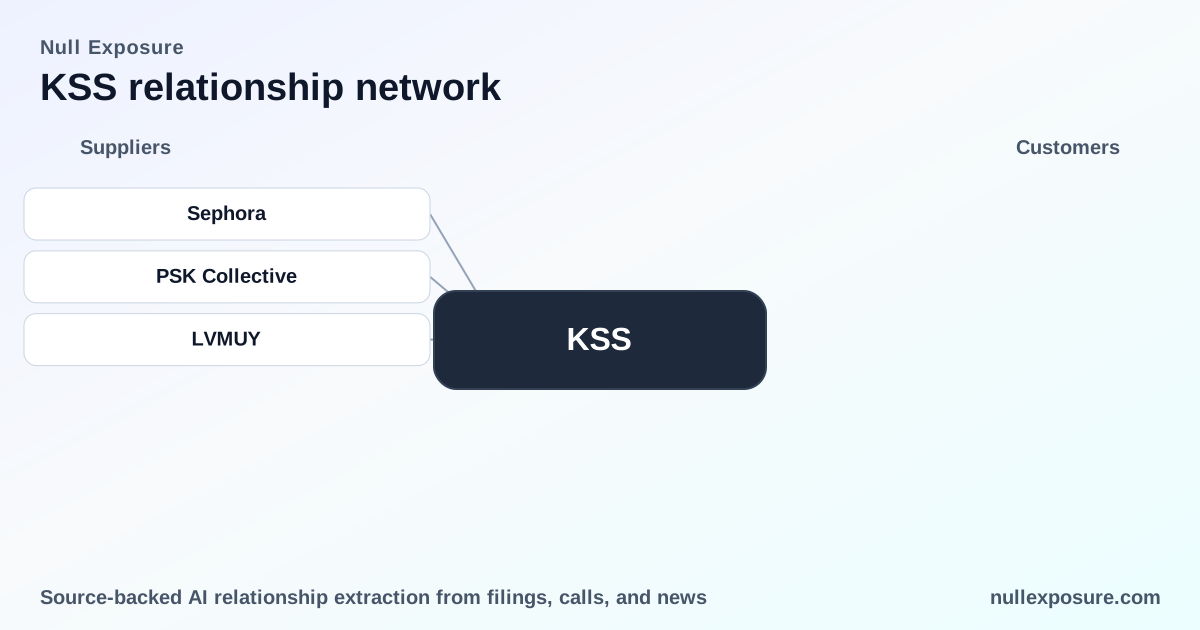
Kohl’s (KSS) — supplier relationships that drive traffic, inventory risk, and the next phase of the turnaround
Kohl’s operates as a traditional department-store retailer that monetizes through merchandise sales across brick-and-mortar and digital channels, augmented by strategic shop‑in‑shop partnerships (notably Sephora) and category reinvestment to lift basket size and frequency. Revenue derives from core apparel, home, and growing beauty categories, while profitability depends on inventory funding, supplier terms, and traffic-driving anchors that transform customer acquisition economics.
Explore more on supplier exposures and partner dynamics at https://nullexposure.com/
Why suppliers are central to the thesis: traffic, margins, and balance‑sheet flexibility
Kohl’s current strategy explicitly treats partners as demand engines rather than just upstream vendors. The Sephora collaboration functions as a traffic-driving anchor that feeds higher-margin beauty sales and accelerates cross-buying into apparel and jewelry. Conversely, supplier disputes—exemplified by recent litigation—signal payment, credit, and working-capital stress that can compress margins and complicate inventory replenishment.
What investors should track operationally:
- Traffic lift and conversion from Sephora locations versus legacy categories.
- Days-payable and inventory funding trends if suppliers assert claims or withhold shipments.
- Geographic concentration of sourcing, given reliance on Asia for manufactured goods.
Constraints that shape how Kohl’s contracts with and relies on suppliers
Kohl’s operating model shows several structural characteristics that are material to supplier risk and negotiating posture:
- Short-term contracting posture. Kohl’s discloses it has no significant long‑term purchase commitments with suppliers, which gives purchasing flexibility but increases exposure to spot-price swings and supplier leverage during tight supply cycles.
- Manufacturing concentration in Asia. The majority of goods are manufactured outside the U.S., primarily in Asia, which concentrates logistics, tariff, and geopolitical risk into a single sourcing region.
- Use of third‑party service providers for controls and reporting. The company references Ernst & Young as its independent auditor and engages standard external assurance, which signals mature external oversight of financial reporting but also reliance on outside professional services for internal control attestation.
These constraints are company‑level signals that shape negotiating leverage, inventory resilience, and operational continuity.
Sephora: the strategic shop‑in‑shop anchor
Sephora is central to Kohl’s growth plan as a beauty-led traffic driver that management has positioned to build a multibillion‑dollar business within Kohl’s stores. By FY2025–FY2026 Kohl’s had expanded to over 1,100 Sephora presences, including full-size and small-format shops, and management cites the partnership as instrumental to attracting younger, higher‑income shoppers and increasing basket size (TradingView SEC 10‑Q, FY2025; JSONLINE coverage, FY2025).
Longer context: analysts frame the Sephora rollout as the core of the bullish case—if Sephora continues to lift store traffic and conversion, Kohl’s can reallocate promotional spend and reinvest in under‑penetrated categories to drive same‑store sales and margin expansion (Finviz commentary; ad‑hoc news, FY2026). Sephora’s role is strategic and revenue‑enhancing rather than a standard vendor relationship. Sources: Kohl’s FY2025 10‑Q summarized on TradingView (FY2025); reporting on category strategy in JSONLINE (Aug 2025); market commentary on the partnership in FY2026 (ad‑hoc news, Finviz).
PSK Collective: supplier dispute turned litigation
PSK Collective alleges it fulfilled orders and submitted roughly 1,500 invoices but that Kohl’s refused payment for about $7.8 million of clothing, prompting a legal claim (WPR reporting, FY2025). This incident is a concrete supplier dispute that highlights execution and accounts-payable friction; while it is a single event, it signals the operational consequences of strained cash flow or contractual disagreement with vendors.
Operational implication: supplier lawsuits increase administrative and legal cost, risk disruption of replenishment, and can amplify supplier bargaining for cash-on-delivery or prepayment terms going forward. Source: Wisconsin Public Radio coverage of the PSK Collective suit (reported FY2025).
What investors and operators should prioritize now
Kohl’s supplier picture is a mix of strategic partnerships and classic commercial vendor risk. Actionable signals for investors and operators:
- Measure the Sephora effect quantitatively. Track store-level traffic, beauty category sales per store, and cross-category uplift as rolling metrics; shop‑in‑shop partners are revenue multipliers, not simple COGS line items.
- Monitor accounts-payable trends and dispute frequency. Elevated supplier disputes like PSK Collective’s $7.8M claim are leading indicators of working-capital stress and potential supply interruptions.
- Watch sourcing concentration in Asia. Any shipping disruption, tariffs, or factory-level constraints will disproportionately affect inventory lead times and cost basis.
- Evaluate contract maturity and flexibility. Short-term supplier commitments give management flexibility but increase exposure to price volatility; quantify the trade‑off via margin sensitivity scenarios.
For a deeper read on supplier concentration and counterparty risk, visit https://nullexposure.com/ for supplemental intelligence.
Final takeaways and practical tracking checklist
- Sephora is a strategic revenue lever and a primary growth asset for Kohl’s. Continued expansion and conversion are necessary to justify the partnership economics.
- Supplier disputes like PSK Collective’s suit are signal events. They reveal stress in payables and can presage supply disruptions if not resolved.
- Company-level constraints—short-term contracts and APAC sourcing—shape both upside and downside. Flexibility helps margin optimization in benign markets; concentration amplifies downside in disruption scenarios.
If you are modeling Kohl’s risk/reward, incorporate sensitivity to supplier payment terms, traffic lift from Sephora, and inventory lead‑time shocks. For more granular counterparty analysis and supplier exposure intelligence, go to https://nullexposure.com/ — our coverage tracks these relationships and their balance‑sheet implications.
Bold moves by management on partner economics will determine whether these relationships drive sustainable margin recovery or add episodic volatility.