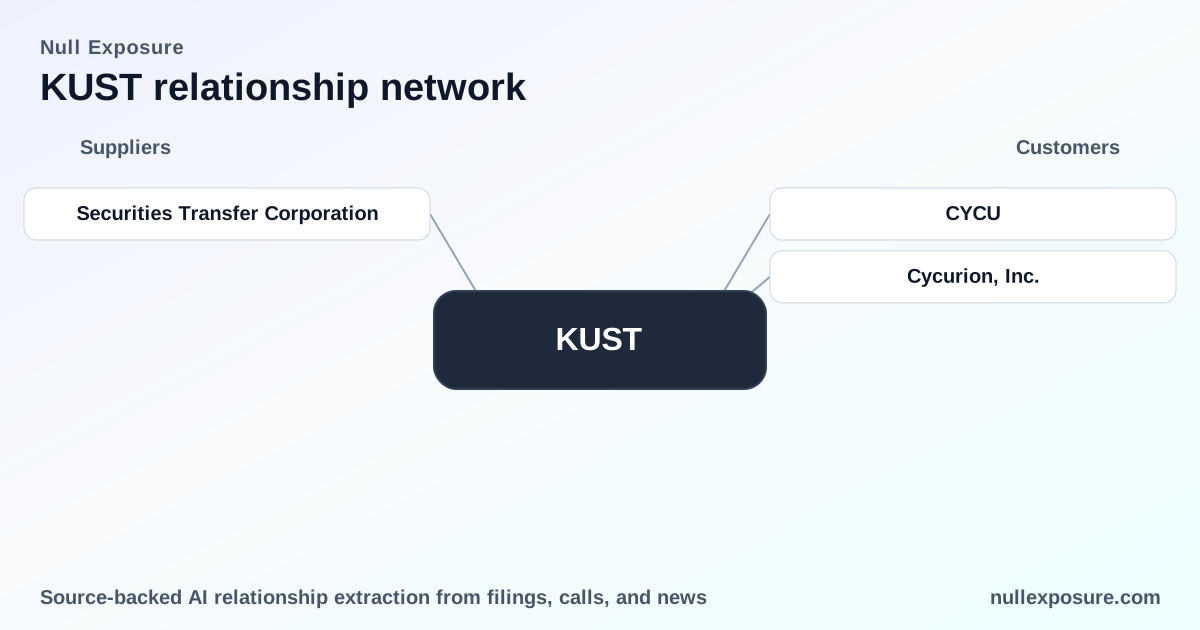
KUST supplier relationships: what investors need to know
Thesis: Kustom Entertainment (ticker KUST) operates as a media and live-events platform combined with an electronics product line, monetizing through ticketing intermediation and direct product sales. Revenue drivers are a mix of transaction fees from the ticketing business and margin on hardware sales, with backend support functions—transfer agents and contract manufacturers—handling administrative and warranty exposure. Learn more about supplier mappings and strategic implications at https://nullexposure.com/.
One-line orientation: how KUST buys and outsources
KUST purchases most components on a purchase-order basis rather than through long-duration supplier contracts, and it maintains multiple suppliers for raw materials so no single vendor dominates spend. This is a short-term, low-concentration procurement posture that favors flexibility over supplier lock-in. According to company disclosures covering fiscal years 2023–2024, the largest supplier accounted for less than 5% of purchases and most material requirements have at least two suppliers. Warranty obligations on key products are handled by contract manufacturers, reducing KUST’s direct warranty expense and operational claims exposure.
The single named supplier relationship: transfer agent responsibilities
Securities Transfer Corporation — KUST’s transfer agent — will distribute instructions to registered stockholders holding physical share certificates relating to the exchange of certificates for common stock. This is a corporate-administration relationship focused on investor record-keeping and certificate exchange logistics rather than procurement of goods or core production inputs. According to a news release on March 10, 2026, Securities Transfer Corporation will send those instructions to stockholders of record. (Source: company announcement reported March 10, 2026.)
How the supplier posture shapes operational risk and opportunity
KUST’s contracting and supplier configuration produces a distinctive set of business-model characteristics:
- Short-term contracting: The company acquires most components on purchase orders and does not rely on long-term supplier commitments. This lowers fixed-supply risk but increases exposure to price volatility and spot-market shortages during demand spikes. (Company disclosure.)
- Low supplier concentration: Multiple suppliers and a largest-supplier share under 5% reduce single-vendor disruption risk, supporting operational continuity for manufacturing and resale channels. (Company disclosure, fiscal years ended December 31, 2023 and 2024.)
- Distributed warranty exposure: Contract manufacturers retain standard warranty responsibility for prominent hardware SKUs (for example, DVM-800 and DVM-250plus), which reduces KUST’s balance-sheet warranty reserves and operational claims handling. (Company disclosure.)
- Dual commercial roles: KUST operates as a buyer of primary tickets (inventory acquisition) and as an intermediary on its secondary ticketing platform, which creates two separate supplier/partner dynamics: inventory procurement and marketplace relationships. This blend drives transactional revenue but requires active inventory and counterparty management. (Company disclosure.)
These company-level signals are derived from KUST’s stated procurement and operational practices and are not tied to the transfer-agent relationship specifically.
What the transfer-agent relationship implies for investors and operators
The Securities Transfer Corporation arrangement is standard for corporate actions such as certificate exchanges and shareholder communications. It is administrative, legally necessary, and low operationally critical relative to KUST’s production and ticketing supply chains. Operational disruptions with the transfer agent would affect corporate communications and share-certificate processing timelines, but would not directly impede manufacturing or ticketing operations.
- For investors: expect predictable, routine costs associated with transfer-agent services with limited financial upside or downside beyond administrative timing risk.
- For operators: maintain contingency plans for shareholder communications and certificate exchanges, but prioritize supplier risk mitigation across component sourcing and contract manufacturing relationships where revenue generation and product warranties are concentrated.
Source for the transfer-agent detail: company announcement reported March 10, 2026 on Securities Transfer Corporation handling certificate exchanges.
Relationship inventory — concise, investor-ready view
Securities Transfer Corporation — The transfer agent will send instructions to registered stockholders holding certificates to exchange those certificates for common stock, a corporate-administration service tied to shareholder record-keeping and corporate actions. Reported March 10, 2026.
(That is the full set of supplier relationships present in the reviewed results.)
Investment implications and risk checklist
- Supply flexibility is a feature and a risk. Short-term purchase-order sourcing and multiple suppliers limit concentration risk but expose margins to commodity swings and logistical shocks. Investors should expect earnings volatility tied to input costs and event-driven ticketing demand.
- Warranty transfer to contract manufacturers reduces contingent liabilities. With warranty responsibility assigned to contract manufacturers for key products, KUST carries lower direct warranty reserves, improving near-term free cash flow stability under normal conditions.
- Marketplace exposure creates two-sided risk. The ticketing business combines buyer inventory exposure (purchased primary tickets) and marketplace intermediation—both revenue-generating but sensitive to consumer demand cycles and event schedules.
- Administrative supplier relationships are routine but necessary. The Securities Transfer Corporation relationship is critical for governance and shareholder services, but does not materially affect core supply chain resilience.
If you need a consolidated supplier-risk scorecard or a detailed supplier map customized to KUST’s procurement categories, visit https://nullexposure.com/ for in-depth supplier analytics.
Final takeaways for decision-makers
- KUST runs a low-concentration, short-term procurement model that prioritizes flexibility over long-term supplier commitments.
- Warranty and manufacturing risk are mitigated through contract manufacturers, improving financial defensibility of hardware sales.
- Administrative vendor relationships such as Securities Transfer Corporation are necessary for corporate actions but are not material to production or ticket inventory.
For investors evaluating supplier exposure or operators designing contingency plans, KUST’s supplier posture supports nimble scaling but requires active management of spot-price and logistics risk. For further supplier-level intelligence and comparative benchmarking, explore https://nullexposure.com/ — the homepage contains resources and engagement options for deeper analysis.