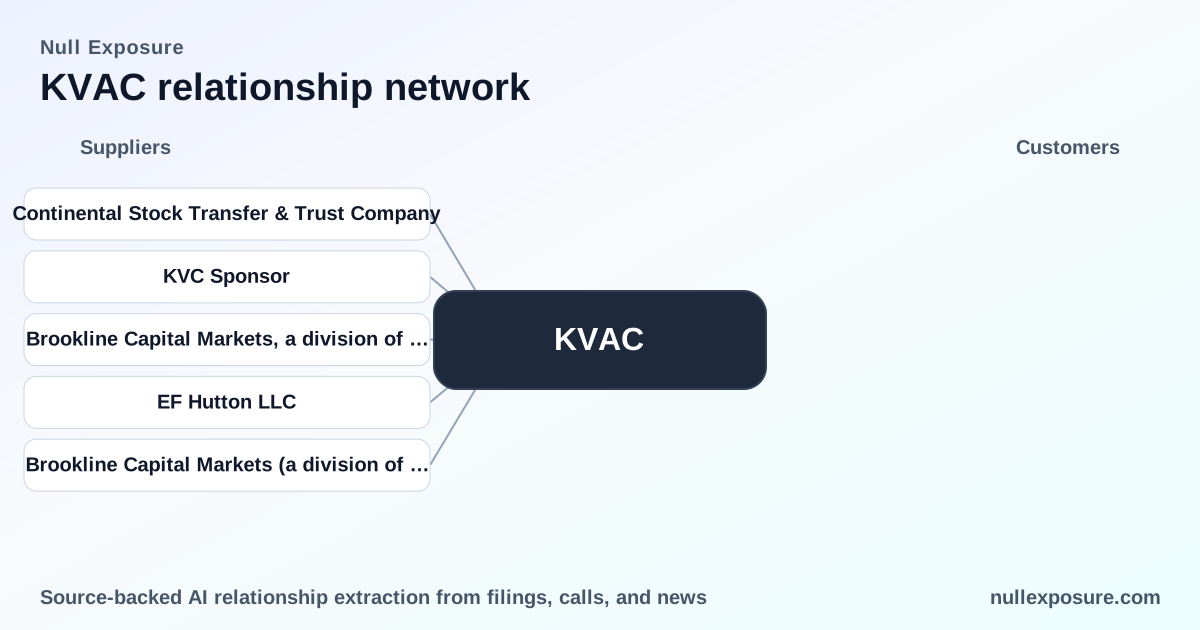
KVAC supplier map: who KVAC hires, how it pays, and what investors should price in
Keen Vision Acquisition Corporation (KVAC) operates as a SPAC: it raises public capital into a trust invested in short-term U.S. treasuries and monetizes through sponsor economics and fee-for-service arrangements while preserving optionality to complete a business combination. The company extends its operating runway by issuing unsecured promissory notes to its sponsor and purchases capital markets advisory services from boutique underwriters; operational support is provided under a monthly administrative fee. This relationship mix creates a funding ladder based on sponsor support and short-term credit rather than operating cash flow — an essential lens for investors evaluating counterparty risk and timing exposure. For a firm-level view and continuous updates, visit https://nullexposure.com/.
Who’s on KVAC’s supplier ledger and what they do
KVAC’s disclosed supplier relationships are narrowly focused on trust management, sponsor financing, and capital markets advisory support. Below I summarize each reported relationship in plain English and cite the public source.
Continental Stock Transfer & Trust Company
Continental Stock Transfer & Trust Company is the trust administrator for KVAC’s trust account and, per a contract amendment on January 22, 2026, the agreement allows up to two three‑month deadline extensions if KVAC deposits $120,000 per extension, potentially pushing the deadline to July 27, 2026. According to a TradingView report (first seen March 10, 2026), this amendment formalizes how extension deposits are handled and the timing mechanics for the trust agreement.
KVC Sponsor
KVAC issued an unsecured promissory note for $120,000 to KVC Sponsor on January 26, 2026 to fund an initial extension payment, reflecting the sponsor’s ongoing role as the primary short‑term financier of the SPAC’s timeline extensions. TradingView reported the promissory note transaction (first seen March 10, 2026), and company disclosures document prior note activity used to prolong the business combination window.
EF Hutton LLC
EF Hutton LLC is engaged as a Capital Markets Advisor to KVAC, acting in an advisory and placement capacity around the company’s de‑SPAC process and investor outreach. CityBiz and related press coverage (citing filings from FY2024–FY2025) list EF Hutton among the firms advising KVAC on capital markets activity and investor conferences.
Brookline Capital Markets (a division of Arcadia Securities, LLC)
Brookline Capital Markets, a division of Arcadia Securities, serves alongside EF Hutton as a Capital Markets Advisor, supporting transaction execution and market positioning in the run‑up to a business combination. The role is documented in CityBiz and company press releases tied to the Medera merger announcement (reported across FY2024–FY2025).
What the supplier list signals about KVAC’s operating model
KVAC’s supplier set and the embedded contractual language produce several clear operating characteristics investors should price directly into valuation and risk assessment.
- Contracting posture: short‑term, sponsor‑dependent. Company filings show multiple short‑term unsecured promissory notes issued to the Sponsor on discrete dates to purchase additional time to complete a business combination, consistent with a short‑term contract profile and recurring sponsor cash injections (company filings referenced in the company constraint excerpts covering Oct 2024–Feb 2025).
- Criticality concentrated on the Sponsor and trust administrator. The Sponsor provides both liquidity (promissory notes) and essential G&A services for a monthly fee; the trust administrator controls deadline‑extension mechanics. This concentration creates a single point of operational and funding failure if sponsor support lapses (service provider evidence cites the sponsor fee arrangement).
- Low counterparty credit risk in treasury holdings but timing risk in runway. Net IPO proceeds are invested in U.S. government treasuries and treasury-only money market funds, limiting credit exposure on idle cash but not eliminating the risk that the SPAC runs out of time before closing a deal (constraint evidence states treasury investments).
- Spend and maturity profile is modest but active. The company shows a note payable balance of $600,000 as of December 31, 2024, and extension payments are priced in the low‑to‑mid six figures, placing spend in the $100k–$1m band and indicating active use of short‑term financing to manage timeline risk.
What investors should watch next
KVAC’s supplier dynamic creates a handful of high‑leverage monitoring points that determine the probability of a successful de‑SPAC and the potential economic outcome for public investors.
- Sponsor extension funding cadence and terms. Continued issuance of promissory notes is the primary lever for keeping the deal alive; these notes are generally non‑interest bearing and payable upon closing, which shifts risk to timing and sponsor solvency (company filings and trading reports document the note structure).
- Trust amendment mechanics and cost to extend. The Continental amendment sets a clear price for time: $120,000 per three‑month extension under the reported 2026 amendment, which is a predictable and transparent cash drain that investors can model directly (TradingView report dated March 2026).
- Advisor quality and access to markets. EF Hutton and Brookline Capital Markets’ roles as capital markets advisors influence deal marketing and placement success; their engagement should be measured by the company’s ability to secure strategic counterparties and institutional interest before extension exhaustion (CityBiz and company press materials from FY2024–FY2025 list these advisors).
- Cash placement in treasuries reduces credit risk but not execution risk. Treasury investments protect principal but do not replace the need for sponsor capital or a viable target pipeline.
For ongoing coverage and a consolidated supplier risk score, consult https://nullexposure.com/.
Quick investment checklist
- Confirm sponsor liquidity and willingness to fund additional extensions on the same terms.
- Model extension costs explicitly at $120k per three months and the present note payable balance ($600k as a historical marker).
- Evaluate the advisor engagement timeline — public outreach and investor conferences signal market building progress (EF Hutton/Brookline press activity is the relevant proxy).
For continued monitoring and actionable supplier intelligence on KVAC and comparable SPACs, see https://nullexposure.com/.
In short: KVAC’s supplier footprint is small, concentrated, and optimized for short-term runway management. Investors should treat sponsor financing cadence and trust‑administered extension mechanics as first‑order risks when assessing deal probability and timing-adjusted returns.