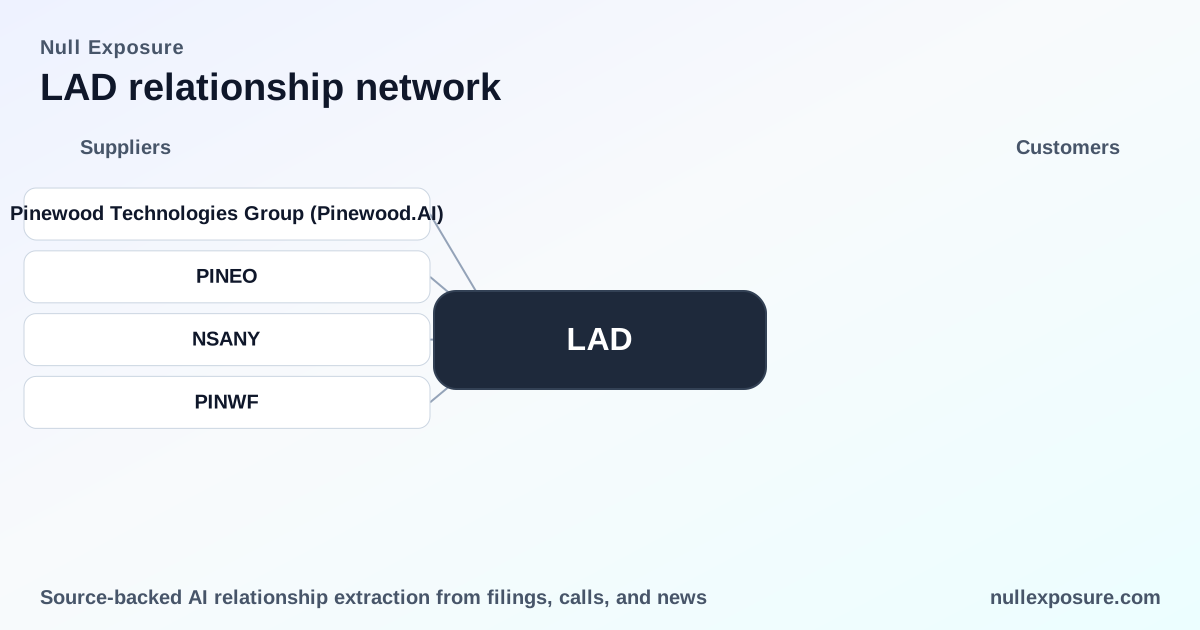
Lithia (LAD) — Supplier relationships that shape operations and upside
Lithia (LAD) operates as a national auto retailer that buys new vehicles from manufacturers, operates franchised dealerships, and monetizes through retail margins, service/parts aftercare, and finance & insurance channels. Supplier relationships — both with manufacturers that supply inventory and with software/technology vendors that run dealer management systems — directly affect gross margins, working capital, and operational scalability. This note reviews the supplier-side relationships surfaced in public filings and news, synthesizes company-level constraints that shape contracting posture, and highlights the commercial risks and opportunities for investors evaluating LAD supplier exposure. For deeper supplier intelligence and relationship mapping, visit https://nullexposure.com/.
Quick read: what the public signals tell investors
Lithia’s supplier footprint combines long-term commercial commitments with standard franchise/licensing structures and an inherently global supply chain for vehicles and parts. Recent public items center on Lithia’s technology partnership rollouts and an ongoing dealer-manufacturer dynamic that remains core to revenue generation. Below I summarize every supplier-related record in the public results and then translate company-level constraints into investment-relevant implications.
What’s in the record (each relationship listed)
-
Pinewood Technologies Group (MotorTrader report, June 9, 2025): Pinewood agreed to a five-year contract to implement the Pinewood Automotive Intelligence™ Platform across all of Lithia’s current and future sites by the end of 2028, signaling a multi-year technology deployment commitment. According to MotorTrader (09 June 2025), the contract covers platform-wide rollout and integration. https://www.motortrader.com/motor-trader-news/automotive-news/pinewood-ai-to-acquire-lithias-majority-stake-in-north-american-jv-09-06-2025
-
Pinewood Technologies Group plc (PR Newswire release, FY2025): The commercial terms of the agreement explicitly include pricing for Lithia’s use of Pinewood.AI, indicating negotiated licensing/commercial arrangements rather than ad hoc procurement. PR Newswire’s FY2025 release notes the pricing agreement tied to the deal. https://www.prnewswire.com/news-releases/pinewoodai-announces-agreement-to-acquire-lithias-majority-stake-in-north-american-joint-venture-302475058.html
-
Nissan (AutoNews coverage, referenced FY2021 activity): Historical dealer acquisitions, such as Lithia’s purchase of a Phoenix-area Nissan store, illustrate the franchise/manufacturer relationship flow that underpins Lithia’s vehicle sourcing and regional footprint expansion. Automotive News covered Lithia’s acquisition activity in the Phoenix market (FY2021), confirming ongoing franchised dealer transactions that affect supply and manufacturer obligations. https://www.autonews.com/dealers/lithia-buys-phoenix-area-nissan-store/
-
Pinewood Technologies (MotorTrader report, April 1, 2025): Management commentary identified the DMS implementation into Lithia’s UK network as a completed priority, with that roll-out driving user growth and revenue for Pinewood. MotorTrader’s April 1, 2025 piece reported the DMS rollout completion and linked it to higher usage and revenue for the vendor. https://www.motortrader.com/motor-trader-news/automotive-news/pinewood-turns-in-8-5m-profit-completes-dms-rollout-with-lithia-uk-01-04-2025
How company-level constraints affect supplier exposure
Public constraint excerpts provide direct signals about Lithia’s operating posture. These are company-level facts that shape every supplier relationship.
-
Long-term financial commitments and leverage posture. Lithia’s amended syndicated credit facility (a $6.0 billion commitment, trancheable to $6.5 billion) with maturity in 2029 indicates material liquidity and covenants that press management to optimize working capital and preserve access to capital markets. The presence of a multi-year credit facility creates pressure to manage supplier payment terms, inventory turns, and capex cadence tightly.
-
Framework contracting with manufacturers. Lithia signs master framework agreements with most manufacturers that impose additional requirements; this institutionalizes obligations and standardizes performance expectations across dealer networks. Frameworks increase predictability but also limit unilateral flexibility in procurement and resale practices.
-
Franchise/licensing economics govern core revenue streams. Lithia’s use of franchise agreements and recognized franchise value establishes licensee obligations and manufacturer-aligned commercial constraints, reinforcing the centrality of manufacturer supply relationships to margins and access to new units.
-
Global supply chain reality. A large share of vehicles and parts are manufactured outside Lithia’s operating regions, producing cross-border supply risk (inventory lead times, currency exposure, and geopolitical sourcing pressures) that management must manage through inventory strategy and vendor diversification.
-
Buyer role and concentration risk. Lithia purchases substantially all new vehicles from manufacturers at prevailing franchised prices, creating concentration in upstream supplier power and cyclical exposure to OEM production and allocation practices.
These constraints translate into investable signals: procurement decisions are not purely tactical — they are bounded by long-term financing, franchise frameworks, and global sourcing realities. For investors, that means supplier changes that reduce cost or increase inventory velocity generate disproportionate upside, while supplier or OEM disruptions create outsized operating downside.
For vendor-specific monitoring and to track how these supplier relationships evolve, see our platform: https://nullexposure.com/.
Investment implications, risks, and watch-list
-
Technology vendor relationships can be material to operational efficiency. The multi-year Pinewood agreements demonstrate that Lithia is committing to a standardized DMS and AI stack across sites, which improves scale benefits and data flow but concentrates risk with a single vendor for critical dealership operations. Monitor contract duration, SLAs, and exit provisions for vendor lock-in.
-
Manufacturer relationships remain the strategic constraint on inventory and margin. Franchise agreements and master frameworks lock Lithia into OEM pricing and allocation rules; investors should watch OEM production cycles, allocation policies, and any shifts in franchise terms that could alter margins.
-
Liquidity and debt covenants will shape supplier negotiating leverage. The sizeable syndicated facility requires disciplined working capital and may push management to seek extended payables or vendor financing in stressed periods; track covenant headroom and liquidity relative to inventory levels.
-
Global supply sensitivity requires inventory discipline. Cross-border parts and vehicle sourcing means Lithia’s margin profile is sensitive to shipping, tariffs, and FX; active inventory management will be a key operational differentiator.
What to watch next (practical triggers)
- Contract renewals or material amendments to the Pinewood arrangement (pricing changes, scope expansions, or publicized SLAs).
- OEM allocation announcements or shifts in franchise frameworks that change dealer economics.
- Quarterly disclosures that update liquidity, covenant compliance, and available capacity under the syndicated facility.
For ongoing monitoring and deeper relationship analytics, visit https://nullexposure.com/ — the live supplier map centralizes vendor contracts, manufacturer ties, and constraint signals.
Bottom line
Lithia’s supplier risk is structurally driven by long-standing franchise relationships and a global supply chain, while recent multi-year technology contracts introduce new operational concentration with potentially high payoff in efficiency gains. Investors should weigh the upside of standardized systems and scale economics against the downside of vendor consolidation and OEM allocation exposure. For a systematic view of Lithia’s suppliers and to convert these signals into actionable risk-return scenarios, explore the platform at https://nullexposure.com/.