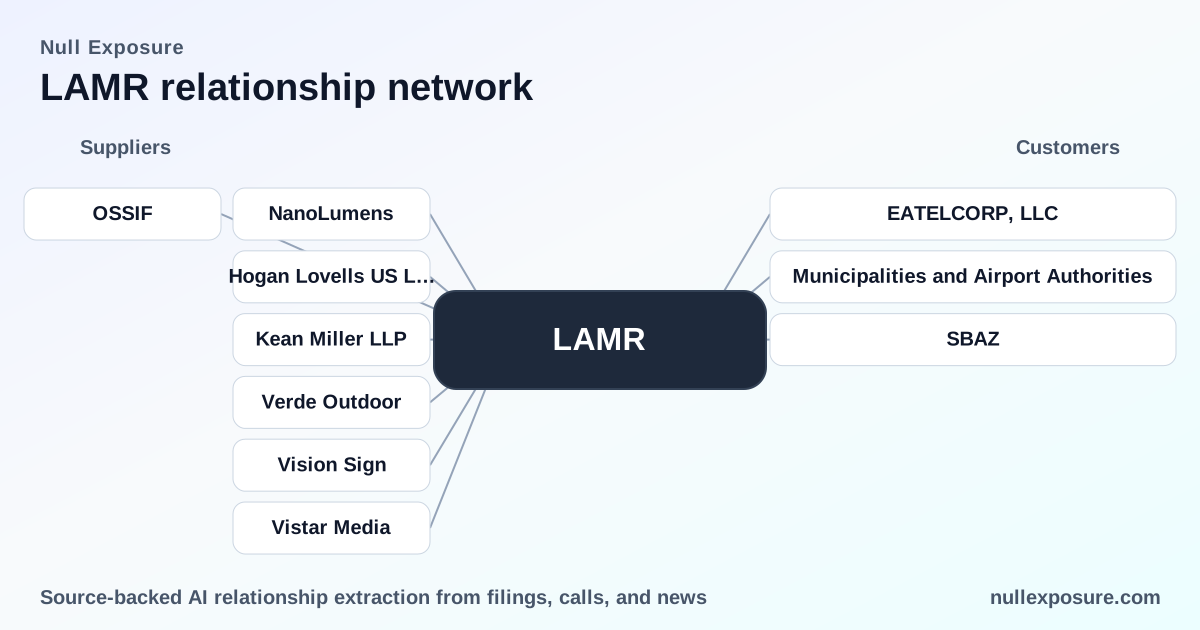
Lamar Advertising (LAMR) — supplier relationships and what they tell investors
Lamar Advertising monetizes large-scale out-of-home (OOH) real estate and media assets by leasing physical locations, deploying digital displays, and selling advertising inventory; revenue comes from long-term site leases and media sales, supplemented by selective acquisitions and technology investments to expand programmatic reach. For investors and operators evaluating Lamar as a counterparty or partner, the supplier relationships and contract characteristics point to a capital-intensive, long-duration operating model with modest counterparty concentration and targeted technology outsourcing.
Explore more supplier intelligence at https://nullexposure.com/ to map counterparties and contractual exposure.
What the supplier map says about Lamar’s operating posture
Lamar’s supplier profile blends infrastructure vendors, integration partners, legal advisors, and strategic technology stakes. Contracts skew long-term — company disclosures reference five- to ten-year arrangements and a weighted-average operating lease life of 12.2 years — which makes supplier continuity and installation vendors important to execution risk and rollout cadence. Transit and airport advertising arrangements are typically with municipalities or airport authorities, positioning Lamar as a tenant with regulated counterparties rather than purely commercial landlords.
These structural traits create a familiar finance profile: stable cash flow from long-dated leases, execution risk tied to integrators and digital platforms, and limited single-counterparty concentration on the landlord side. For counterparties, the business is transactional but recurring; for investors, the model emphasizes lease amortization, capex timing, and the scalability of programmatic channels.
Direct relationship summaries you need to know
Below are every supplier/partner referenced in recent coverage, with a one- to two-sentence plain-English summary and source note.
-
NanoLumens — Lamar replaced static advertising in Terminal 1 baggage claim with 60 Engage and Performance Series LED displays supplied by NanoLumens, indicating Lamar’s preference for LED vendors for airport digital conversions. Source: AVNetwork feature (FY2021).
-
Vision Sign — Local integrator Vision Sign managed the large-scale Las Vegas airport installation and selected NanoLumens hardware, serving as Lamar’s field integration partner on that project. Source: AVNetwork feature (FY2021).
-
OSSI (OSSIF) — OSSI designed and installed the software platform that operates Lamar’s new airport system, demonstrating Lamar’s use of specialized software integrators for system control and content management. Source: AVNetwork feature (FY2021).
-
Vistar Media — Lamar made a strategic investment in Vistar Media, the largest out-of-home programmatic sales platform, highlighting a push to monetize inventory via programmatic channels rather than only direct sales. Source: corporate announcement cited via QuiverQuant (FY2025).
-
Verde Outdoor — Lamar purchased assets from Verde Outdoor, expanding its portfolio through an acquisition that increases scale in key markets. Source: Yahoo Finance coverage of the transaction (FY2025).
-
Hogan Lovells US LLP — Hogan Lovells acted as a legal advisor to Lamar during the Verde Outdoor asset acquisition and related transactions, indicating reliance on national law firms for deal execution. Source: FinancialContent/SiliconValley.com article (FY2025).
-
Kean Miller LLP — Kean Miller also served as legal counsel to Lamar in the same asset acquisition, reflecting a mix of national and regional legal support for transaction and regulatory work. Source: FinancialContent/SiliconValley.com article (FY2025).
Constraints and what they imply for counterparties and investors
Lamar’s constraint signals present a consistent operating profile rather than fragmented exceptions:
-
Contracting posture: Long-term leases dominate. Company language identifies typical contract terms of five to ten years and a weighted-average remaining operating lease life of 12.2 years, implying capital commitments and predictable booking windows for advertising inventory.
-
Counterparty type: Government exposure in transit/airport channels. Transit and airport contracts are generally with municipalities and airport authorities, increasing the regulatory and public-sector dimension of those relationships.
-
Concentration: No single-lease concentration. Executive disclosures emphasize there is no significant concentration of displays under any one lease, signaling distributed landlord risk and lower single-counterparty landlord exposure.
-
Role: Supplier relationships function as service providers and contractors. Lamar’s model relies on third-party vendors for production, installation, site acquisition and digital platforms—contracting as the tenant/operator rather than infrastructure owner in some relationships.
-
Maturity and renewal rhythm: Ongoing renewals in signage contracts. The company reports a small number of logo sign contracts were subject to renewal or expiration in 2025, which demonstrates routine churn and renewal management rather than abrupt contract cliff risk.
These constraints tell investors that operational risk is front-loaded in capex and installation cycles, while recurring revenue is anchored by long-dated lease economics. Suppliers should be judged on execution capacity and compliance with long-term deployment schedules; investors should monitor capex pacing and the cadence of renewals for revenue continuity.
You can map these supplier signals into risk models and vendor scorecards at https://nullexposure.com/.
Where execution risk concentrates and what to monitor
Execution risk clusters in three places: the hardware and integrator layer (e.g., NanoLumens, Vision Sign), the software/controls layer (e.g., OSSI), and legal/transactional support during acquisitions (e.g., Hogan Lovells, Kean Miller). Programmatic distribution via Vistar Media changes revenue mix over time, requiring monitoring of ad-tech performance and fill rates.
Operationally focus on:
- Timeliness and quality of large-scale installs (airport rollouts are capital- and timing-sensitive).
- Software stability and content management (platform outages materially affect revenue days).
- Contract renewals with municipalities and airports (public-sector counterparties can impose non-economic constraints).
Final investment takeaways and next steps
Lamar’s supplier relationships underscore a capitalized, long-duration media business that balances physical infrastructure with selective tech investments. Hardware and integrators are critical to near-term execution; legal advisors support M&A and portfolio expansion. For investors and operators, the priority is assessing vendor reliability during capex cycles, monitoring programmatic monetization through partners like Vistar Media, and tracking renewal patterns with public-sector counterparties.
For a deeper supplier risk map and tailored counterparty assessments, visit https://nullexposure.com/ — use the supplier profile for LAMR to benchmark vendors, simulate lease renewal impact, and prioritize vendor due diligence.
Contact the team through the site to convert these signals into actionable vendor scorecards and scenario stress tests.