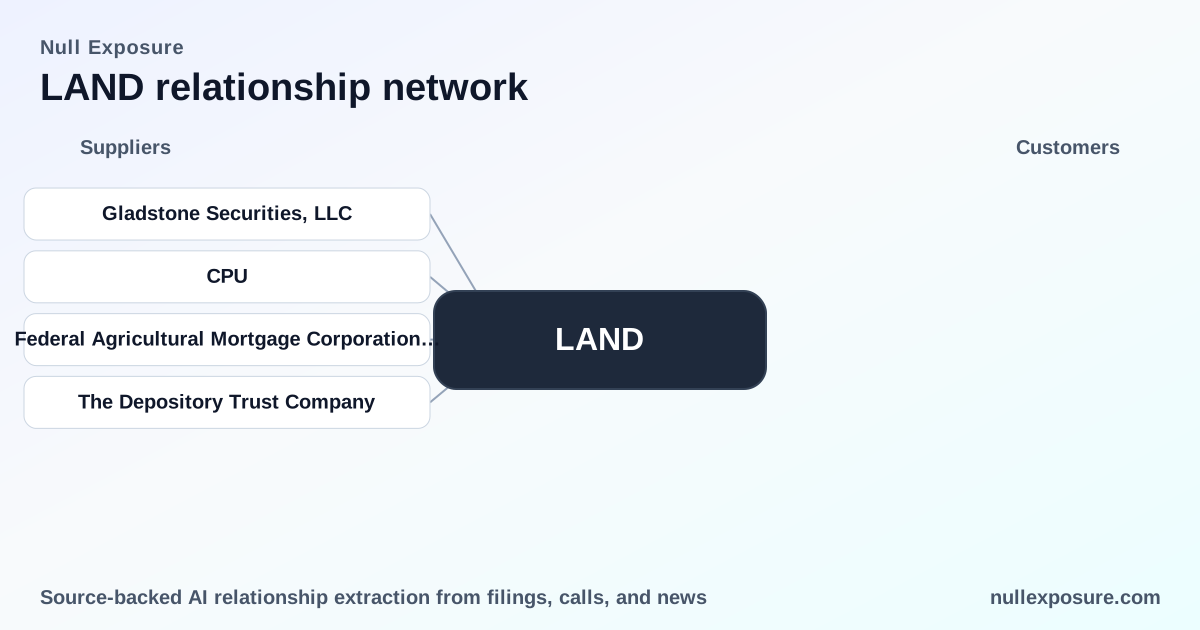
Gladstone Land (LAND) — supplier relationships, what they mean for investors
Gladstone Land operates as an owner and operator of agricultural real estate and funds operations primarily through third‑party capital markets activity and outsourced administration. The company acquires farmland, finances properties with a mix of debt and equity instruments, and monetizes through lease income, selective dispositions, and capital markets transactions that are executed with dealer managers and transfer agents. For investors, the critical axis to monitor is counterparty execution — dealer managers, transfer agents, and structured agricultural lenders are central to capital and redemption mechanics. Learn more about supplier risk analysis at https://nullexposure.com/.
Who does the heavy lifting: the supplier roster and what each relationship does
Gladstone Securities, LLC — dealer manager on offerings
Gladstone Securities is acting as dealer manager for an offering referenced in March 2026 communications, which places it at the point of sale for securities issuance and distribution activities. That role directly affects LAND’s ability to access retail and institutional capital, and its effectiveness will influence placement success and issuance costs. Source: Yahoo Finance press release, March 10, 2026.
Computershare — redemption agent and payment processor for preferred shares
Computershare is appointed as the redemption agent for the Company’s Series D preferred stock and is responsible for payments to DTC in connection with that redemption process. Using a global transfer agent like Computershare standardizes redemption mechanics and reduces operational friction for large-scale redemptions, but it also centralizes a settlement dependency. Source: Gadsden Times press release / TradingView summary, March 10, 2026.
The Depository Trust Company (DTC) — book‑entry custody and settlement conduit
The Series D preferred shares are held in book‑entry form at DTC and will be redeemed in accordance with DTC procedures, which means redemptions and transfers flow through the standard U.S. securities settlement infrastructure. DTC custody is the backbone of tradability and liquidity for LAND’s listed preferred equity; any operational risk at the agent/custodian layer directly impacts investor access and timing. Source: Gadsden Times press release, March 10, 2026.
Federal Agricultural Mortgage Corporation (Farmer Mac) — structured lending partner
Historically, Gladstone Land has used a Farmer Mac facility to issue bond financing (for example, a $10.2 million issuance under a larger $75 million facility referenced in 2015). This relationship demonstrates access to specialized agricultural mortgage financing that supports property acquisitions and diversification of funding sources beyond public equity. Source: AgFunderNews report on a 2015 Salinas farm purchase (FY2015).
What these supplier relationships reveal about LAND’s operating model
- Outsourced operating posture. Gladstone Land uses third‑party advisory, administrative, and capital markets partners rather than building a vertically integrated in‑house distribution and back‑office stack; its Adviser and Administrator employ personnel and manage day‑to‑day operations. This structure lowers fixed overhead but increases reliance on external suppliers for execution and compliance.
- Capital markets–centric monetization. Dealer managers and transfer agents are central to how LAND issues and redeems securities; financing cadence and liquidity profiles are therefore sensitive to counterparty execution quality and market access.
- Access to specialized agricultural finance. Use of Farmer Mac facilities indicates a deliberate strategy to pair property acquisitions with agriculture‑specific lending, improving funding diversity and matching collateral to lender expertise.
- Global service provision signal. Corporate materials reference engagement with an international information‑technology service provider to manage IT and cybersecurity risks; this is a company‑level signal that IT operations and threat monitoring are handled through external providers rather than fully internally staffed teams.
Together these characteristics imply a contracting posture that is outsourced and platform‑driven, with key suppliers being moderately concentrated (dealer manager, transfer agent, DTC) and operationally critical to capital activities and investor liquidity.
(Explore supplier profiles and monitoring tools at https://nullexposure.com/.)
Investor implications — risks and areas to monitor
- Counterparty and operational concentration. Reliance on a small set of capital‑markets and settlement partners (dealer manager, Computershare, DTC) concentrates operational risk; monitor service agreements, historical performance on redemptions/issuances, and whether backup agents or contingency plans exist.
- Liquidity and execution risk tied to transfer mechanics. Redemptions processed through Computershare and DTC follow standard procedures, but any delay or misalignment between registrar, agent, and custodian timelines can affect cash flows and investor receipts.
- Funding mix resilience. The presence of Farmer Mac financing is a positive signal for agricultural underwriting expertise and access to non‑bank liquidity, which mitigates some reliance on public equity issuance — however, the scale and current utilization of that facility should be tracked in filings for a current picture.
- Third‑party IT/cyber supervision. The company’s decision to use an international ISP for IT and cybersecurity monitoring is a company‑level signal that operational resilience depends on supplier security posture; investors should watch disclosures about incidents, business continuity, and vendor oversight.
Quick, actionable checklist for operator diligence
- Confirm the current dealer manager arrangements and any exclusivity or termination terms in the latest filings.
- Verify Computershare’s scope (redemption agent, registrar, payment processor) and any service level commitments referenced in corporate releases.
- Review recent financing activity related to Farmer Mac or similar specialized lenders to understand leverage and covenants.
- Look for vendor due‑diligence disclosures on IT and cybersecurity oversight tied to the international ISP arrangement.
Bottom line and next steps for investors
Gladstone Land’s supplier map centers on capital market intermediaries and specialized agricultural lenders; these relationships are business‑critical and materially influence liquidity, issuance costs, and operational risk. Investors should prioritize monitoring dealer manager performance, transfer agent execution, and the status of structured lending arrangements in quarterly filings and press releases. For a deeper supplier risk assessment and ongoing monitoring tools, visit https://nullexposure.com/.
If you want a vendor‑level monitoring briefing or an investor memo tailored to a specific financing scenario, start here: https://nullexposure.com/.