LBPH supplier relationships: what investors need to know now
LBPH operates as an asset-centric bio/pharma supplier that acquires or licenses therapeutic candidates and crystallizes value through development milestones, licensing revenue, and strategic exits. The company monetizes by sourcing external programs—capturing upfront payments, milestone receipts, and downstream royalties or sale proceeds—while outsourcing parts of development and commercialization to partners. For investors, the primary lever is portfolio quality and counterparty execution rather than manufacturing scale. Learn more at https://nullexposure.com/.
One clear supplier relationship — why it matters
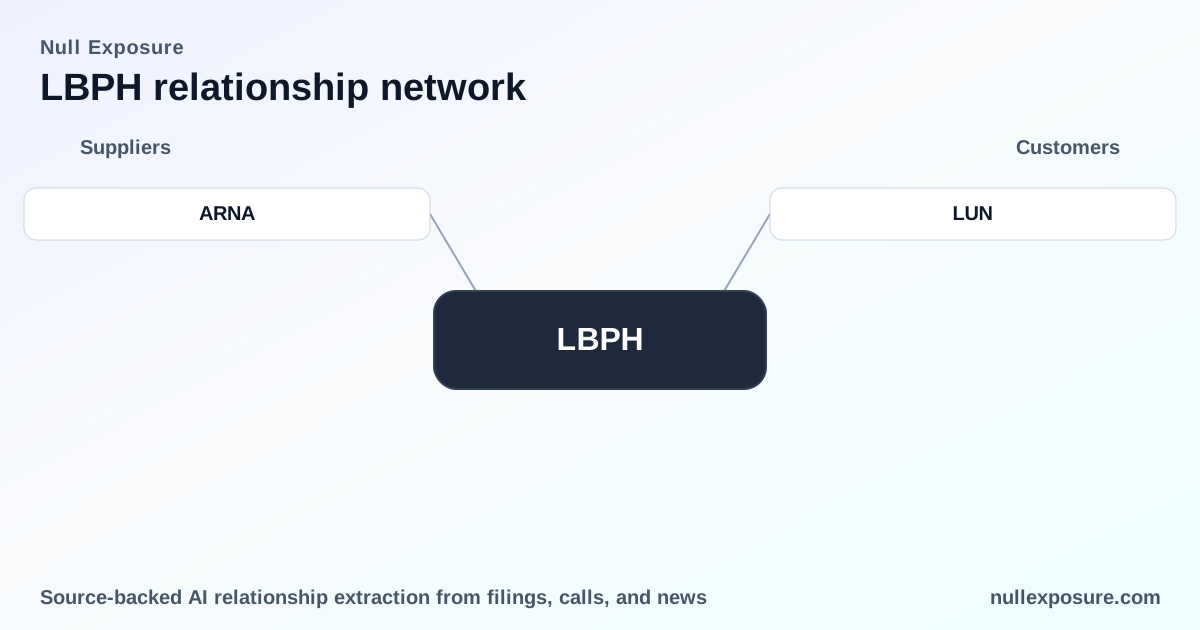
The public extract shows a single disclosed supplier/licensor relationship: Arena Pharmaceuticals. According to a MedCityNews article in October 2024, both bexicaserin and LP659 were licensed from Arena Pharmaceuticals, tying LBPH’s pipeline directly to Arena-originated assets (MedCityNews, Oct 2024 — https://medcitynews.com/2024/10/lundbeck-longboard-acquisition-epilepsy-seizure-bexicaserin-dravet-lennox-gastaut/). This makes Arena a strategically important counterparty for the specific epilepsy-related assets referenced.
- Arena Pharmaceuticals (ARNA): Arena is the licensor of bexicaserin and LP659, two therapeutic candidates referenced in LBPH-related coverage; the licensing relationship supplies LBPH with program-level intellectual property and development rights. According to MedCityNews (Oct 2024), both compounds were licensed from Arena and form part of the assets discussed in the Lundbeck/Longboard transaction coverage (https://medcitynews.com/2024/10/lundbeck-longboard-acquisition-epilepsy-seizure-bexicaserin-dravet-lennox-gastaut/).
What the relationship set says about LBPH’s operating model
The supplier footprint—visible through the single disclosed licensor—reveals several company-level operating and business-model characteristics:
-
Contracting posture: asset licensing over vertical integration. The relationship with Arena demonstrates LBPH sources innovation via licensing rather than building discovery capabilities in-house. That posture implies reliance on negotiated legal terms (upfronts, milestones, royalties) and counterparty diligence as the primary operational control points.
-
Supplier concentration: focused and relationship-driven. Publicly visible supplier relationships are concentrated, with Arena the identifiable licensor in the extract. Concentration increases counterparty risk but simplifies governance and operational coordination when counterparties execute.
-
Criticality of the supplier to value creation. Licensed assets are likely core value drivers for specific indications; thus the licensor relationship is strategically critical to pipeline progress and valuation realization.
-
Maturity and predictability: partnership-stage dynamics. Licensing suggests program-level maturity that is sufficient to justify commercial/clinical transfer. The business model leans on contract terms, regulatory milestones, and partner execution rather than commodity supply chains.
No supplier-specific constraints were reported in the available relationship extract; as a company-level signal, this indicates limited public supplier-side restrictions captured in the snapshot and underscores that disclosed partner relationships are governed chiefly by licensing agreements rather than by supply chain constraints.
Investment implications and risk agenda
-
Concentration risk is material. With Arena the visible licensor for named assets, LBPH’s near-term upside on these programs is tied to the licensor’s IP and the commercial terms of those licenses. Investors should price in counterparty execution risk and the potential for renegotiation dynamics.
-
Event-driven value capture. LBPH’s returns are driven by discrete license milestones, clinical readouts, and M&A events. This structure creates step-function valuation moves tied to partner deliverables and clinical progress.
-
Due diligence focus shifts to legal and clinical milestones. Traditional manufacturing or distribution risk is secondary; investors must focus on the licensing contract economics (upfronts, earnouts, royalties) and clinical timelines tied to the licensed assets.
-
Operational leverage is limited but strategic. Because LBPH sources programs externally, scalability depends on access to attractive licensors and favorable contract terms rather than capital-intensive scale-up.
A practical next step for investors: review the licensing agreement terms and recent clinical disclosures connected to bexicaserin and LP659, and stress-test upside against downside scenarios tied to milestone realization. For a centralized view of supplier disclosures and licensing relationships, visit https://nullexposure.com/.
How operators should act on this supplier map
Operators should treat Arena as a strategic partner for the licensed epilepsy candidates:
- Negotiate clear milestone payment schedules and robust IP warranties to protect LBPH’s downside if development stalls.
- Build governance processes for joint development activities, including data transfer, regulatory filings, and commercialization handoffs.
- Maintain contingency plans for alternative development pathways or third-party partnerships if progress on the licensed programs is delayed.
Operational discipline in contract execution will determine whether licensed assets convert into scalable revenue streams or remain stranded value.
Quick checklist for investors and partners
- Confirm the commercial and royalty terms embedded in the Arena licenses for bexicaserin and LP659.
- Map clinical milestones and regulatory timelines to cash-flow triggers in valuation models.
- Monitor partner execution and public disclosures for event-driven re-rating opportunities.
For ongoing monitoring of supplier relationships and licensing activity, see https://nullexposure.com/ for aggregated supplier intelligence and transaction summaries.
Bottom line and recommended actions
LBPH’s disclosed supplier landscape is compact and license-driven, with Arena Pharmaceuticals standing out as the primary licensor for named assets. That structure concentrates both upside and counterparty risk into a small number of program-level relationships, so investor returns will be driven by milestone execution, contract economics, and successful clinical progress. Operators must prioritize airtight licensing agreements and active program governance to protect value.
To explore deeper supplier intelligence and comparative supplier analytics, visit https://nullexposure.com/ and review the supplier profiles and relationship histories.