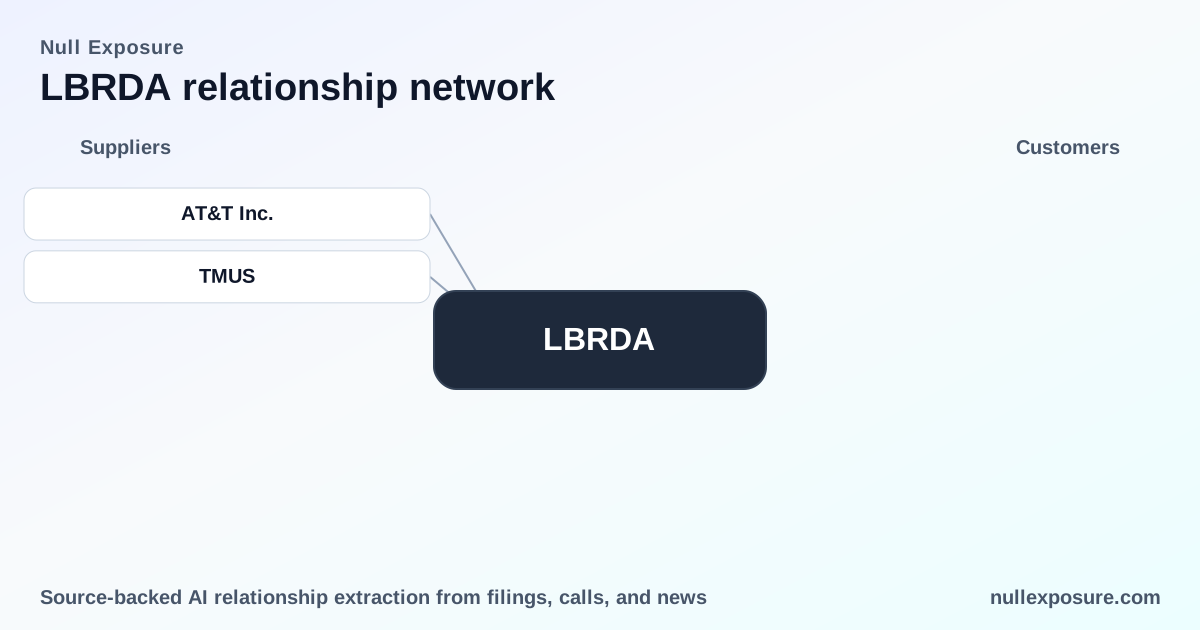
Liberty Broadband (LBRDA) — supplier relationships and what they signal for investors
Liberty Broadband operates as a U.S. cable operator providing video, Internet and voice services to residential and small-to-medium business customers and monetizes through subscription revenue, service add‑ons and capital deployment across its communications assets. The company shows meaningful scale with a trailing twelve‑month revenue of roughly $1.016 billion and EBITDA of $171 million, while its capital structure and financing arrangements drive a substantial portion of counterparty exposure and operational flexibility. For investors and operators evaluating supplier and counterparty risk, the 2025 Form 10‑K highlights competitive relationships and financing commitments that materially shape Liberty Broadband’s operating posture. Learn more about supplier intelligence on the Null Exposure homepage: https://nullexposure.com/
The short read: what the filing actually discloses about external parties
Liberty Broadband’s FY2025 10‑K does not surface large supplier contracts as primary disclosures; instead, the filing references national telecom carriers in the competitive landscape and documents material financing arrangements that create high‑value counterparty exposure. The public disclosures emphasize competition from AT&T, Verizon and T‑Mobile in both fiber and mobile services, while the company’s financing arrangements — notably a $790 million Margin Loan Agreement and debentures — define the near‑term contractual runway and liquidity profile. According to Liberty Broadband’s FY2025 10‑K, these are the relationships and the specific excerpts that the company itself recorded.
Relationship breakdown (every relationship in the 10‑K results)
AT&T Inc.
Liberty Broadband’s 2025 filing identifies AT&T as one of Charter’s primary FTTH competitors, situating AT&T as a top competitive counterparty in fiber-to-the-home markets. According to Liberty Broadband’s FY2025 Form 10‑K (file lbrda-2025-12-31), the company lists AT&T alongside Verizon as primary competitors to Charter’s FTTH initiatives.
T‑Mobile (TMUS)
The 10‑K notes that Charter’s mobile service competes with national mobile network operators, including T‑Mobile, and a variety of regional operators and mobile virtual network operators. Liberty Broadband’s FY2025 Form 10‑K (file lbrda-2025-12-31) specifically references T‑Mobile in the competitive set for Charter’s mobile offerings.
What these relationship mentions mean for supplier and counterparty risk
The two corporate names surfaced in the 10‑K are framed as competitors, not suppliers. That distinction is critical for investors: competitive pressure from AT&T and T‑Mobile increases go‑to‑market and pricing risk for Liberty’s broadband and mobile-related activities, but it does not, in the filing, translate to supplier concentration or single‑source vendor risk.
At the same time, the filing surfaces material financing relationships that function as supplier‑like counterparties because they control capital availability and covenant schedules. The company reports outstanding borrowings of $790 million under a Margin Loan Agreement and discloses treatment of a 3.125% debenture due 2053 as current based on exchange/put mechanics. These financing items are the dominant, high‑dollar contractual relationships in the filing and therefore represent the largest counterparty exposure by spend and criticality.
How to think about contracting posture, maturity and concentration
- Contracting posture: Liberty Broadband’s disclosures show a mix of long‑term and short‑term contractual obligations. The Margin Loan Agreement has a stated maturity in June 2027 and is treated as an active borrowing facility; the debentures include exchange/put provisions that create current classification under the balance sheet as of December 31, 2025. These features signal active liquidity management and negotiated financing terms rather than short, transactional supplier purchasing.
- Maturity and criticality: The presence of a large margin loan and current classification of a long‑dated debenture indicate near‑term cash and refinancing priorities; financing counterparties therefore carry higher criticality to operations than the competitive vendors named in the competitive landscape.
- Concentration: The filing does not enumerate large operating suppliers; the primary concentration risk highlighted is financial counterparties represented by the Margin Loan Agreement and debenture holders, not software or network vendors.
Constraints disclosed in the filing and investor implications
Liberty Broadband’s FY2025 filing includes explicit contract/evidence excerpts that inform supplier and counterparty analysis:
- Long‑term financing maturity: the Margin Loan Agreement has a maturity date of June 30, 2027, which anchors near‑term refinancing risk and shows the company is operating with multi‑year financing commitments. (From the company’s FY2025 10‑K.)
- Short‑term classification of long‑dated paper: holders of the 3.125% Debentures due 2053 have exchange/put windows that produce a current classification of that debenture on the December 31, 2025 balance sheet. (From the company’s FY2025 10‑K.)
- Active relationship status and dollar scale: the filing reports outstanding borrowings of $790 million under the Margin Loan Agreement as of both December 31, 2025 and 2024, which establishes an active, high‑value liability and counterparty exposure.
These constraints translate into practical signals: liberal use of secured financing, material short‑term cash commitments, and a need to prioritize creditor relations and refinancing pathways alongside operational execution.
Investment implications and risk checklist
- Competitive risk is real and explicit. The naming of AT&T and T‑Mobile in the 10‑K confirms that Liberty Broadband (through Charter references) competes directly with national carriers on FTTH and mobile services, pressuring customer acquisition and ARPU dynamics.
- Financing risk is the dominant counterparty exposure. The $790 million outstanding under the Margin Loan Agreement and the current treatment of long‑dated debentures make capital markets and refinancing events primary risk vectors for equity holders.
- Operational supplier concentration is not documented. The 10‑K does not disclose single‑vendor operational dependencies in the results provided, so supplier management for network vendors would require deeper diligence beyond the public filing.
If you want a structured supplier and counterparty diligence package for LBRDA or to compare these relationships across peers, start here: https://nullexposure.com/
Final read: what investors and operators should do next
Focus diligence on liquidity timelines, covenant language and the refinancing calendar tied to the June 2027 maturity and the debenture exchange/put windows. Monitor competitive actions from AT&T and T‑Mobile that affect fiber and mobile uptake, while prioritizing scenarios where financing counterparties constrain investment or growth. For tailored exposure mapping and ongoing alerts on supplier and financing counterparties, visit our home hub: https://nullexposure.com/
Bold takeaway: Liberty Broadband’s FY2025 disclosures emphasize competitive pressure from national carriers and significant financing counterparty exposure — financing, not operating supplier concentration, is the primary contractual risk disclosed.