L Catterton Asia Acquisition Corp (LCAA): supplier map and what it means for investors
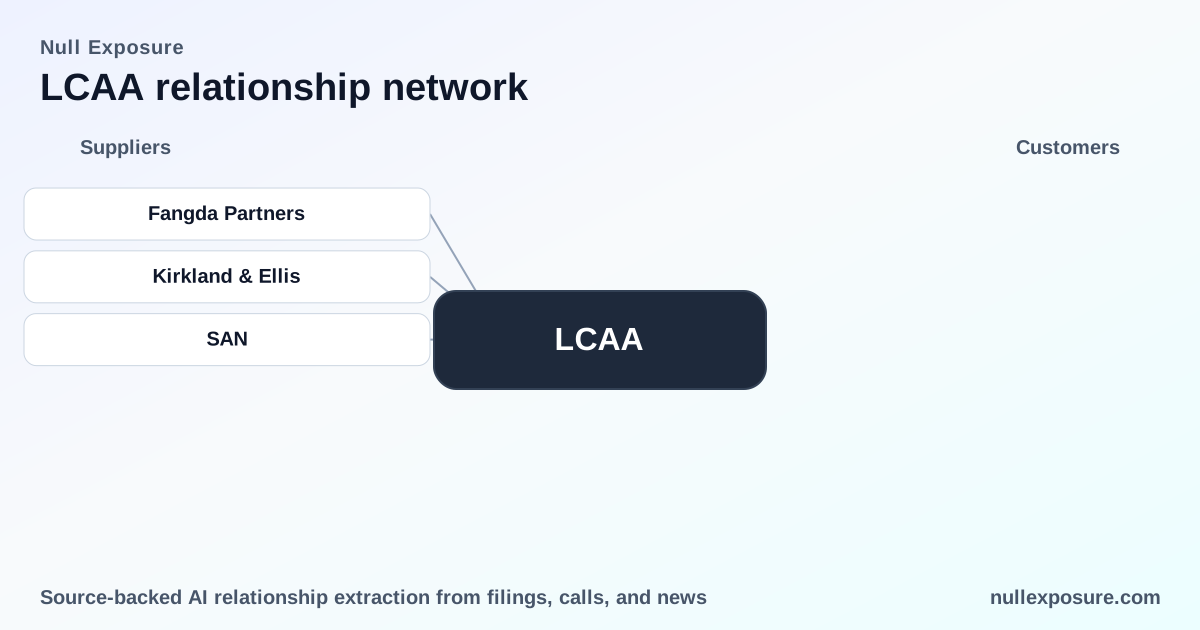
L Catterton Asia Acquisition Corp (LCAA) operates as a special purpose acquisition vehicle that monetizes by executing a business combination that transfers private company equity into the public market while capturing sponsor economics and enabling PIPE and equity capital raises at deal close. The company’s supplier relationships are event-driven and focused on capital markets execution, cross‑border legal work, and local counsel in China — three functions that determine whether a transaction clears regulatory, underwriting, and investor scrutiny. For investors evaluating exposure to LCAA, the composition and quality of these suppliers materially influence deal execution risk and timing. See more on portfolio-level supplier intelligence at https://nullexposure.com/.
The advisers and counsel named on the Lotus Tech combination
Three external providers are named in coverage of LCAA’s announced combination with Lotus Tech. Their roles are discrete and concentrated around deal execution.
Santander US Capital Markets LLC — equity capital markets and financial advisor
Santander US Capital Markets LLC acted as equity capital markets advisor and financial advisor to LCAA for the Lotus Tech transaction, indicating the bank is leading the market-facing capital raise and valuation underwriting work. This role places Santander at the center of pricing, investor roadshows, and PIPE placement execution. (CityBiz report on the Lotus Tech / L Catterton Asia Acquisition Corp combination, reported March 10, 2026; FY2024 excerpt.)
Kirkland & Ellis — international legal counsel
Kirkland & Ellis served as international legal counsel to LCAA, supplying cross-border transaction structuring, securities documentation, and regulatory compliance oversight needed for a US-listed SPAC to consummate a business combination. The firm’s involvement signals use of a top-tier global law practice for negotiating the merger agreement and preparing SEC disclosures. (CityBiz report on the Lotus Tech / L Catterton Asia Acquisition Corp combination, reported March 10, 2026; FY2024 excerpt.)
Fangda Partners — PRC counsel
Fangda Partners was retained as PRC counsel, responsible for on-the-ground regulatory navigation, corporate governance review in China, and local filings or legal opinions required for the target’s cross-border listing path. Local counsel in China is a gating item for transactions involving onshore operations or shareholders. (CityBiz report on the Lotus Tech / L Catterton Asia Acquisition Corp combination, reported March 10, 2026; FY2024 excerpt.)
Why these relationships matter for prospective and current investors
These three supplier choices reveal the transaction priorities and risk posture LCAA adopts as it executes a cross-border business combination.
- Deal execution is bank-led and market-facing. Retaining Santander for capital markets advisory places pricing and distribution risk with an external financial institution rather than internal sponsor resources. That reduces execution friction but creates counterparty exposure to underwriting appetite.
- Legal risk is routed to global and local specialists. Engaging Kirkland & Ellis and Fangda Partners signals a defensive approach to legal and regulatory risk: international counsel handles US securities and transaction structure while PRC counsel manages local compliance and approvals.
- Supplier relationships are event-driven and concentrated. All three engagements are transaction-specific rather than indicative of broad, ongoing vendor ecosystems; that makes LCAA’s operational resilience heavily dependent on the timing and effectiveness of these advisers around the closing window.
These inferences are company-level signals driven by the roles the suppliers perform in the announced combination. For investors who want a broader supplier-risk view across deal flow, visit https://nullexposure.com/.
Operating model constraints and what to watch (company-level signals)
No formal constraints were provided in the sourced material, so treat the following as structural observations about LCAA’s operating model rather than relationship-level covenants.
- Contracting posture: engagements are transactional and finite, executed to support a specific merger close rather than ongoing platform service contracts. That posture compresses execution timelines and concentrates risk in short windows.
- Concentration: supplier roster is small and high‑quality; concentration lowers coordination costs but increases single‑point-of-failure exposure if a key adviser withdraws or underperforms.
- Criticality: the named suppliers are highly critical — capital markets counsel, international securities counsel, and PRC counsel are minimal but essential inputs for cross‑border SPAC deals.
- Maturity: relationships reflect mature, market-standard hires used by many listed acquisition vehicles; they are not indicative of long-term vendor integrations or dependency on bespoke technology or services.
These constraints imply LCAA’s operational success on this transaction will hinge on the advisers delivering within a narrow execution window, and on regulatory acceptance in both US and Chinese jurisdictions.
Key risks and controls investors should monitor
- Regulatory approval in China: Fangda Partners’ role makes PRC regulatory feedback a live event risk that can delay or modify transaction terms.
- Market and placement risk: Santander’s underwriting exposure ties outcome to investor demand and pricing execution; watch PIPE terms, anchor investor commitments, and any backstop arrangements.
- Document risk: Kirkland & Ellis will produce the definitive proxy and merger documentation; any adjustments to disclosures or disclosures of material liabilities trigger re‑pricing risk.
- Sponsor alignment: SPAC economics are deal-dependent; monitor sponsor rollover, earn‑outs, and any sponsor-led renegotiations that can dilute public investor returns.
Practical next steps for investors evaluating LCAA exposure
- Pull the transaction filing and investor presentation in the SEC filings and scrutinize the financing structure, PIPE investors, and sponsor rollover provisions.
- Track PRC regulatory updates and public statements from Fangda Partners or the target on approvals and shareholder consents.
- Monitor market signals around the capital raise led by Santander, including bookbuild progress and any anchor investor announcements.
If you want a consolidated view of suppliers and how they affect deal outcomes, explore our analysis tools at https://nullexposure.com/.
Bottom line and call to action
LCAA’s supplier roster for the Lotus Tech combination is narrowly focused on capital markets execution and cross‑border legal risk control. That configuration reduces execution friction when advisers perform, but it concentrates critical risk in a small set of counterparties and in the PRC regulatory pathway. Investors should prioritize monitoring of legal disclosures, PIPE commitments, and PRC approval timing as the transaction progresses.
For a deeper supplier-risk profile and ongoing updates on LCAA’s counterparties, visit https://nullexposure.com/ and subscribe for alerts.