LDI: Supplier Relationships, Contract Signals, and What Investors Should Price In
LDI monetizes by originating and financing consumer mortgage assets using short-dated warehouse and securitization facilities, capturing fees from loan origination and servicing and funding spread between cost of capital and loan yields. The company finances originations with a network of revolving credit lines and periodic securitizations, and its supplier footprint reflects that high-volume funding posture. Investors should treat LDI as a capital-intensive originator whose operating continuity depends on renewal-prone, short-term credit lines and a small number of large funding relationships. For direct updates on supplier exposure and relationship monitoring, visit https://nullexposure.com/.
Why supplier relationships matter for LDI’s valuation
LDI’s business model is funding-dependent: it relies on warehouse and securitization facilities to convert loan production into fee and spread income. That structure drives three investment implications that are visible in the public record:
- Contracting posture is short-term and renewal-heavy. The company’s core facilities come with finite maturities and annual credit reviews, so funding is continually re-priced and re-negotiated.
- Counterparty concentration is material. Aggregate facility size implies single-provider or small-group exposure can be economically significant to quarterly operations.
- Operational criticality is high. Loss, non-renewal, or adverse repricing of these facilities would immediately constrain originations and revenue capture.
These are not abstract risks: LDI reported nine revolving lines and one securitization facility that together provided $3.7 billion of capacity as of December 31, 2024, and several lines mature through 2026. That combination is a clear signal of both funding scale and short contract duration. For ongoing monitoring of supplier exposure and to see how relationships evolve, see https://nullexposure.com/.
What the public record says about supplier relationships
Below I cover every relationship identified in the available results and explain what each connection implies for investors evaluating counterparties and operational resilience.
Angeion Group — settlement administration for loanDepot breach litigation
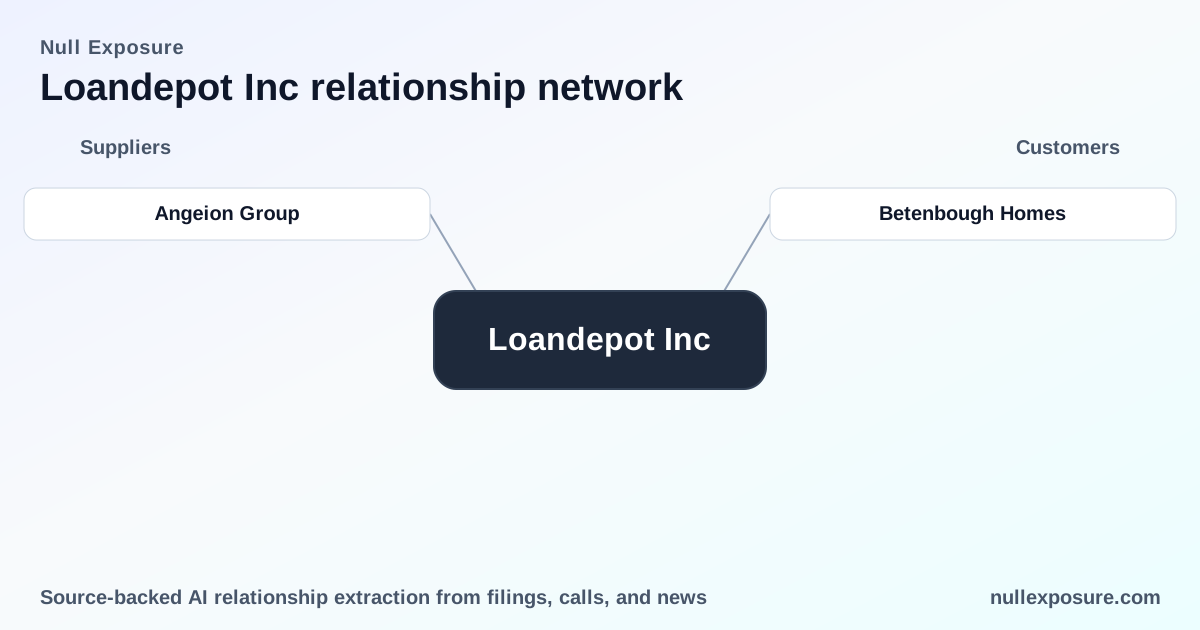
Angeion Group is listed as the Settlement Administrator for the loanDepot data-breach litigation, indicating LDI’s involvement in a class-action settlement process where a third-party administrator handles claims distribution and outreach. According to the claims website posting in FY2024, Angeion was named to manage the In re loanDepot Data Breach Litigation settlement administration (document posted March 2026). This relationship is administrative rather than funding-related but signals litigation and remediation costs that can affect cash flows and reputational capital. (Source: ClaimDepot posting on the loanDepot settlement, March 2026.)
Constraints and what they say about the operating model
The public constraints extracted from company disclosures provide actionable, company-level signals for investors and risk officers. These signals are not tied to any specific supplier by name unless explicitly stated; they summarize contractual posture and spend scale across LDI’s supplier and counterparty base.
- Short-term contract type with renewal mechanics. Company filings note nine revolving lines and one securitization facility with maturities stretching to 2026 and annual credit reviews that govern renewal. This is a short-term contracting profile that requires active counterparty management and continuous liquidity access. Evidence: disclosure of nine revolving lines and a two-year securitization facility scheduled to expire in 2026 (December 31, 2024 filing language).
- Large spend band — at least $100 million. The aggregate $3.7 billion of warehouse and securitization facilities places LDI firmly in the >$100 million spend category for funding relationships, implying material counterparty exposure for each major lender. Evidence: explicit statement of $3.7 billion aggregate facilities as of December 31, 2024.
Taken together, these constraints create a characteristic operating profile: highly capital-dependent, concentrated counterparty risk, and persistent refinancing exposure. Investors should price in funding volatility and monitor covenant triggers and renewal negotiations as leading indicators of operational stress.
Risk anatomy for investors and operators
LDI’s supplier picture highlights three actionable risk areas for portfolio managers and operators:
- Refinancing and renewal risk. With lines that require annual credit reviews and several maturities in 2026, funding cost and availability can swing quickly. Active hedging of liquidity and contingency plans for alternate warehouse providers are essential.
- Legal and remediation expense flow. Administrative relationships such as the Angeion settlement assignment are a visible conduit for litigation-related cash flows and reputation management. Settlement administration contracts themselves are low-margin but indicate material underlying liabilities.
- Concentration of counterparty exposure. Aggregate facility size implies a small number of lenders can influence pricing and access; diversification of funding sources reduces single-point failure risk.
Each of these should be incorporated into scenario analyses and stress tests when valuing LDI or when negotiating credit terms with the firm.
How operators should respond, and how investors should monitor
Operators at LDI should accelerate supplier governance practices around funding counterparties — specifically, secure staggered maturities, build committed backup facilities, and document liquidity triggers. Investors should prioritize these monitoring actions:
- Track facilities’ maturity schedule and covenant language at quarterly filings.
- Monitor settlement and litigation postings for new administrative relationships that imply cash outflows.
- Watch counterparty concentration metrics and seek disclosures on top lenders and their exposures.
If you want detailed, ongoing supplier exposure intelligence and automated alerts for changes in counterparties or constraint signals, start monitoring with NullExposure at https://nullexposure.com/.
Bottom line: price in funding fragility and legal externalities
LDI’s supplier footprint, as evidenced by public filings and the settlement administration record, paints a clear picture: large-scale funding needs executed through short-duration facilities and periodic securitizations, coupled with litigation-related administrative relationships that generate non-operating cash demands. For investors, the valuation hinge is not hypothetical product demand but the continuity and cost of the funding stack and the pace at which legal obligations convert into cash settlements.
For subscription access to continuous supplier monitoring and alerts tailored to relationship, maturity, and spend-bands, visit https://nullexposure.com/.
Key takeaway: treat LDI as a funding-governed originator—manage exposure through active counterparty monitoring, scenario-based liquidity planning, and careful attention to litigation-related obligations.