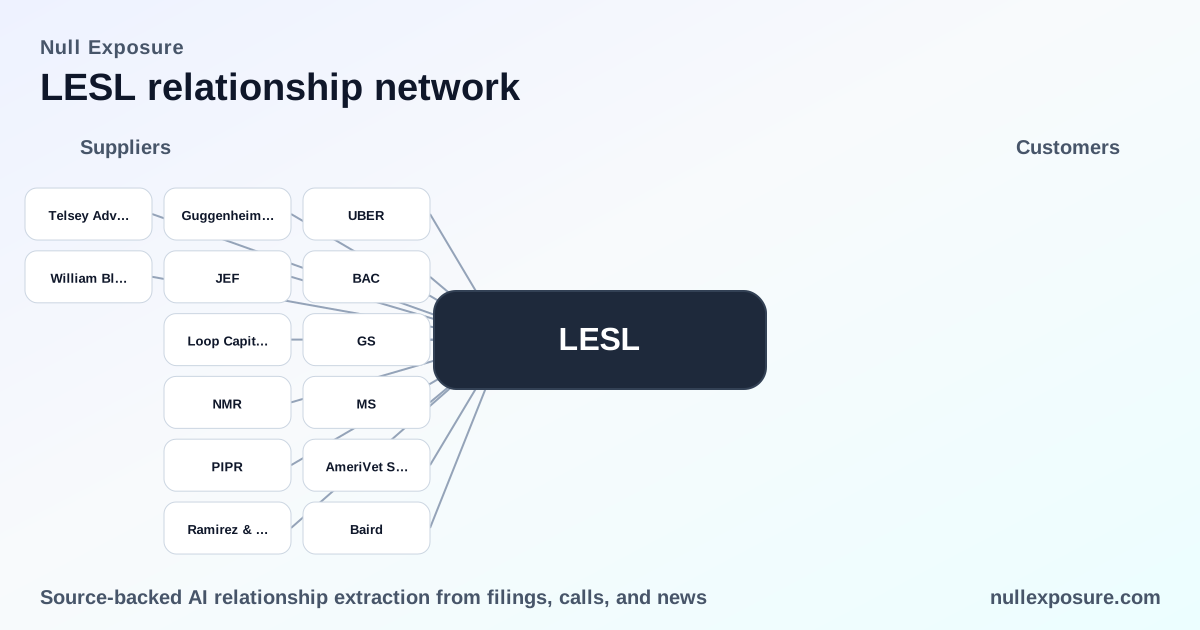
Leslie’s (LESL) — Supplier relationships and what they mean for investors
Leslie’s operates a direct-to-consumer spa and pool care retail platform in the U.S., monetizing through merchandise sales, consumables and service—with inventory bought from large chemical and equipment suppliers and sold through stores, e‑commerce and same‑day fulfillment. The company’s economics are driven by seasonal inventory purchasing, vendor rebate flows and delivery/fulfillment partnerships that shift service economics away from brick‑and‑mortar labor toward third‑party logistics. For active investors evaluating counterparty risk and procurement strategy, the supplier picture is the first-order input to margin recovery and working capital dynamics. Visit the firm’s profile for more context: https://nullexposure.com/.
The concise operating thesis for procurement-driven outcomes
Leslie’s purchases commodity chemicals and branded pool products in concentrated bursts (December–March) and finances that inventory through negotiated payment terms. That seasonal cadence, plus a vendor base that includes very large suppliers and brokered underwriting relationships, creates both leverage (volume discounts and rebates) and vulnerability (single‑supplier concentration and rebate-control risk).
- Key takeaway: inventory procurement and vendor rebate governance are central to near‑term profitability and the company’s ability to execute its transformation plan.
Learn more about supplier coverage and counterparty intelligence at https://nullexposure.com/.
Who Leslie’s is working with — relationship-by-relationship review
The following covers every relationship referenced in the available reporting. Each line is a plain-English synopsis with a short source note.
Uber
Leslie’s has expanded same‑day delivery through a partnership with ridesharing firm Uber to improve customer convenience and reduce fulfillment friction. This represents a strategic shift to outsourced last‑mile logistics for faster delivery windows (FY2026 reporting). Source: Pool & Spa News and investor call excerpts reported in FY2026 (poolspanews.com; insidermonkey.com; finviz.com).
BofA Securities (Bank of America)
BofA Securities served as one of the lead underwriters on Leslie’s capital markets transactions as the company prepared its market offering, positioning it as a primary capital markets advisor during the FY2025–FY2026 offering process. Source: PE‑Insights (FY2025) and Pool Magazine press release (FY2026) (pe-insights.com; poolmagazine.com).
Goldman Sachs / Goldman Sachs & Co. LLC
Goldman Sachs acted as a joint lead book‑running manager on Leslie’s public offering, reflecting placement of underwriting leverage with a bulge‑bracket firm in the FY2025–FY2026 raises. Source: PE‑Insights (FY2025) and Pool Magazine (FY2026) (pe-insights.com; poolmagazine.com).
Morgan Stanley / Morgan Stanley & Co. LLC
Morgan Stanley was named as a joint lead manager alongside other global banks for Leslie’s offering, indicating coordinated financing and distribution support for the IPO/secondary. Source: PE‑Insights (FY2025) and Pool Magazine press release (FY2026) (pe-insights.com; poolmagazine.com).
AmeriVet Securities
AmeriVet Securities served as a co‑manager on the offering syndicate, contributing distribution reach among retail and specialty investor channels in the FY2026 close. Source: Pool Magazine press release (FY2026) (poolmagazine.com).
Baird
Baird participated as a co‑manager on Leslie’s underwriting syndicate, supplying middle‑market distribution capacity for the capital raise. Source: Pool Magazine press release (FY2026) (poolmagazine.com).
Guggenheim Securities
Guggenheim acted as a co‑manager in the syndicate supporting Leslie’s offering, adding boutique institutional placement capability for the transaction. Source: Pool Magazine press release (FY2026) (poolmagazine.com).
Jefferies
Jefferies was listed among the bookrunners and book managers for the transaction, reflecting a role in pricing and bookbuilding for the offering. Source: Pool Magazine press release (FY2026) (poolmagazine.com).
Nomura
Nomura served as a bookrunner, suggesting international distribution participation and underwriting support in the capital markets process. Source: Pool Magazine press release (FY2026) (poolmagazine.com).
Piper Sandler
Piper Sandler acted as a co‑manager on the offering, supporting placement to institutional accounts and syndicate coverage. Source: Pool Magazine press release (FY2026) (poolmagazine.com).
Loop Capital Markets
Loop Capital Markets served as a co‑manager, indicating targeted outreach to regional and minority‑owned investor channels in the syndicate. Source: Pool Magazine press release (FY2026) (poolmagazine.com).
Ramirez & Co., Inc.
Ramirez & Co. participated as a co‑manager, providing additional distribution capacity for the offering to its client base. Source: Pool Magazine press release (FY2026) (poolmagazine.com).
Telsey Advisory Group
Telsey acted as a co‑manager, contributing retail and specialty analyst coverage and distribution in the financing. Source: Pool Magazine press release (FY2026) (poolmagazine.com).
William Blair
William Blair was a co‑manager on the underwriting syndicate, supporting institutional placements and roadshow execution. Source: Pool Magazine press release (FY2026) (poolmagazine.com).
What the constraints tell investors about Leslie’s procurement posture
The constraint signals are company‑level and reveal the following operating characteristics:
- Concentration and materiality: Leslie’s discloses that at least one supplier represented more than 10% of annual purchases as of October 4, 2025, signaling material vendor concentration that directly exposes margins to supplier terms and availability.
- Large‑enterprise counterparties: The company sources granular chlorine compounds from nation’s largest suppliers, indicating procurement dependency on major chemical producers rather than niche vendors.
- Seasonal contracting and buyer posture: Leslie’s negotiates extended payment terms for inventory received in high‑season months and pays later in the year; this establishes Leslie’s as a large buyer with structured working‑capital timing.
- Control and governance attention: The firm remediated a prior material weakness in controls related to vendor rebates, and has strengthened technical accounting review processes—this is a sign of improving governance and contract discipline.
- Active relationships: Reporting reflects active, ongoing supplier and logistics relationships rather than one‑off agreements; procurement is operationally central, not ancillary.
Collectively, these signals imply a procurement model that is both strategic and vulnerable: Leslie’s leverages volume to negotiate terms but retains exposure to supplier concentration and rebate governance.
Investment implications — what to watch next
- Margin leverage vs. supplier concentration: If Leslie’s extracts consistent rebates and negotiates favorable terms with large suppliers, gross margin recovery is achievable; however, ** >10% supplier concentration is a clear single‑point risk** for cost inflation or supply disruption.
- Fulfillment economics: The Uber partnership shifts incremental delivery cost and speed to a third party; this reduces in‑store labor costs but introduces execution and service risk tied to a transport provider.
- Capital markets execution: A broad syndicate of lead and co‑managers (Goldman, Morgan Stanley, BofA, Jefferies, Nomura and others) indicates successful access to capital markets, which supports balance‑sheet flexibility but increases scrutiny on operating KPI improvements tied to the offering proceeds.
- Governance progress: Remediation of vendor rebate control issues strengthens financial reporting reliability and reduces audit risk; improved controls materially lower the probability of recurring accounting surprises.
For investors conducting counterparty diligence or portfolio risk analysis, these are the levers to monitor quarterly: vendor concentration ratios, rebate recoverability, working capital timing, and same‑day delivery economics.
Explore supplier intelligence and counterparty exposure tools at https://nullexposure.com/ to quantify these risks.
Final recommendation and action items
Leslie’s procurement relationships are operationally critical and governance‑sensitive: the company has the levers to restore margin through better sourcing and logistics, but single‑supplier concentration and prior rebate control weaknesses are principal risk vectors. Investors should demand transparent quarterly disclosure on top‑supplier spend, rebate realizations and same‑day delivery economics before increasing exposure.
If you are evaluating LESL or building a counterparty map, check the firm profile for ongoing updates and actionable supplier signals at https://nullexposure.com/.