LifeMD (LFMD) — supplier relationships that shape growth and risk
LifeMD operates an end-to-end virtual primary care and pharmacy platform that monetizes by selling telehealth services, prescriptions and cash-pay medication programs, plus supporting product lines such as RexMD. Revenue flows from patient subscriptions and one-off medication sales, while the company offloads manufacturing, pharmacy fulfillment and selected software development to third parties. This supplier footprint is material to both margin capture and regulatory compliance, and investors must evaluate counterparties for commercial scale, regulatory standing and financing support. For deeper supplier intelligence, visit https://nullexposure.com/.
Why suppliers matter for LifeMD’s trajectory
LifeMD’s model is platform-first and asset-light: clinical services and digital distribution are internalized while the physical medicine manufacturing, pharmacy fulfillment and some technology work are outsourced. That mix drives two investor imperatives: optimize gross margin through procurement and secure regulatory-aligned manufacturers/distributors to avoid business interruption. Financing partners also matter because they supply working capital as the company scales higher‑priced therapeutic offerings. Learn more at https://nullexposure.com/.
The counterparty map — who matters and why
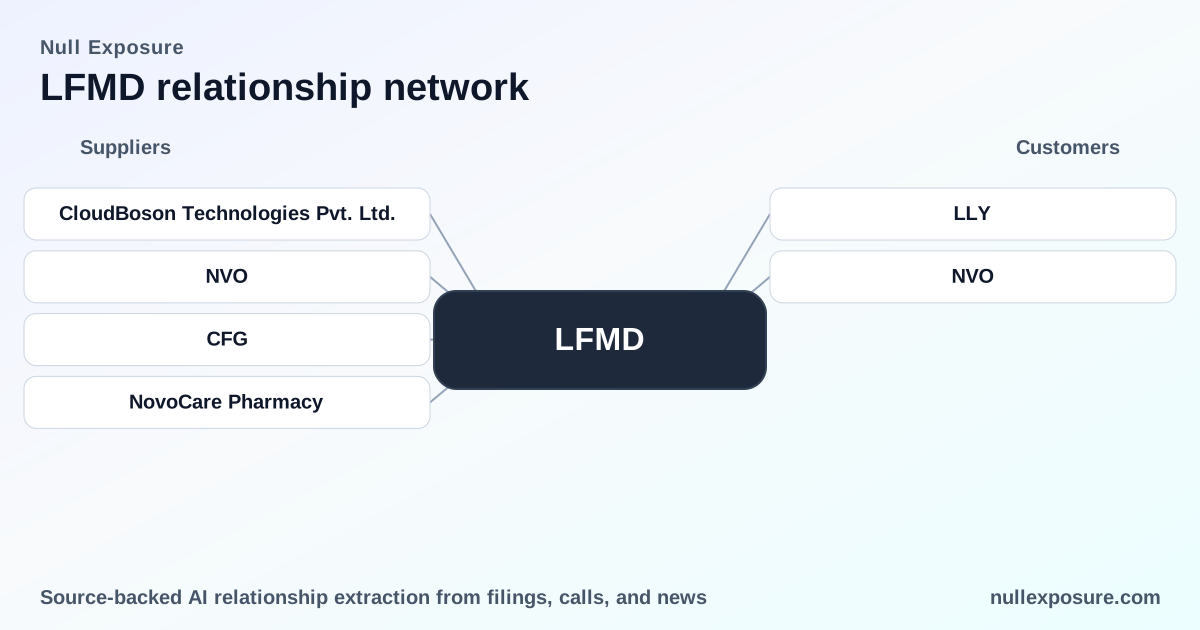
Below I cover every supplier relationship surfaced in public filings and news in the record set. Each entry includes a plain-English summary and the public source.
CloudBoson Technologies Pvt. Ltd.
LifeMD used CloudBoson Technologies Pvt. Ltd., formerly LegalSubmit Pvt. Ltd., to provide software development services; CloudBoson is owned by WorkSimpli’s Chief Software Engineer. According to LifeMD’s FY2024 10‑K filing, this engagement was a vendor relationship used for development work supporting the company’s platform. (Source: LifeMD 10‑K, FY2024)
Novo Nordisk
LifeMD expanded its commercial collaboration with Novo Nordisk to offer the newly FDA‑approved Wegovy (semaglutide) oral formulation through LifeMD’s telehealth channel, positioning LifeMD as a recognized telehealth partner for Novo Nordisk’s GLP‑1 products. Multiple press releases in early January 2026 described the rollout and pricing implications for LifeMD’s cash‑pay offerings. (Source: GlobeNewswire / company release, Jan 5–6, 2026)
NovoCare Pharmacy
LifeMD integrated with NovoCare Pharmacy to provide streamlined access and dispensing for Novo Nordisk’s GLP‑1 medications (Wegovy and Ozempic), enabling fulfillment and competitive cash‑pay pricing through LifeMD’s platform. News coverage and company announcements in late 2025 and early 2026 describe this pharmacy integration as the logistical channel for Novo Nordisk products. (Source: Finance Yahoo / GlobeNewswire coverage, Nov 2025–Jan 2026)
Citizens Bank, N.A. (Citizens Bank)
LifeMD closed a senior secured revolving credit facility with Citizens Bank that provides committed working capital to support operations and product scaling; public announcements in January 2026 reported a $50 million facility closing, with other sources describing an initial $30 million facility expandable by $20 million. This financing partnership materially increases LifeMD’s liquidity while it scales higher‑margin GLP‑1 offerings. (Sources: GlobeNewswire press release, Jan 6, 2026; TradingView coverage summarizing facility economics, Jan 2026)
What LifeMD’s filings say about supplier risk and commercial posture
LifeMD’s disclosures frame supplier relationships as commercially important and regulatory‑sensitive. The company explicitly identifies regulatory failure in product sales and marketing as a potential material risk that could impede access to regulated products and have a material adverse effect on results. Separately, LifeMD notes that its finished‑goods inventory for the RexMD line is largely manufactured by two vendors and that it relies on third‑party fulfillment and internet infrastructure providers to deliver services. Those statements create four operational signals investors should weigh:
- Contracting posture: LifeMD is outsourced on manufacturing and fulfillment, keeping the customer front end and clinical interface internal while depending on third parties for production and distribution. That posture reduces capital intensity but increases dependency on supplier SLAs and compliance controls.
- Concentration: The company indicates purchase commitments are concentrated (the FY2024 filing approximates implicit purchase commitments of roughly $479 thousand, the majority with two vendors). Concentration elevates counterparty risk and negotiation leverage challenges.
- Criticality: Suppliers are mission‑critical because product regulation is central; failure in manufacturing, pharmacy fulfillment or regulatory compliance would directly affect LifeMD’s ability to sell certain medications and could materially impair revenue.
- Maturity and service mix: The supplier base mixes pharmacy and manufacturing partners (regulated, mature functions) with technology and infrastructure providers (variable maturity and ownership) — CloudBoson’s ownership structure is notable for being tied to a software engineer from an affiliated company rather than a large established vendor.
These characteristics combine to make supplier selection and contract terms a central operational lever for LifeMD.
Investment implications — upside and areas for monitoring
- Upside: The Novo Nordisk / NovoCare relationship materially broadens LifeMD’s product set into higher ASP GLP‑1 medications and improves monetization potential per patient. The Citizens Bank facility reduces near‑term liquidity constraints, enabling marketing and inventory investment to capture demand for new therapeutics.
- Risks: Regulatory enforcement or manufacturing disruption is the single largest supplier‑related threat. Concentrated manufacturing commitments and reliance on third‑party fulfillment mean operational disruptions could translate into rapid revenue loss. The CloudBoson arrangement signals some development work sits with smaller, affiliated vendors rather than scale software firms, which requires governance scrutiny.
Investors should track: regulatory compliance disclosures, any expansion or reduction of the Citizens credit facility, and further detail on manufacturing counterparties beyond the two major unnamed vendors. For a consolidated supplier risk view, visit https://nullexposure.com/.
Practical next steps for operators and investors
- Demand vendor‑level SLAs and contingency plans for manufacturing and pharmacy fulfillment contracts.
- Require audit rights and regulatory compliance attestations for manufacturers and for pharmacy partners handling GLP‑1 distribution.
- Monitor covenant tests and draw mechanics on the Citizens facility to understand liquidity flexibility as GLP‑1 volumes scale.
For a deeper supplier due‑diligence workflow and ongoing monitoring, see the supplier intelligence resources at https://nullexposure.com/.
Bottom line
LifeMD’s growth inflection is driven by commercial partnerships (Novo Nordisk/NovoCare) and financing (Citizens) that expand high‑value product access, while its operational resilience depends on concentrated manufacturing and outsourced fulfillment. These supplier relationships are both the company’s growth engine and its primary operational vulnerability; disciplined supplier governance and transparent disclosure will determine whether LifeMD captures margin upside without taking disproportionate regulatory or counterparty risk.