LHC supplier relationships: what advisors and counsel tell investors about transaction risk and operating posture
Leo Holdings Corp. (LHC) operates as a transaction-focused holding company that identifies and completes business combinations in the digital media and services space, monetizing through sponsored equity, capital markets access for target companies, and the operational upside of merged entities. The supplier footprint disclosed in public reporting is transaction-centric: primary counterparties are investment banks and law firms that support deal execution rather than recurring operational vendors. Investors evaluating LHC should treat supplier relationships as indicators of deal execution capability and legal cover rather than as sources of operational scale or recurring revenue.
Explore full coverage and relationship analytics at https://nullexposure.com/ for deeper diligence and comparable supplier risk profiles.
Why advisor and counsel relationships matter more than vendor lists for a deal-first company
For a company whose business model is to create value through combinations and sponsor-led transitions, the quality and depth of its financial and legal advisors drive execution velocity and pricing power. That contracting posture is different from an operating company that depends on logistics, software, or manufacturing suppliers for day-to-day revenue delivery. The supplier relationships captured for LHC reflect that distinction.
- Contracting posture: Transactional and project-based; relationships are oriented to discrete closings rather than long-term supply agreements. The public records show advisors engaged specifically for a combination process.
- Concentration: Supplier counterparties are concentrated in elite financial and legal service providers, consistent with high-stakes dealmaking.
- Criticality: Advisors and counsel are critical at specific inflection points (due diligence, capital raising, closing) but are not ongoing contributors to revenue generation post-close.
- Maturity: The relationship set is typical for SPAC/holding-company formation and combination activity—mature professional firms used episodically.
If you want a comparative read on how supplier concentration affects transaction-backed models, visit https://nullexposure.com/ for cross-company patterns and screening tools.
Relationship rundown — what public records show (every disclosed counterparty)
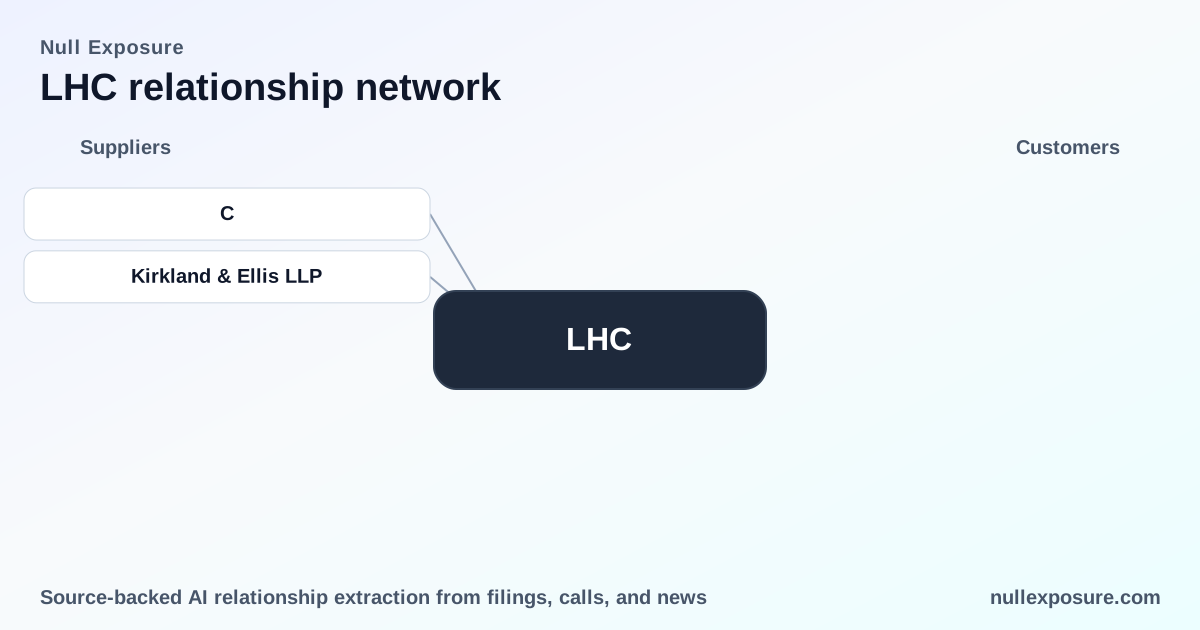
The public relationship set for LHC in the reviewed materials contains two professional-service counterparties tied to a transaction announcement. Each is summarized below with the source context.
Citigroup Global Markets Inc. — capital markets and private placement support (FY2020)
Citigroup Global Markets Inc. acted as financial advisor, capital markets advisor, and private placement agent to Leo Holdings in connection with the transaction disclosed in the March 2026 press coverage; the relationship is recorded as FY2020 in the reporting. This places Citigroup squarely in the role of structuring and placing capital, a function that materially affects deal financing terms and the sponsor’s ability to deliver committed funds. Source: SpaceInsider coverage of the Leo Holdings combination, published March 10, 2026.
Kirkland & Ellis LLP — legal counsel to Leo (FY2020)
Kirkland & Ellis LLP served as legal counsel to Leo, providing the transaction-level legal work necessary for documentation, regulatory filings, and closing mechanics for the combination covered in the March 2026 report. The presence of a top-tier law firm signals standard market practice for transaction risk mitigation and contract drafting. Source: SpaceInsider coverage of the Leo Holdings combination, published March 10, 2026.
What these relationships imply about LHC’s operating model and risk profile
The listed counterparties are both professional-service firms engaged for a combination process, not operational suppliers. Translate this into investor-relevant signals:
- Execution-focused operating model. LHC relies on elite advisers for capital formation and legal structuring, indicating the company’s core competencies are deal origination, sponsor management, and post-close integration rather than vendor management or supply-chain optimization.
- Event-driven supplier criticality. Counterparty importance concentrates around deal milestones; the firm’s exposure to these suppliers is intense but time-bound. Problems with advisors would directly affect closings and capital raises, not necessarily day-to-day cash flow post-close.
- Concentration risk concentrated in the transaction lifecycle. A limited, specialized supplier list reduces broad vendor complexity but increases dependency on a handful of service providers at critical stages.
- Transparency and disclosure posture. The available public relationships are narrow and precise, which is consistent with a company that engages suppliers for specific transactions and discloses those roles when relevant to financings or combinations.
Risk considerations investors should monitor
- Execution risk anchored to advisor performance. Because capital-raising and legal readiness determine whether a combination closes, advisor competence and reputational alignment are primary operational risks.
- Liquidity and financing terms. A financial advisor’s role as private placement agent directly influences the quality and cost of capital available to LHC; capital cost and timing are therefore supplier-mediated risks.
- Concentration of counterparty types. The firm’s reliance on a narrow vendor class reduces operational noise but concentrates the company’s exposure to legal and financing delays.
- Disclosure gaps. Public records list only transaction advisors; absence of other supplier disclosures is a company-level signal that either no material long-term supplier relationships exist or that such relationships are not materially relevant to the combination in question.
How investors should incorporate these findings into diligence
- Confirm the continuity and depth of advisor relationships across multiple deals: repeat engagements with top-tier banks and law firms are positive governance signals.
- Stress-test financing pathways: understand who will act as placement agent in future raises and the terms they historically secure.
- Evaluate post-combination vendorization separately: the supplier profile relevant to ongoing operations will shift once target companies are integrated, so track changes to supplier disclosure after close.
For model portfolios focused on transaction-driven plays or sponsor-backed rollups, add LHC to your watchlist and compare advisor concentration across peers at https://nullexposure.com/ to quantify execution risk.
Final takeaways and next steps
LHC’s public supplier footprint is narrow and transaction-centric: elite financial and legal advisors dominate disclosed relationships, signaling an execution-first operating model where supplier importance is time-bound and concentrated. For investors, the immediate diligence priorities are advisor track records, capital-raising capacity, and legal readiness for future combinations.
To continue your analysis, review comparative supplier patterns and supplier-risk scoring at https://nullexposure.com/ — the next combination window will define whether these advisor relationships convert into durable value creation.
If you need a custom supplier-risk brief for LHC or a peer comparison across transaction-focused issuers, visit https://nullexposure.com/ and request tailored coverage.