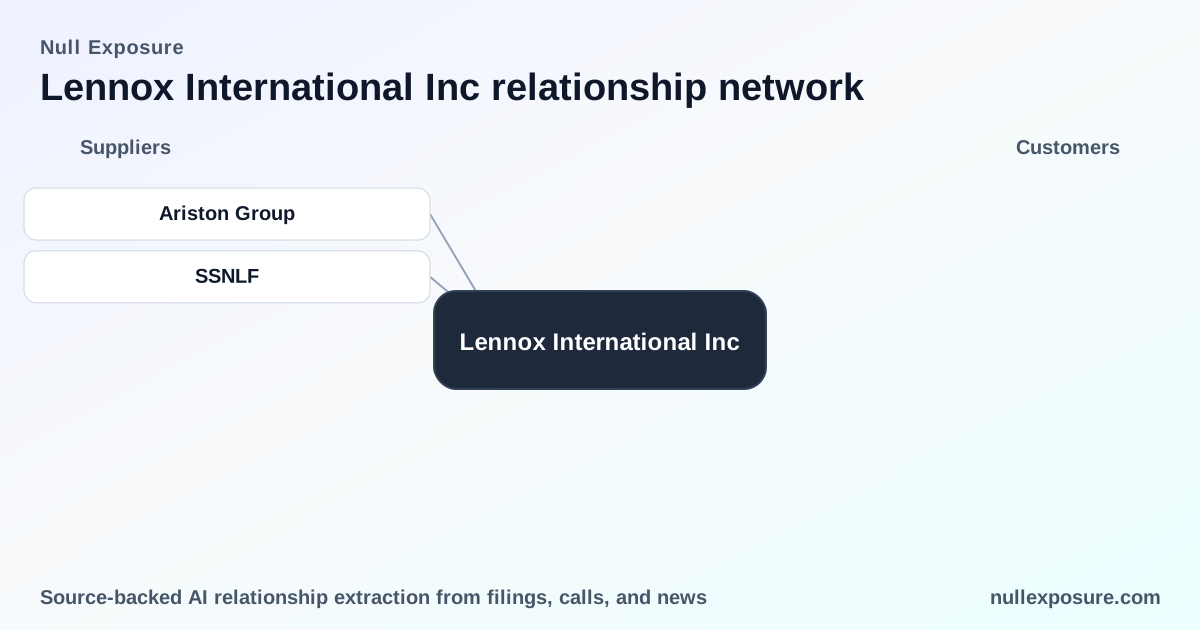
Lennox International (LII): Supplier Landscape and What It Means for Investors
Lennox International designs, manufactures and markets HVAC and refrigeration systems and monetizes primarily through product sales, aftermarket parts and service, and selective joint ventures that expand addressable markets. The firm’s go-to-market is vertically integrated: it controls manufacturing while outsourcing select components, which creates both margin leverage and supplier concentration risk. This note breaks down the supplier relationships visible in public reporting and news, the procurement constraints that shape operating execution, and the practical implications for investors and operators. For supplier intelligence and deeper relationship mapping, visit https://nullexposure.com/.
How Lennox’s procurement posture drives cash flow and risk
Lennox runs a manufacturing-centric supplier model: it procures raw materials and critical components to assemble finished HVAC and refrigeration equipment for residential, commercial and light-industrial customers. That model yields predictable gross margins when supply is stable, but creates working capital sensitivity—inventory moves and strategic sourcing decisions directly affect cash conversion and service levels.
According to Lennox’s consolidated statements for the year ended December 31, 2024, the company reported $173.3 million of compressor purchases from a joint venture, a sign that certain components are sourced in large, concentrated dollar amounts through related-party manufacturing arrangements. Lennox’s trailing twelve-month revenue is approximately $5.195 billion with a gross profit of $1.7348 billion, so a $100–$200 million supplier relationship is meaningful to both cost of goods sold and supply risk. (Lennox financials, FY2024–FY2025.)
Procurement characteristics that matter
- Long-term contracting posture: Lennox emphasizes developing long-term supplier relationships and global component strategies, which supports continuity but increases dependency on a smaller set of partners (company filings, strategic sourcing statement).
- Manufacturer relationships and vertical integration: The company both manufactures in-house and purchases from manufacturers (including joint ventures), so supplier performance translates directly into product availability and quality.
- Material spend concentration: Single-component spend bands exceed $100 million annually in at least one category, indicating material exposure if a supplier underperforms or if a joint-venture partner changes terms.
What the public relationships show (each relationship covered)
Below are the supplier relationships surfaced in the recent results. Each relationship is summarized in plain English and sourced.
Lennox + Ariston Group: joint venture into water heating
Lennox entered the North American water heating market through a joint venture with Ariston Group, representing a strategic expansion beyond core HVAC into adjacent water-heating systems and aftermarket capture. According to reporting in March 2026, the tie-up is intended to accelerate Lennox’s product breadth and distribution in North America. (Simply Wall St coverage, March 10, 2026: https://simplywall.st/stocks/us/capital-goods/nyse-lii/lennox-international/news/lennox-enters-water-heating-with-ariston-jv-as-valuation-sta/amp)
Lennox + Samsung: inventory build to support ductless product initiative
Lennox disclosed a FIFO inventory increase of $300 million year-over-year, which management attributed in part to supporting growth initiatives around commercial emergency replacement and Samsung ductless products; the inventory build was linked to improved equipment fulfillment for those lines. This signals a short-term working capital trade-off to support a channel or OEM partnership with Samsung. (Earnings call transcript coverage, Q4 2025, InsiderMonkey, March 2026: https://www.insidermonkey.com/blog/lennox-international-inc-nyselii-q4-2025-earnings-call-transcript-1684204/)
Constraints and what they signal for operational resilience
The texts extracted from Lennox disclosures deliver company-level constraints that inform how supplier relationships operate:
- Long-term contract orientation is explicit in the company’s strategic sourcing language; this signals a procurement playbook that favors stability and negotiated terms over spot buying, which supports margin consistency but increases dependency duration with key suppliers.
- Manufacturer role: Lennox buys significant components from manufacturing partners and joint ventures; the $173.3 million compressor purchases in 2024 are a concrete example of material reliance on partner-supplied core components (company consolidated statements of operations, year ended Dec 31, 2024).
- Manufacturing segment dependence: Procurement is tightly integrated with Lennox’s manufacturing operations—suppliers are essential to finished-goods output rather than ancillary inputs.
- Spend concentration: The presence of $100m+ spend bands is a company-level signal that supplier disruptions or renegotiations in a single category could meaningfully affect cost of goods sold and margins.
These constraints collectively produce a procurement profile that is strategic and concentrated: strong negotiating leverage on recurring, commoditized items is possible, but critical component concentration—especially where purchased through JV arrangements—creates tangible operational risk.
If you want an operational map of those suppliers and how they move through Lennox’s P&L and balance sheet, see the analytics at https://nullexposure.com/ for direct supplier-to-financial linking.
Investment implications and near-term watch items
- Working capital volatility: The $300 million inventory build tied to Samsung ductless initiatives shows intentional, demand-driven working capital deployment; investors should watch inventory turns and days sales of inventory over the next two quarters.
- Concentration risk on critical components: Compressor purchases of $173.3 million from a joint venture are sizable relative to gross profit, making supplier continuity and JV governance a material risk-laden area to monitor.
- Growth via partnerships: The Ariston joint venture expands addressable markets and aftermarket capture, supporting longer-term revenue diversification—but it also introduces integration and distribution execution risk during the rollout phase.
- Margin leverage but limited short-term flexibility: Long-term contracting supports predictable margins but reduces the ability to quickly switch suppliers if disruptions occur.
For a focused supplier risk scan that maps these commercial exposures to balance-sheet dynamics, visit https://nullexposure.com/ to see how suppliers propagate through financial statements.
Bottom line for investors
Lennox operates a manufacturing-led business with selective, high-dollar supplier relationships and a long-term contracting posture. That structure delivers attractive margin stability when supply chains are intact, but it concentrates risk where certain components—most notably compressors—are sourced through significant vendor or JV relationships. Recent activity (Ariston JV and inventory investment to support Samsung ductless products) demonstrates simultaneous expansion and working capital pressure. Monitor inventory efficiency, JV governance, and supplier continuity as leading indicators of short-to-medium-term execution risk and upside from new product introductions.
For ongoing supplier intelligence and to monitor how these relationships influence Lennox’s financials, go to https://nullexposure.com/.