LIMN — Liminatus Pharma: capital-driven development and partner dependence
Liminatus Pharma (NASDAQ: LIMN) is a clinical-stage immuno-oncology developer focused on next-generation CD47‑blockade therapies. The company currently operates as a research and development enterprise financed through equity capital and strategic financing arrangements rather than product revenues, monetizing progress through capital raises, milestone-based structures and eventual licensing or commercialization outcomes. For investors and counterparties evaluating supplier and financing relationships, the relevant signal is clear: Liminatus’s business model is cash‑intensive and partnership‑dependent. Learn more about supplier risk and exposure profiling at NullExposure.
Where Liminatus stands: a concise commercial snapshot
Liminatus is listed on NASDAQ and headquartered in La Palma, California, positioned as a clinical-stage biotech with no recorded revenues through the trailing twelve months. Market facts from the company profile (latest quarter 2025-09-30) show a market capitalization around $9.3 million, zero revenue, negative EPS (-$0.16), and a high insider ownership stake of roughly 44%. Institutional ownership is effectively negligible (~0.8%), the public float is limited relative to shares outstanding, and the company’s 52‑week trading range spans from $0.21 to $33.66—a sign of extreme historical volatility concentrated in low-liquidity trading. These are operational realities that shape every supplier and investor negotiation: limited internal funding, concentrated ownership, and elevated execution risk.
The single material supplier/financing relationship on record
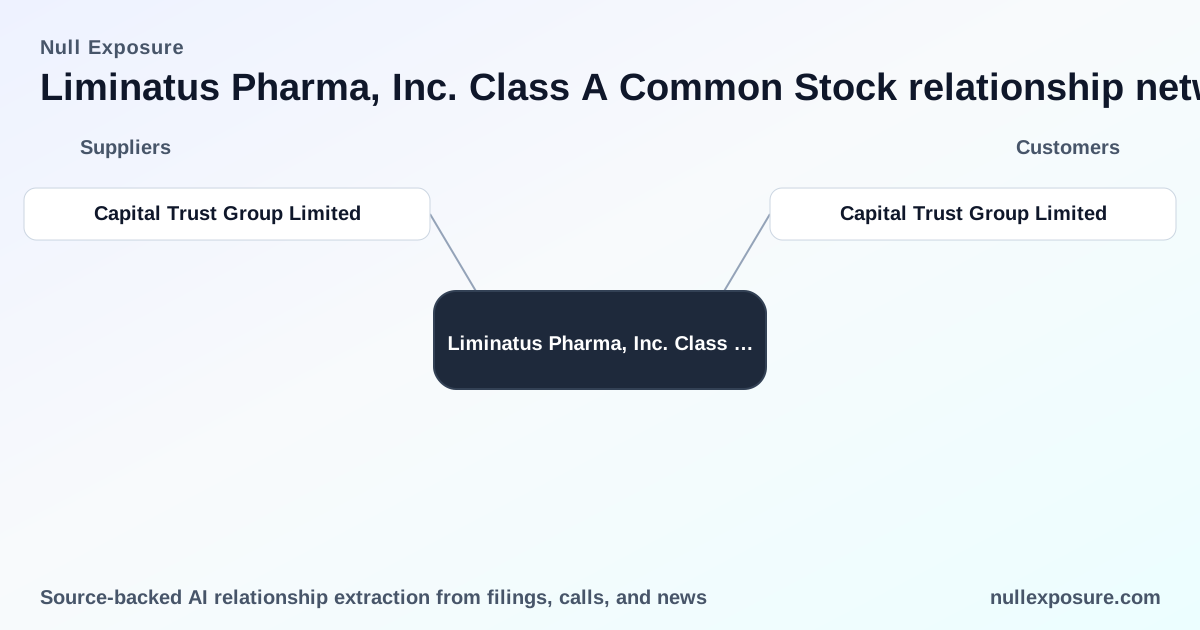
Capital Trust Group Limited — USD 30 million earn‑out equity MOU
According to a press release dated March 10, 2026, Liminatus signed a Memorandum of Understanding with New Zealand‑based Capital Trust Group Limited for a USD 30 million equity investment delivered via an earn‑out mechanism and tied to future strategic cooperation. The MOU positions Capital Trust as a major near‑term financier to underwrite continued R&D activity. (Source: company press release reported on YDR, March 10, 2026.)
This relationship is critical by dollar and intent: a $30M financing for a company with no revenue is a strategic lifeline, and the earn‑out structure links tranche releases to milestones and cooperation terms set in the MOU. For counterparties, that means the finance partner’s performance and the timing of funding tranches directly affect operational continuity and supplier payments.
What the Capital Trust MOU implies for counterparties and investors
- Liquidity runway and vendor risk: With zero revenue and a small market cap, Liminatus depends on the MOU’s follow‑through to finance lab work, CRO relationships, clinical progression and supplier payments; any delay in the $30M funding cadence elevates operational and counterparty credit risk.
- Concentration of funding: The announced MOU represents a single large funding commitment; that concentration creates counterparty single‑point risk where one investor’s insistence on earn‑out conditions can dictate program pace.
- Strategic alignment and commercialization optionality: The MOU’s stated “future strategic cooperation” implies potential non‑financial ties (co-development, licensing priority, or governance changes) that will influence future contracting posture and commercialization pathways.
Operating model constraints that shape supplier engagement
Even without explicit contractual excerpts beyond the MOU, the company profile signals a set of operating constraints that suppliers and investors must factor into relationship negotiations:
- Contracting posture — defensive and capital‑sensitive: Liminatus negotiates from a position of limited cash and scale; suppliers will face stringent payment protections, milestone‑linked terms, or prepayment requests.
- Concentration — funding and ownership: High insider ownership and minimal institutional support create concentrated control and an investor base that is not broadly diversified, increasing governance risk and idiosyncratic event sensitivity.
- Criticality — high for near‑term R&D partners: For contract research organizations, material suppliers and clinical service providers, Liminatus is a client whose survival depends on timely capital infusions, making service continuity contingent on external financing performance.
- Maturity — early, developmental and binary: As a clinical‑stage company with no commercial revenue, program success is binary and long‑dated; counterparties must price for long lead times and outcome dependency.
Practical implications for investor and operator decision‑making
Evaluate three prioritized actions before engaging:
- Demand financing transparency and milestone clarity: Require disclosure of tranche schedules, escrow arrangements or third‑party confirmations tied to the Capital Trust MOU, and update cadence for funding triggers.
- Structure downside protections into supplier contracts: Negotiate payment milestones, termination rights for non‑funding, and preferential security or receivable assignments where appropriate.
- Assess governance and dilution paths: Given the size of the planned financing relative to market cap, insist on visibility into anti‑dilution terms, governance rights tied to capital providers, and any exclusivity clauses that could constrain future partners.
A deeper supplier risk analysis and exposure map is available at NullExposure if you need tailored counterparty diligence.
Key risks and a concise verdict
- Capital dependence is the defining risk: with zero revenue and negative profitability, Liminatus’s ability to execute is contingent on the Capital Trust MOU converting to definitive agreements and payments.
- Single‑partner concentration risk increases negotiation leverage for financers and elevates operational uncertainty for suppliers.
- High insider ownership and thin institutional backing reduce market discipline and limit liquidity options, exacerbating execution risk during adverse events.
Bottom line: Liminatus is a high‑risk, high‑dependency clinical-stage issuer where supplier exposure is directly coupled to financing outcomes. For investors and operators, the Capital Trust MOU is the principal short‑term variable to monitor; contracts should be written to protect against delayed tranches and governance changes.
For a practical next step and access to more supplier‑level intelligence, visit NullExposure. Conduct contractual diligence now: require tranche confirmations, escrow protections, and explicit termination triggers tied to financing performance before extending material credit or supply.