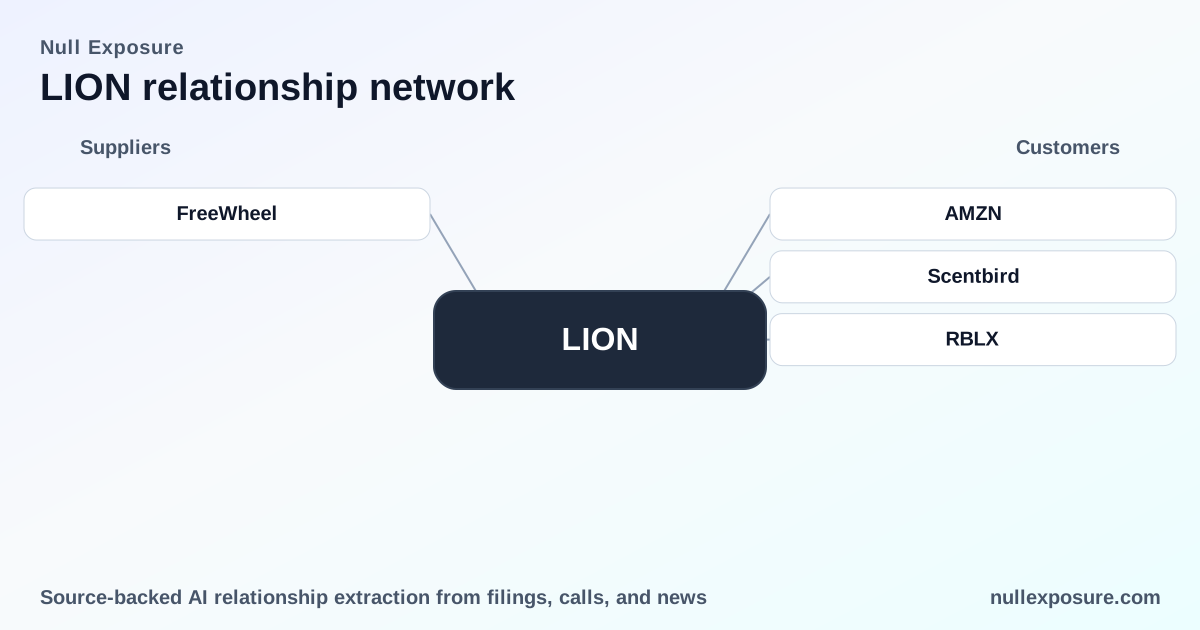
Lionsgate Studios Corp. — supplier relationships that move the ad needle
Thesis: Lionsgate Studios Holding Corp. (to be renamed Lionsgate Studios Corp.) operates as a content owner and distributor that monetizes libraries and streaming channels through advertising, licensing and distribution agreements; the company is accelerating advertising monetization on its owned FAST channels by consolidating ad-serving with third-party partners. The recent exclusive ad‑serving arrangement with FreeWheel converts channel inventory into a more direct, scalable revenue stream for advertisers and for Lionsgate’s streaming business. Learn more or request a supplier relationship briefing at https://nullexposure.com/.
Why the FreeWheel deal matters for investors
Lionsgate’s strategy shifts more of its streaming economics from indirect licensing into direct advertising revenue. By providing media buyers with a single, exclusive ad‑serving path into nearly 30 U.S. FAST channels, Lionsgate gains clearer pricing control, better measurement and higher yield potential on linear‑style streaming inventory. According to multiple December 2025 reports, the arrangement gives buyers access via FreeWheel’s SSP for both direct and programmatic buys—an outcome that accelerates monetization cadence and broadens advertiser demand (see relationship section below for sources).
Key takeaway: the FreeWheel partnership is not a peripheral supplier engagement — it is a commercial lever to scale ad revenue from owned streaming channels and to reduce friction for buyers.
Documented supplier relationships and primary sources
Below are all captured relationship mentions in public news coverage. Each item is a plain-English summary with a source link.
- Lionsgate tapped FreeWheel to facilitate all advertisements on its FAST channels in the U.S., enabling businesses to place ads across the portfolio. Source: Finviz news report (March 10, 2026) — https://finviz.com/news/263212/lionsgate-lion-soars-12-amid-christmas-rush
- FreeWheel announced it became the exclusive ad‑serving partner across Lionsgate’s portfolio of nearly 30 U.S. FAST channels on December 18, 2025, giving media buyers direct access through the FreeWheel SSP for direct or programmatic transactions. Source: TS2 Tech report (first December 18, 2025 mention) — https://ts2.tech/en/lionsgate-studios-corp-stock-nyse-lion-near-a-52-week-high-latest-news-analyst-forecasts-and-what-to-watch-before-mondays-open/
- A follow-up TS2 Tech story reiterated the December 18 expansion, describing FreeWheel as the exclusive ad‑serving partner across Lionsgate’s U.S. FAST channels and noting programmatic and direct buying access. Source: TS2 Tech weekend update (December 2025) — https://ts2.tech/en/lionsgate-studios-corp-stock-nyse-lion-weekend-update-friday-jump-near-52-week-high-analyst-targets-and-a-new-legal-headline-to-watch/
- InsiderMonkey reported Lionsgate tapped FreeWheel to facilitate all advertisements on its FAST channels in the U.S., emphasizing advertiser ease of access. Source: InsiderMonkey article (December 2025 coverage) — https://www.insidermonkey.com/blog/lionsgate-lion-soars-12-amid-christmas-rush-1667226/?amp=1
- A StockstoTrade summary described the new exclusive partnership with FreeWheel granting ad buyers direct access to Lionsgate’s premium FAST inventory across nearly 30 U.S. channels. Source: StocksToTrade news (December 23, 2025) — https://stockstotrade.com/news/lionsgate-studios-corp-lion-news-2025_12_23/
- A TS2 Tech article from December 18, 2025 reiterated that FreeWheel is now the exclusive ad‑serving partner across the nearly 30 U.S. FAST channels, enabling buyers to access inventory via the FreeWheel SSP. Source: TS2 Tech stock jump coverage — https://ts2.tech/en/lionsgate-studios-corp-nyse-lion-stock-jumps-to-new-highs-on-dec-23-2025-latest-news-analyst-forecasts-and-whats-driving-the-move/
- Another TS2 Tech piece repeated the December 18 expansion language, emphasizing the path for buyers to access Lionsgate streaming inventory through FreeWheel. Source: TS2 Tech pre-market coverage — https://ts2.tech/en/lionsgate-studios-corp-stock-nyse-lion-climbs-toward-a-fresh-52-week-high-latest-news-analyst-targets-and-what-to-watch-before-mondays-open/
- A TradingView/Zacks industry outlook coverage highlighted that the December 2025 FreeWheel partnership substantially expands advertising revenue potential across Lionsgate’s nearly 30 premium U.S. FAST channels and ties the move to the growing free ad‑supported streaming market. Source: TradingView (Zacks commentary, December 2025) — https://www.tradingview.com/news/zacks:9a5f35f9e094b:0-zacks-industry-outlook-highlights-sphere-entertainment-lionsgate-studios-and-madison-square-garden-entertainment/
- TS2 Tech reiterated the exclusive ad‑serving partnership language and the access buyers gain through FreeWheel’s SSP for direct or programmatic buys. Source: TS2 Tech earlier repeat (December 2025) — https://ts2.tech/en/lionsgate-studios-corp-stock-nyse-lion-near-a-52-week-high-latest-news-analyst-forecasts-and-what-to-watch-before-mondays-open/
These entries collectively document a single, consistent supplier relationship: FreeWheel as the exclusive ad‑serving partner for Lionsgate’s U.S. FAST channels, publicized in December 2025 and reported repeatedly across financial news outlets.
What company constraints tell investors about operating posture
Public filings and disclosures provide company-level signals about how Lionsgate structures risk and capital:
- Mixed contract tenor: Lionsgate uses both long‑term, asset‑backed credit facilities (IP credit facilities maturing in 2029) and a short‑term revolving facility to manage liquidity and working capital. This combination signals a capital structure that finances content libraries long‑term while preserving short‑term flexibility.
- Government incentives are part of production financing: The company leverages state and foreign film incentives (tax credits, rebates, low‑interest loans) to reduce production costs and allocate capital more efficiently.
- Counterparty mix includes major financial institutions: Lionsgate executes forward FX contracts and hedges with large banks, indicating exposure to cross‑border production expenses and a reliance on institutional counterparties for hedging.
- Materiality of refinancing decisions: The company’s disclosure that debt repurchases, refinancings or exchanges could be material signals that capital markets moves can produce meaningful P&L and liquidity impacts.
- Third‑party service reliance and active supplier program: Lionsgate uses outside service providers for hosting, applications and supply chain functions and runs a supplier diversity program, suggesting procurement is active and strategically managed across services.
Implication: the operating model is finance‑intensive and reliant on both secured long‑term funding and flexible short‑term facilities; supplier and counterparty relationships that affect monetization (like FreeWheel) are commercially critical even if not named in financing covenants.
If you want a deeper supplier risk map and contractual exposure analysis, request a bespoke report at https://nullexposure.com/.
Investment risks and practical next steps
- Revenue concentration risk: converting FAST inventory to ad revenue increases near‑term upside but ties returns to digital ad market cycles and SSP dynamics.
- Execution risk: the benefit of an exclusive ad‑serving partner depends on implementation, measurement fidelity and buyer adoption; these operational factors will determine realized revenue uplift.
- Financing sensitivity: heavy use of IP‑backed facilities and potential refinancing activity means interest rates and capital markets conditions translate directly into cash flow pressure.
Suggested next steps for investors and operators:
- Demand seller disclosures on ad revenue attribution and measurement post‑FreeWheel implementation.
- Get contractual clarity: duration and exclusivity terms with FreeWheel, termination rights and performance KPIs.
- Monitor liquidity metrics and upcoming maturities related to IP credit facilities and revolver availability.
Bottom line and how we can help
Lionsgate’s FreeWheel partnership is a strategic move to commercialize ad inventory across nearly 30 FAST channels and is a meaningful revenue lever for streaming monetization. Investors should treat the arrangement as operationally significant and pair commercial diligence with capital structure review given Lionsgate’s financing posture.
For a custom supplier relationship review, contract risk summary, or to commission a monitored watchlist on Lionsgate and its partners, start here: https://nullexposure.com/.