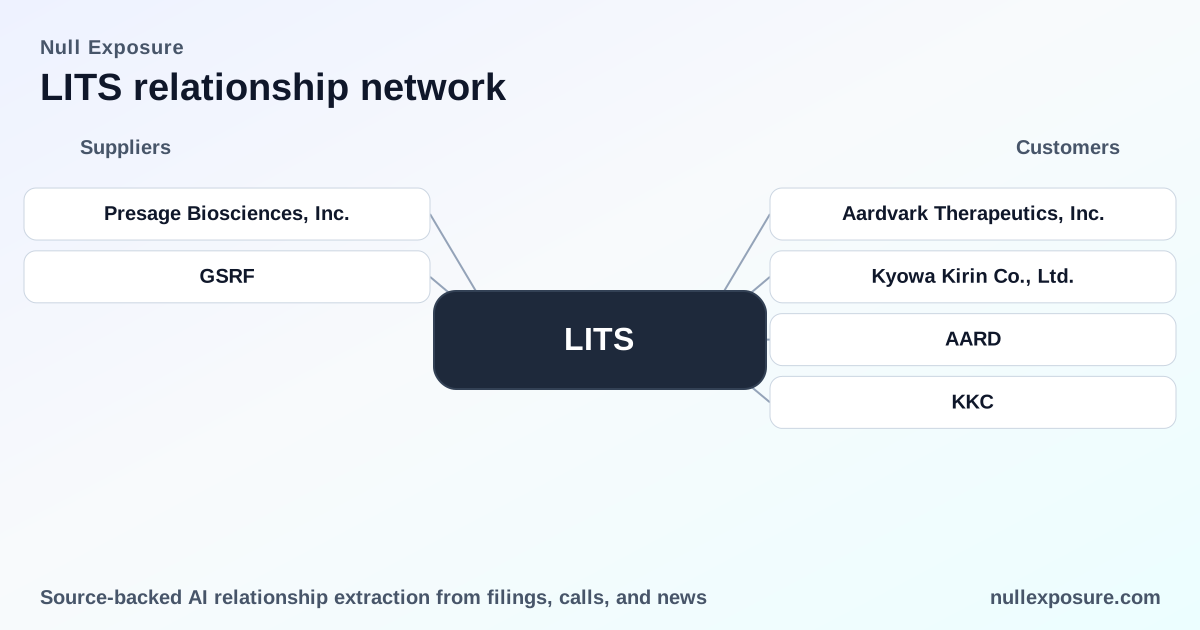
Lite Strategy (LITS): supplier relationships that drive a mixed biotech + digital-asset operating model
Lite Strategy is a clinical-stage biotechnology company that has combined a traditional drug-development agenda with an active digital-asset treasury and capital-markets program. The firm licenses and develops oncology assets (pipeline upside) while monetizing balance-sheet exposure through a Litecoin treasury strategy and related advisory and asset‑management arrangements — a hybrid model that creates two distinct supplier classes: research/licensing partners and treasury/advisory firms. For investors and operators evaluating supplier counterparty risk, governance and value capture, the two supplier relationships below are the centerpieces of the company’s current strategy. Learn more about how these supplier links affect valuation and risk at https://nullexposure.com/.
How Lite Strategy arranges supply and services — one operating model, two commercial logics
Lite Strategy’s commercial model has two monetization levers. First, traditional biotech upside: the company acquires development and commercialization rights for oncology assets and funds clinical development. Second, active treasury management: the company accumulates and actively manages a Litecoin position and uses external advisors and asset managers to deploy that strategy, including funding share repurchases and other capital-market activity. This dual posture produces distinct contracting needs (license agreements and advisory/asset-management contracts), different counterparty risk profiles (biopharma licensors vs. crypto-market advisers), and a governance overlay that ties treasury advisors to board and capital actions.
- Contracting posture: multiple bespoke agreements — intellectual property/license transfers on the biotech side and advisory, asset management and placement agreements on the treasury side. The company compensates at least some advisors with equity-linked instruments (warrants), creating alignment with shareholders.
- Concentration and criticality: treasury advisors are critical to capital-market execution and liquidity management; licensors control program-level clinical IP. Both classes are high‑priority to the company’s near-term strategy.
- Maturity: the shift into active treasury and advisory relationships is recent (FY2025 onward) and operationally active in FY2026 communications.
- Governance signals: advisors are connected to board-level decisions; one named adviser has a board role, increasing integration between advisor recommendations and company actions.
Supplier relationships, one-by-one
Presage Biosciences, Inc.
Lite Strategy acquired exclusive worldwide rights to develop, manufacture and commercialize voruciclib from Presage Biosciences, giving the company control of a clinical-stage oncology asset that forms part of its drug-development pipeline. This is an IP/licensing relationship that situates Presage as the counterparty for the asset transfer; the detail is disclosed in Lite Strategy’s FY2025 Form 10‑K (filed for the fiscal year ended June 30, 2025). According to the FY2025 10‑K, the acquisition of rights to voruciclib is explicit and central to the company’s therapeutic strategy (FY2025 10‑K).
Source: Lite Strategy FY2025 Form 10‑K (filed June 30, 2025).
GSR (GSR Strategies / GSRF)
Lite Strategy entered into a strategic partnership with GSR, a crypto investment and treasury-management firm, to guide its Litecoin treasury strategy and support active capital-market operations, including execution of a $25 million share-repurchase program and evaluation of strategic investments. News releases and coverage across Nov 2025–Feb 2026 (GlobeNewswire, Chainwire, Decrypt, Bitget, QuiverQuant) consistently describe GSR as the adviser executing governance and market execution for LITS’s digital-asset program and repurchase activity, and note a public board connection through a named GSR executive discussing shareholder-value initiatives (Nov 17, 2025; Feb 17, 2026).
Source: Company press release and coverage — GlobeNewswire (Feb 17, 2026) and Chainwire / Decrypt / Bitget / QuiverQuant reporting (Nov 17, 2025–Feb 17, 2026).
What the formal constraints and disclosures reveal about counterparty posture
The company’s disclosures and subsequent evidence signal a deliberate, advisor-centric supplier posture rather than transactional outsourcing:
- Service‑provider orientation: filings list a suite of agreements entered in mid‑2025 — placement agency, asset‑management, advisory, strategic advisor and at‑the‑market sales agreements — indicating the company deliberately structured a mix of long‑form advisory engagements and transactional arrangements to operationalize the Litecoin treasury strategy.
- Named advisers and fee forms: an Advisory Agreement with Green Dragon Investments LLC is disclosed in the 10‑K and specifically states that Green Dragon provides asset‑management services in return for warrants tied to assets under management; the filing also records Deloitte as the independent auditor selection for fiscal 2025. Those disclosures are company-level signals of how Lite Strategy pays advisers (equity‑linked compensation) and the kinds of suppliers it prioritizes.
- Active stage: the company characterizes at least some advisory engagements as active — Green Dragon’s asset‑management role is described as ongoing in the filing — which aligns with public statements about continued program execution in FY2026.
- Direct naming of GSR in commercial materials: press releases and media coverage explicitly place GSR in the role of treasury adviser and execution partner for the repurchase and asset strategy, implying operational reliance on a single, specialist counterparty for market-facing treasury tasks.
These constraints indicate a firm that uses a concentrated set of service providers for core treasury functions while retaining IP licensors for its biotech pipeline. That architecture concentrates operational risk around a few advisers for balance‑sheet deployment while spreading clinical development risk across licensed assets.
Investment implications — where supplier structure changes the risk/return profile
- Upside is twofold: clinical development success for voruciclib creates traditional biotech valuation upside; effective treasury execution (cryptocurrency returns and accretive repurchases) can materially augment near‑term shareholder value.
- Counterparty risk is asymmetric: licensors (Presage) directly influence pipeline progress and regulatory timelines; treasury advisers (GSR, Green Dragon) control market execution and custody practices that affect realized returns and balance‑sheet exposure. Governance overlaps (advisers with board ties) increase execution speed but also concentrate influence.
- Compensation mechanics matter: paying advisers in warrants aligns them with share-price outcomes but dilutes equity if exercised; that tradeoff is explicit in the FY2025 disclosures.
- Operational maturity is early: these supplier programs moved from accumulation to active management in FY2025–FY2026, so operational execution and policy refinement remain material ongoing drivers.
For a deeper supplier map and counterparty scorecard visit https://nullexposure.com/ for a structured review and secondary-source aggregation.
Tactical takeaways for investors and counterparties
- Track execution against public milestones: clinical-development milestones for voruciclib and announced repurchase execution are near-term indicators of supplier effectiveness.
- Monitor governance paths: board and adviser overlap is a channel for quick decision-making but raises the bar for independent oversight.
- Evaluate custody and execution controls: treasury advisers are central to crypto custody, market access and regulatory compliance — ensure documentation and counterparty diligence are available for institutional evaluation.
Interested in a supplier risk memo or a tailored counterparty diligence report? See actionable intelligence and engagement options at https://nullexposure.com/.
Conclusion
Lite Strategy’s supplier map is intentionally bifurcated: IP/licensing partners deliver biotech optionality; specialized crypto advisers deliver active balance‑sheet management and capital-market outcomes. Both supplier classes are material to valuation and require different diligence disciplines — clinical and regulatory review on the biotech side, governance, custody and market‑execution review on the treasury side. Investors and operators should treat supplier performance as an operational lever: success on either front shifts the company’s risk/return profile meaningfully. For a full supplier dossier and modelled scenario analysis, visit https://nullexposure.com/.