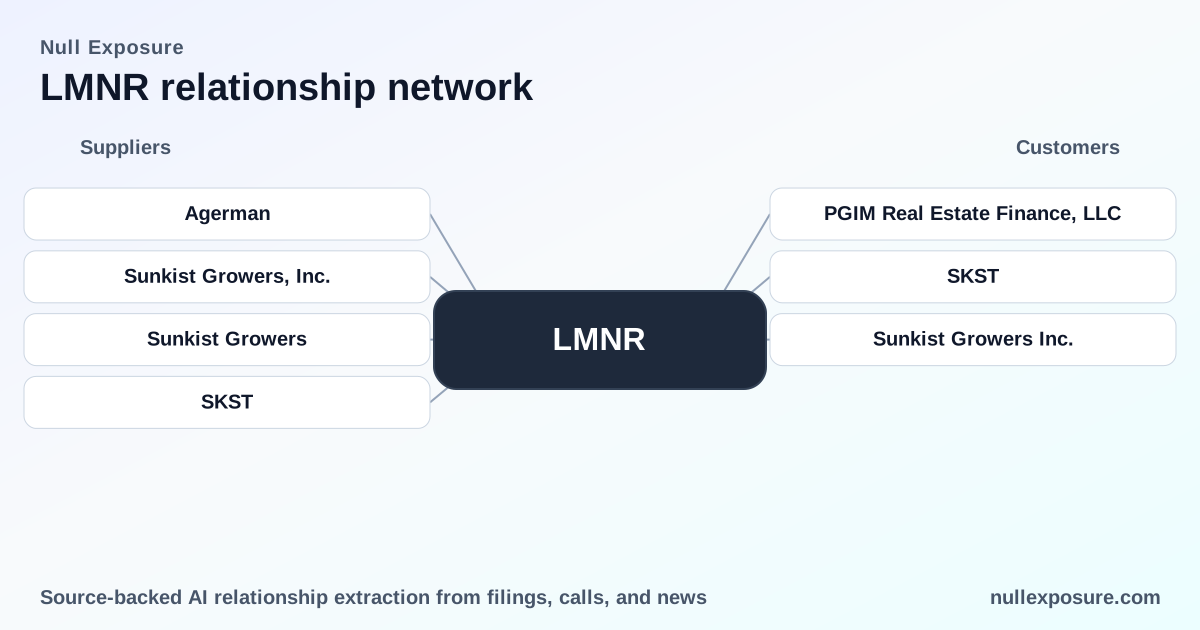
Limoneira (LMNR): Supplier relationships that shape margins and market access
Limoneira is an integrated agribusiness and real estate operator that monetizes through fruit production and packinghouse services, branded licensing, and selective land development revenues. The company extracts margin both by selling its own lemon crops and by operating packing and marketing services for third-party growers; licensing arrangements and strategic partnerships extend its channel access into major U.S. retailers while joint ventures target new EBITDA streams from organic-waste processing. For a consolidated view of supplier and partner exposure, visit the NullExposure homepage: https://nullexposure.com/.
How Limoneira’s supplier ecosystem affects value creation
Limoneira’s commercial model relies on two complementary levers: agricultural production and downstream packing/marketing. That integration lets the company capture value across the supply chain, but it also creates dependencies — on third‑party growers for supply, on branded cooperatives for market access, and on specialized service partners for new-business ventures. The current portfolio of relationships demonstrates a mix of revenue-enhancing commercial agreements and strategically important operational dependencies that will influence margin recovery and growth into FY2027.
- Revenue leverage: Packinghouse licensing and the merging of marketing functions with Sunkist are direct routes to higher premium pricing and retailer penetration.
- Cost structure and inputs: As a licensed packer, Limoneira is contractually tied to specific suppliers for packing materials, which constrains procurement flexibility.
- Growth optionality: The Agerman JV is positioned to add predictable EBITDA from waste‑to‑energy/recycling operations starting FY2027.
Explore these relationships in context at https://nullexposure.com/ — the page consolidates partner signals that matter for investment decisions.
Vendor and partner roll call (every reported relationship, with sources)
Agerman
Limoneira is executing a 50/50 organic recycling joint venture with Agerman, targeted to process 300,000 tons of organic waste annually and to generate $4–$5 million of EBITDA beginning in fiscal 2027. This is an earnings-call disclosed strategic JV intended to create a new, recurring EBITDA stream separate from commodity cycles. (Source: Limoneira Q4 FY2025 earnings call, disclosed March 2026.)
Sunkist Growers, Inc. — Commercial Packinghouse License Agreement
Limoneira entered a Commercial Packinghouse License Agreement with Sunkist, effective November 1, 2025, allowing Limoneira to grade, label, pack and ship Sunkist grower fruit and to use Sunkist trademarks; the agreement has an initial three‑year term with automatic one‑year extensions. This licensing contract formalizes Limoneira’s role as a Sunkist private licensed packer and directly opens premium branded channels for its packing operations. (Source: SEC 10‑K disclosure reported via TradingView; FY2025 filings, June–November 2025.)
Sunkist Growers — merged sales and marketing operations
Beginning in Q1 FY2026, Limoneira consolidated its citrus sales and marketing into a merged operation with Sunkist Growers, positioning Limoneira as one of Sunkist’s largest lemon growers and as a Sunkist private licensed packer. The operational integration is intended to increase access to premium accounts and major U.S. retailers, enhancing top‑line realization on core fruit sales. (Source: Market reporting citing company remarks; Globe and Mail / The Motley Fool coverage, FY2026 commentary.)
Sunkist (ticker SKST) — channel access and category breadth
Management highlighted that Sunkist provides enhanced customer access to premium accounts and major U.S. retailers through a full-category citrus offering, underscoring the channel importance of this partner for Limoneira’s retail penetration and pricing power. This mention in the Q4 FY2025 earnings call emphasizes Sunkist’s role as a distribution and marketing counterparty rather than a capital provider. (Source: Limoneira Q4 FY2025 earnings call, March 2026.)
What the constraints tell investors about Limoneira’s operating posture
The reported constraints in Limoneira’s disclosures reveal an operating model with contractual commitments, concentrated supplier exposure, North American sourcing, and medium-term financing maturity:
- Contracting posture: The Sunkist Commercial Packinghouse License is explicit — a three‑year initial term with automatic one‑year renewals — which creates contractual lock‑in for packing operations and trademark use and ensures predictable access to branded channels. Because the license names Sunkist directly, the licensing constraint is specific to that relationship.
- Supply concentration and criticality: Company-level disclosures show high dependency on third‑party growers for domestic lemon supply (78% in FY2025) and two third‑party growers accounted for 25% and 23% of payables as of October 31, 2025; this indicates material counterparty concentration that exposes Limoneira to grower-level disruption or pricing stress.
- Procurement linkage: As a Sunkist‑licensed packer, Limoneira is required to procure the majority of packing supplies from Fruit Growers Supply Company (FGS), a Sunkist‑affiliated cooperative; this constraint ties operating costs and input sourcing to the cooperative’s terms and reduces procurement flexibility for packaging materials.
- Geographic footprint: The company’s supplier and crop sourcing is primarily North American, as documented by domestic lemon procurement statistics, which centralizes weather, labor, and regulatory risk in NA agricultural markets.
- Maturity and capital posture: Limoneira executed a Master Loan Agreement extending principal repayment to July 1, 2030; while this is a company-level financing signal rather than a supplier tie, it indicates multi-year debt maturity that supports capital-intensive transitions (e.g., JV investments) but requires sustained operating cash flow to defend leverage.
Investment implications and risk profile
Limoneira’s supplier relationships are strategic drivers of margin and market reach but also concentration risk vectors. The Sunkist links create clear upside through better retailer placement and branded pricing; conversely, the heavy reliance on third‑party growers for supply and the procurement constraints tied to Sunkist/FGS create operational inflexibility that can pressure margins if input costs or grower costs shift. The Agerman JV adds an EBITDA diversification pathway with a discrete start date (FY2027), improving cash‑flow optionality.
- Key positives: Branded channel access via Sunkist; incremental EBITDA from the Agerman recycling JV; integrated packing capability.
- Key risks: Supplier concentration, constrained procurement, exposure to North American vintage risk, and negative recent profitability metrics that require operational improvement to service debt and fund growth.
For investors and operators requiring consolidated partner intelligence and ongoing monitoring, see full coverage at https://nullexposure.com/ — the homepage centralizes partner signals and constraint analysis.
Next steps for due diligence
Request the Sunkist license terms and renewal mechanics, analyze counterparty exposure to the two largest growers named in payables, and review the Agerman JV business plan and capex schedule targeted at FY2027 EBITDA contribution. For continuous updates and a centralized view of Limoneira’s supplier relationships, visit https://nullexposure.com/.
Bold takeaways: Sunkist relationships materially expand retail access but constrain procurement; Agerman JV creates a new EBITDA stream by FY2027; supplier concentration is a material operational risk.