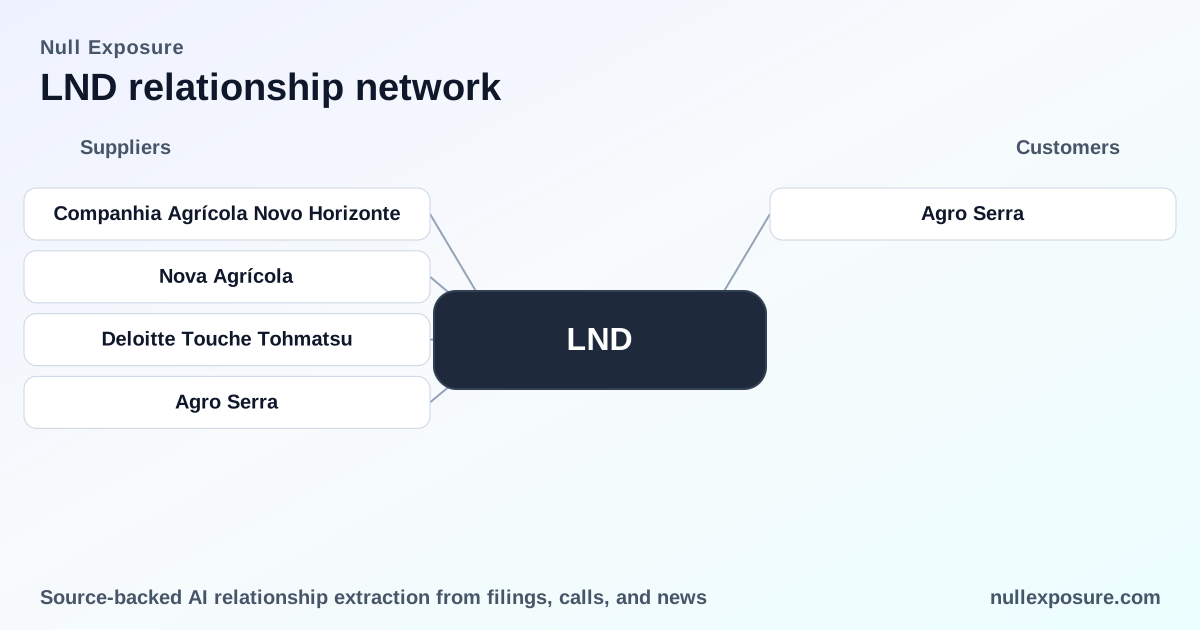
LND supplier relationships: an investor briefing on asset-backed agribusiness links
LND operates as a supplier within Brazilian agribusiness networks, generating value through asset-backed transactions, the transfer of agricultural equipment and irrigation capacity, and utility partnerships that lower operating costs on large farms. Recent media-captured activity shows the company engaging in property transfers and working with third-party valuers and energy/water service providers—suggesting a monetization model built on real assets and operating synergies rather than on pure commodity trading.
For investors and operators evaluating counterparty risk, supplier concentration, or strategic partnership value, this set of relationships provides actionable signals about LND’s operating footprint, cash generation levers, and operational dependencies. For an integrated view of supplier exposure and scenario planning, visit https://nullexposure.com/ for more detailed supplier intelligence.
What these relationships reveal about how LND runs the business
- Contracting posture: Transactions and asset transfers referenced in the reporting point to an active buyer/seller posture where LND (as supplier) uses property deals and equipment transfers to manage balance-sheet exposure and liquidity. This is a business model that executes through discrete, large-ticket arrangements rather than recurring small contracts.
- Geographic and operational concentration: The relationships documented are concentrated in Brazilian agricultural corridors (Mato Grosso and related assets), signaling regional concentration risk for supply and revenue dependencies.
- Operational criticality: Partnerships that involve cogeneration and water provisioning (see Agro Serra) are operationally critical: energy and irrigation services directly reduce operating costs on key properties, so supplier performance in these areas is material to farm-level profitability.
- Maturity and formality: Use of a Big Four valuation (Deloitte) and public reporting of purchase prices indicates mature governance and valuation practices, supporting transparent transaction pricing and potentially smoother investor due diligence.
- Disclosure posture: The public reporting captured is transaction- and asset-focused; the absence of disclosed contractual constraints in available sources is a company-level signal of limited public covenant disclosure, which increases the importance of direct contract review for counterparties and lenders.
These characteristics shape a supplier profile where asset sales, operating partnerships, and a few high-impact contracts drive outcomes. For practical follow-up and to compare these findings to other suppliers, see https://nullexposure.com/.
Relationship readouts — what each partner brings to the table
Companhia Agrícola Novo Horizonte
LND paid R$36.4 million to acquire Companhia Agrícola Novo Horizonte, principally for a 5,000-hectare lease contract in the Primavera do Leste region, indicating that LND secures large-scale operating footprints via outright acquisitions. This was reported by The Agribiz on March 10, 2026.
Nova Agrícola
The purchase consideration paid to Nova Agrícola included a machinery park, five irrigation pivots and an accumulated loss of roughly R$10 million tied to the Novo Horizonte unit, highlighting that transfers involve both productive assets and legacy liabilities that affect near-term cash flow. This detail is noted in The Agribiz coverage from March 10, 2026.
Deloitte Touche Tohmatsu
Properties associated with the company were appraised at more than R$3.6 billion in a valuation exercise conducted in July, demonstrating the use of recognized independent valuation to underpin large asset transactions and balance-sheet reporting. This valuation was reported by AgFeed in March 2026 and cites the Deloitte engagement from July (FY2024 context).
Agro Serra
Agro Serra provides cogeneration services and supplies water for irrigation to Fazenda São José, improving efficiency and lowering production costs on that property; this operational partnership is explicitly linked to cost reduction at São José and is publicly discussed in two outlets. Infomoney and CompraRural covered the energy cogeneration and irrigation supply role of Agro Serra in March 2026, and one source also referenced a valuation of São José at R$475 million.
What investors should prioritize when underwriting LND exposure
- Counterparty documentation: Given the transaction-driven structure and limited public covenant detail, investors must secure full copy of purchase agreements, equipment transfer schedules, and ongoing service contracts for energy/water suppliers before pricing credit or equity risk.
- Operational dependency mapping: Because energy and irrigation suppliers like Agro Serra are operationally critical, model scenarios that stress interruptions to cogeneration or water delivery and quantify EBITDA sensitivity.
- Asset-level valuation verification: Independent valuations (for example, the Deloitte engagement) provide credible reference points; insist on up-to-date appraisals and title reviews when underwriting large property exposures.
- Concentration controls: Exposure is regionally concentrated in Mato Grosso and neighboring agricultural clusters; impose geographic diversification thresholds or require mitigants such as guarantees or cash traps.
- Liability transfer assessment: Transaction reports show asset purchases carrying legacy losses (R$10 million cited for Novo Horizonte); include post-closing indemnities and loss-sharing mechanisms in deal terms.
If you want a supplier-risk checklist tailored to LND’s profile, the team at NullExposure maintains a focused playbook—review it at https://nullexposure.com/.
Bottom line and action plan
LND’s supplier footprint is asset-centric, regionally concentrated, and operationally dependent on a small set of utility/service providers. The public record documents sizable property transactions, independent valuations, and utility partnerships that materially affect operating economics at farm level. For investors, the priorities are thorough contract review, independent asset valuation, and quantifying operational dependencies on energy and water suppliers.
To translate these findings into underwriting actions and monitoring dashboards, engage the NullExposure supplier intelligence platform and advisory resources at https://nullexposure.com/.
Key takeaway: treat LND exposure as asset-backed but operationally concentrated—structured diligence and contract-level protections are required to convert observed asset value into durable investor returns.