LINKBANCORP (LNKB): Counterparties, Constraints, and What Investors Should Price In
Linkbancorp operates as a regional banking franchise that generates cash flow from traditional banking activities — primarily net interest margin on loans and investments, recurring fee income from deposit and payment services, and selective balance-sheet optimization such as branch sales. Its monetization strategy blends core banking economics with episodic capital-marketing events that declutter the footprint and shore up capital. For an investor evaluating supplier and advisor relationships, the pattern of law firms, underwriters, and outsourced security providers tells a consistent story about capital access, regulatory posture, and third‑party reliance. Learn more at https://nullexposure.com/.
Who LINK uses: advisors, underwriters and counsel (straight to the point)
-
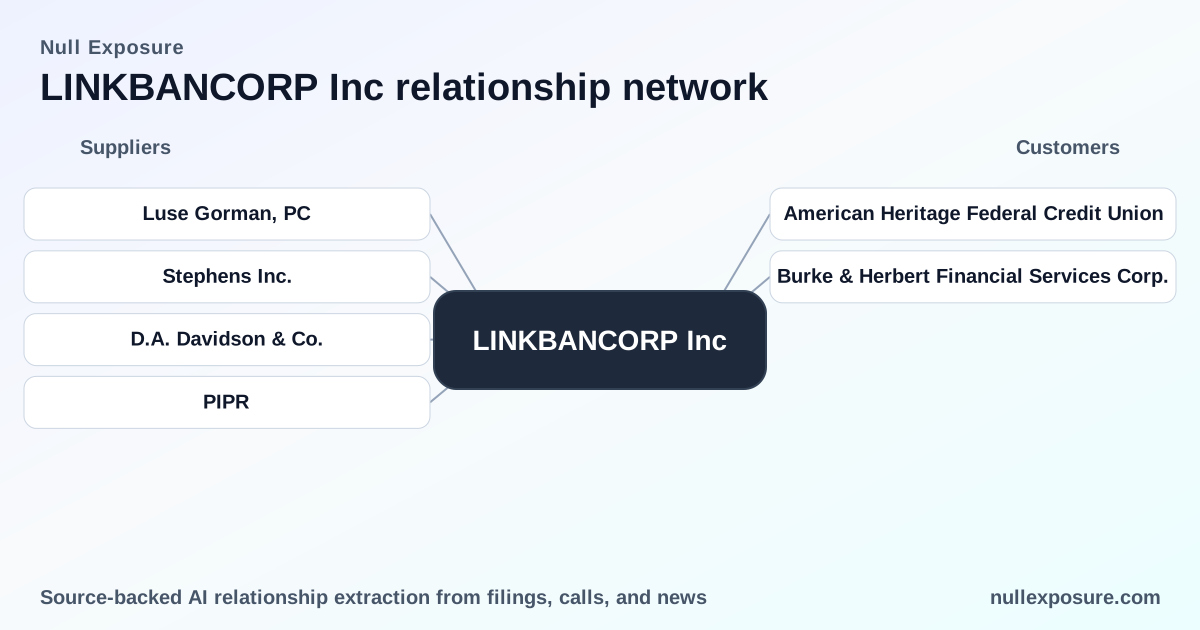
Stephens Inc. — Stephens served as a financial adviser to Link during a branch sale and was one of the joint bookrunning managers on Linkbancorp’s IPO. This dual role underscores a sustained investment‑banking relationship spanning both strategic dispositions and capital markets execution (American Banker, FY2022; CUToday, March 2026).
-
Piper Sandler & Co. — Piper Sandler acted as a joint bookrunning manager for the company’s IPO, signaling top‑tier market placement for public equity issuance and an established underwriting relationship (American Banker, FY2022).
-
D.A. Davidson & Co. — D.A. Davidson served as a co‑manager on the IPO syndicate, which is consistent with regional bank offerings that layer national bookrunners with co‑managers to enhance distribution and execution (American Banker, FY2022).
-
Luse Gorman, PC — Luse Gorman provided legal counsel to Link in the context of a branch sale transaction, indicating the firm supports transaction‑level regulatory and title/legal diligence needs (CUToday, March 2026).
Each of the relationships above is documented in public reporting: the IPO coverage in American Banker (FY2022) outlines the syndicate composition, and a March 2026 local news piece on branch sales confirms adviser and counsel roles.
Why these relationships matter for valuation and risk
The mix of counterparties delivers three concrete signals for investors:
-
Capital markets readiness and access. Joint bookrunners like Stephens and Piper Sandler plus co‑managers such as D.A. Davidson indicate that Link maintains the underwriting relationships necessary to raise public capital on competitive terms. That reduces refinancing risk in stressed scenarios and supports strategic capital actions.
-
Transaction sophistication and regulatory navigation. Engaging specialist counsel such as Luse Gorman on branch dispositions confirms Link follows established legal pathways for asset transfers, reducing execution risk in portfolio rationalization.
-
Operational third‑party reliance. Beyond capital markets and legal advisers, Link’s vendor posture—described in filings as ongoing and substantial—demonstrates reliance on external service providers for critical operations, including cybersecurity monitoring.
These relationship strengths translate into tangible investor considerations: lower execution risk for market actions, modestly improved access to capital, and a non‑trivial operational dependency that should be priced into operational risk and vendor concentration assessments.
Learn more about how counterparty visibility can affect portfolio decisions at https://nullexposure.com/.
Relationship-level notes and sources
Each entry above is drawn from public coverage of Link’s underwriting and corporate activity. The IPO underwriting roles are described in American Banker reporting from the company’s offering (FY2022). The branch sale adviser and counsel roles are documented in a March 2026 local news report covering a branch sale to American Heritage FCU.
Operational constraints and what the filings disclose
Company filings and public excerpts convey a set of company‑level constraints that shape operating leverage and counterparty criticality:
-
Long-term leases and fixed cost commitment. The company leases its administration and operations facility plus 18 solutions centers under agreements with remaining terms up to 15 years. That creates fixed occupancy cost exposure and reduces near‑term flexibility to shrink physical infrastructure.
-
Active buyer posture from acquisition activity. Filings note Link completed a merger by acquiring 100% of a partner’s outstanding shares, reflecting an acquisitive posture that affects integration workload and counterparty obligations.
-
Outsourced security operations. The bank leverages a managed security service provider for 24/7/365 monitoring of users, applications, infrastructure, and network activity; this is a critical vendor relationship given the sensitivity of banking data.
-
Ongoing third‑party dependencies. The company regularly uses third‑party vendors and relies on vendor solutions that have access to sensitive and proprietary information—an operationally material characteristic that increases concentration and vendor management risk.
-
Services segment reliance. Several third‑party solutions support core operations, placing a premium on vendor SLAs, controls, and contractual clarity.
These constraints are not isolated statistics; they imply a contracting posture where contract terms are long, vendor relationships are active and operationally critical, and integration or disposition events (mergers, branch sales) drive episodic legal and advisory spend.
Investment implications and recommended diligence
For institutional investors and operators evaluating Linkbancorp supplier relationships, prioritize three areas of diligence:
-
Counterparty continuity and substitution risk. Confirm the terms and notice periods on key vendor contracts (especially the MSSP and facilities leases) to assess how quickly services can be replaced and at what cost. Long lease terms and 24/7 security out‑sourcing elevate criticality.
-
Capital markets optionality. Validate underwriting relationships beyond historical events: review current syndicate relationships, retail distribution arrangements, and whether underwriters remain engaged for potential follow‑on issuances.
-
Operational controls and vendor governance. Insist on evidence of vendor risk management, penetration testing, and breach history for the MSSP and other providers with sensitive access.
For a deeper counterparty risk profile and supplier analysis, visit https://nullexposure.com/ — use this to align operational due diligence with market valuation.
Bottom line
Linkbancorp’s roster of advisers and underwriters is consistent with a regional bank that executes both capital markets transactions and portfolio optimization through asset dispositions. The principal strengths are clear: credible underwriting access and specialist counsel for transactional execution. The principal risks are also evident: long‑dated facility commitments and material dependence on third‑party service providers for critical operations. Investors should balance the company’s capital‑market optionality against vendor concentration and fixed‑cost exposure when modeling downside scenarios.
For targeted supplier intelligence and to translate these relationship signals into investment actions, see https://nullexposure.com/.