Lindsay Corporation (LNN) — supplier relationships and what investors should know
Thesis: Lindsay Corporation operates as a capital-equipment and services provider for agricultural irrigation and infrastructure markets, monetizing through the sale of equipment, aftermarket parts, field service and recurring contracts, and professional services; supplier relationships that support governance, audit and critical vendor services are key to validating financial controls and operational continuity. Understanding who provides those governance and audit services — and whether the company discloses constraints or supplier concentration — is material for investors assessing counterparty, compliance and continuity risk. Explore full supplier coverage.
What Lindsay does and how supplier relationships fit into the model
Lindsay sells durable equipment and long-lived systems where aftermarket parts, service agreements and software subscriptions drive recurring revenue and margins after the initial equipment sale. That operating model creates two supplier dynamics that matter for investors: operational suppliers (manufacturing, logistics, parts suppliers and service partners) and governance suppliers (audit firms, legal and consulting providers) that underpin investor confidence in reported results and controls.
The available supplier disclosures for LNN in the examined records focus on governance suppliers rather than production vendors. That emphasis is itself a signal — the company is current with external audit arrangements and corporate reporting, which supports stability in investor-facing controls and reduces near-term informational risk. Explore full supplier coverage.
The full set of supplier relationships in the record
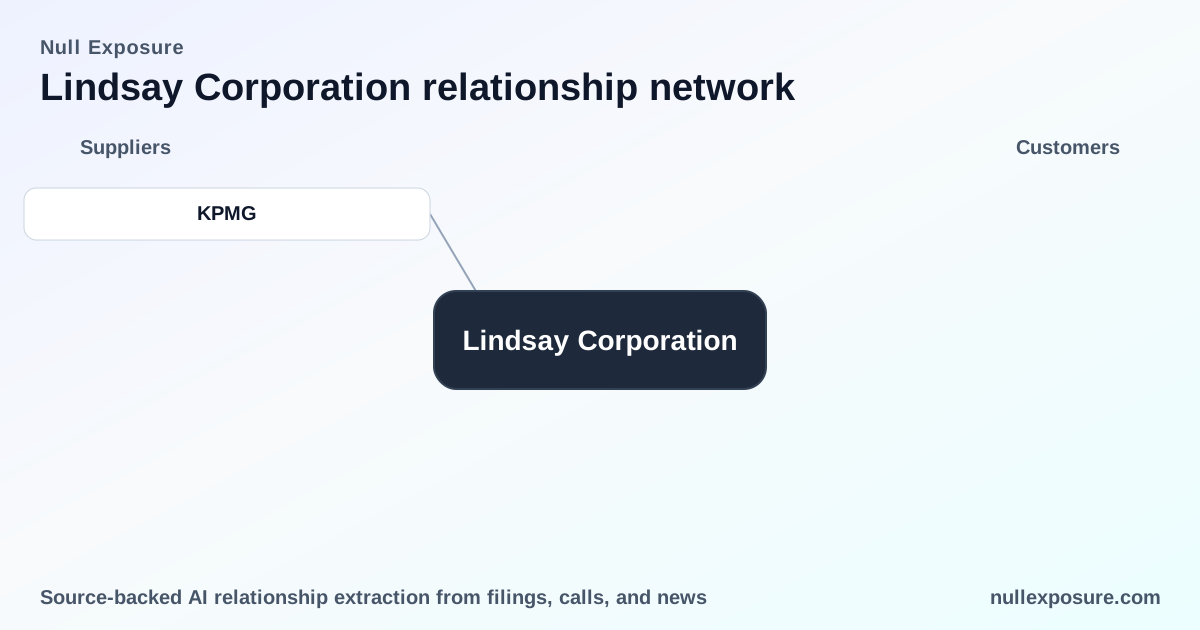
- KPMG — independent auditor, ratified for FY2026. According to a Globe and Mail press release dated March 10, 2026, Lindsay secured shareholder ratification of KPMG as its independent auditor for the fiscal year ending August 31, 2026. This is a governance-level supplier relationship that confirms external audit continuity and an unchanged primary audit provider for the stated fiscal year (Globe and Mail, March 2026).
What the KPMG relationship means for investors
Auditor choice and ratification are high-signal governance events. A ratified engagement with a Big Four auditor like KPMG signals continuity in external assurance and reduces the probability of near-term audit disruption that could otherwise complicate earnings reliability or delay filings. For a company with significant installed equipment and service contracts, consistent external audit coverage supports credit reliability and investor confidence in balances such as deferred revenue, inventory and long-term service liabilities.
Constraints and company-level signals about supplier posture
No supplier-specific contractual constraints or restrictive clauses are present in the reviewed disclosures. At the company level, that absence is informative: public disclosures did not identify supplier-imposed operational restrictions or material vendor contingency clauses in the sources reviewed, which suggests the company is not reporting supplier-side covenants that would materially alter contracting posture in investor communications.
From a business-model perspective that produces actionable intelligence for investors:
- Contracting posture: Governance suppliers are clearly disclosed; less information is publicly available about manufacturing or logistics suppliers in these records, which implies that production vendor relationships are managed without unusual public-facing constraints.
- Concentration and criticality: The record shows no evidence of a single supplier concentration outside of the audit relationship; audit continuity with KPMG reduces governance concentration risk but does not address operational supplier concentration.
- Maturity and stability: The ratification of a large, established auditor is a maturity signal for corporate reporting processes and indicates management prioritizes continuity in financial oversight.
Investment implications and risk checklist
For investors and operators evaluating LNN supplier exposure, focus on three areas:
- Governance and reporting integrity: KPMG’s ratification for FY2026 is a positive governance signal—lessening concerns about audit transitions that can trigger restatements or delayed filings.
- Operational supplier transparency: The reviewed disclosures do not enumerate manufacturing or logistics suppliers; investors should request further supplier-level detail if operational concentration or supply-chain risk is a decision factor.
- Hidden constraints: While no supplier constraints were reported, investors should confirm whether material long-term service contracts or exclusive supplier agreements exist off-disclosure that could affect margins or flexibility.
Key takeaways:
- Confirmed governance continuity via KPMG reduces near-term audit risk.
- Lack of disclosed operational supplier detail increases the need for diligence on parts and service partner concentration.
- No reported supplier constraints in the reviewed materials is a neutral-to-positive signal for contracting flexibility.
Practical next steps for investors and operators
If supplier risk or governance continuity matters to your investment or operational thesis, take these actions:
- Request management narratives and schedules for key vendors, numeric exposure to top suppliers, and any change-in-auditor memoranda.
- Verify the scope of KPMG’s engagement and whether any audit-related disagreements or non-routine auditor communications exist in recent filings.
- Monitor quarterly reports and proxy materials for updates on supplier concentration, major equipment suppliers and service-partner arrangements.
For comprehensive supplier intelligence and ongoing coverage updates, visit Null Exposure home to see how supplier analytics are tracked across the market.
Conclusion: governance strength, operational questions
The disclosed supplier relationship set for Lindsay in the reviewed records is concise and governance-focused. KPMG’s ratification for FY2026 is a governance-strength signal that supports the integrity of financial reporting, but the absence of publicly disclosed operational supplier detail leaves a gap for investors who require a full picture of manufacturing and service concentration. Use audit continuity as a base-case positive and pursue targeted diligence on operational vendors and service agreements to complete the supplier-risk assessment. Explore full supplier coverage.
Bold summary: Audit continuity with KPMG is a clear positive; lack of operational supplier disclosure requires follow-up diligence before drawing conclusions on supply-chain concentration or vendor risk.