LENSAR (LNSR) Supplier Relationships: What Investors Should Know
Thesis: LENSAR operates as a medical device supplier focused on the commercial roll‑out of its ALLY System, monetizing through sales of capital systems and related components and inventory; its supplier posture is characterized by a mix of long‑term purchase commitments and third‑party logistics/service dependencies that create mid‑range committed spend and operational sensitivity. Investors should value LENSAR not only by top‑line adoption of the ALLY System but also by the durability and cost profile of its supply agreements. For further vendor intelligence and supplier network context, see https://nullexposure.com/.
How LENSAR sources and converts product into revenue
LENSAR’s operating model centers on manufacturing and procuring components for the ALLY System and shipping finished product to customers. The company has disclosed a mix of standard purchase orders and a “limited number of long‑term supply agreements” that bind it to future purchases and influence unit economics. Revenue is driven by sales of the ALLY System and associated inventory; supply commitments therefore convert future demand into immediate cash flow obligations and inventory risk.
- Contracting posture: The company has increasingly entered longer‑term and higher per‑unit cost contracts to ensure inventory availability for expected commercial demand.
- Spend scale: Documented remaining minimum purchase obligations total approximately $12.2 million as of December 31, 2024, placing LENSAR’s supplier spend in the $10m–$100m band on a near‑term horizon.
- Service dependencies: LENSAR relies on third‑party transport and logistics providers for secure point‑to‑point delivery and shipment tracking, introducing operational criticality around fulfillment.
If you are evaluating supplier counterparty risk or negotiating with LENSAR, download targeted exposure reports at https://nullexposure.com/ for a deeper view.
What the constraints tell us about business model risk
The disclosed constraints reveal practical, investor‑relevant signals about LENSAR’s supply chain and financial commitments:
- Long‑term contracting is deliberate and material. The company transitioned to more multi‑period supply arrangements to protect against supply shortages; that raises predictability of supply but also locks in price and quantity risk.
- Mid‑sized committed spend creates leverage and concentration risk. The roughly $12.2 million remaining purchase obligation and related lease liabilities mean procurement commitments are meaningful relative to a small‑cap medical device operator and influence liquidity planning.
- Operational criticality of logistics providers. Reliance on transport service providers for secure delivery and tracking makes logistics a single point of operational failure if not diversified or well‑managed.
These constraints are company‑level signals that shape strategic choices — from pricing power to inventory financing — and should be considered when modeling margins, working capital needs, and downside scenarios.
Every reported supplier/service relationship (plain English summaries)
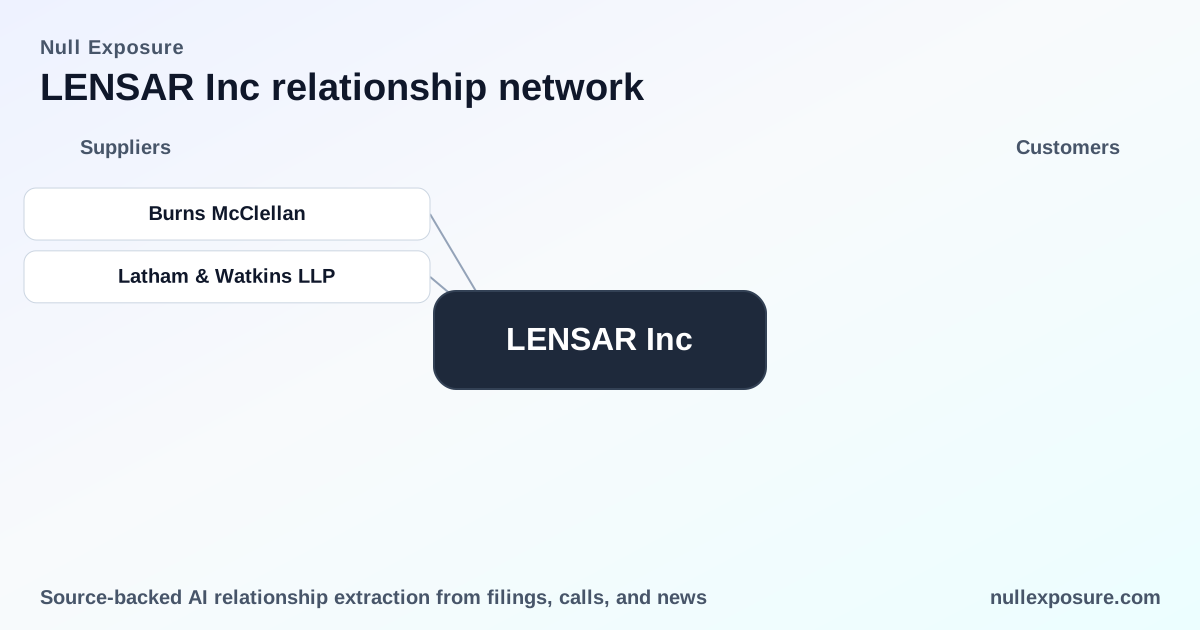
Burns McClellan — investor relations / communications support
Burns McClellan is cited in LENSAR press materials and news coverage as an external investor‑relations and communications contact for the company, handling investor inquiries and media distribution for corporate announcements. According to a GlobeNewswire release (Sept 2, 2025) and a Yahoo Finance report (March 10, 2026), Burns McClellan is listed among contact points for LENSAR press and IR matters, indicating an ongoing vendor relationship for communications services. (GlobeNewswire, Sept 2, 2025; Yahoo Finance, Mar 10, 2026)
Latham & Watkins LLP — legal representation in strategic transaction
Latham & Watkins LLP represented LENSAR in a strategic transaction with Alcon, acting as legal counsel through a team of partners and associates. A firm announcement and related coverage note that Latham & Watkins led the legal work for LENSAR in the acquisition context, confirming the use of large international law firms for high‑value corporate transactions (Latham & Watkins news release, FY2025).
Operational implications of the listed relationships
The supplier/service footprint documented is narrow but strategically chosen: professional services (IR/communications and top‑tier legal counsel) are externalized, while manufacturing and logistics obligations are driven through purchase orders and long‑term supply arrangements. That mix implies LENSAR allocates internal resources to core product development and commercialization while outsourcing non‑core but mission‑critical functions.
- Concentration and criticality: The procurement spend and logistics dependency create higher criticality on manufacturing partners and transport providers; professional services vendors are less operationally critical but important for transaction execution and market communications.
- Maturity and contracting posture: Long‑term supply agreements and binding purchase obligations reflect a maturing commercialization phase where the company is securing capacity and shielding revenue pathways against supply volatility.
If you want granular supplier exposure and how these contracts affect cash flow and counterparty risk, visit https://nullexposure.com/ for tailored supplier intelligence.
Investment implications — risks and catalysts
- Risk: locked‑in unit costs. Long‑term contracts signed at higher per‑unit prices to secure supply raise downside margin risk if adoption of the ALLY System lags or component prices fall.
- Risk: working capital pressure. The $12.2 million minimum purchase obligation and lease commitments exert pressure on near‑term liquidity and inventory funding strategies.
- Catalyst: secured supply enabling commercial scale. The strategy of securing components through longer‑term agreements reduces supply interruption risk and supports a predictable supply pipeline if end‑market demand materializes.
- Catalyst: professional services posture increases execution credibility. Use of a top law firm for the acquisition and an IR firm for communications supports corporate governance, transaction execution, and investor outreach.
Primary takeaway: LENSAR’s supplier relationships and contractual commitments are consistent with a company moving from development into commercial scale — that brings both improved revenue visibility and meaningful procurement and liquidity risk that investors must price.
Bottom line and recommended next steps
LENSAR’s supplier landscape is compact but consequential: long‑term purchase obligations and logistics dependencies define the supply risk profile, while professional services relationships support market execution and strategic transactions. Investors should explicitly model committed procurement obligations into working capital forecasts and stress test margins under different procurement cost and demand scenarios.
For a concise vendor risk briefing and to explore which suppliers drive the largest contractual exposures for LENSAR, get a focused supplier risk report at https://nullexposure.com/. For institutional inquiries or custom coverage, visit https://nullexposure.com/ to arrange a deeper analysis.
Sources referenced in this note include LENSAR press coverage and firm announcements: GlobeNewswire (Sept 2, 2025), Yahoo Finance (Mar 10, 2026), and Latham & Watkins news reporting (FY2025).