LOBO EV Technologies — supplier relationships and operational signals investors must price in
LOBO EV Technologies designs, manufactures, and sells electric two- and four-wheeled vehicles out of Wuxi, China, monetizing through direct product sales, OEM contracts and channel distribution (including e‑commerce platforms), and expanding into energy-integrated vehicle systems. Revenue generation is product-led with incremental monetization from platform distribution and strategic production partnerships that reduce unit cost and expand market access. Learn more supply‑chain intelligence at Null Exposure.
How LOBO makes money and why partnerships matter
LOBO’s core business model is manufacturing and selling e-bicycles, e-mopeds, e-tricycles and light electric shuttles. The company reported roughly $21.15M revenue (TTM) with negative EBITDA and negative EPS, indicating current cash consumption while scaling commercial reach. Commercial channels include traditional sales and growing use of online marketplaces; management is also pursuing localized production solutions and energy‑storage integrations to reduce operating cost and product differentiation.
- Commercialization is concentrated on product margins: gross profit is positive but operating and net margins are negative, so scale and channel efficiency are primary levers for restoring profitability.
- Partnerships serve two roles: (1) expand manufacturing footprint to lower costs and access incentives, and (2) integrate energy and distribution capabilities to support product differentiation.
For a comparative view of supplier and partner exposures, consult Null Exposure.
The relationships investors need on their watchlist
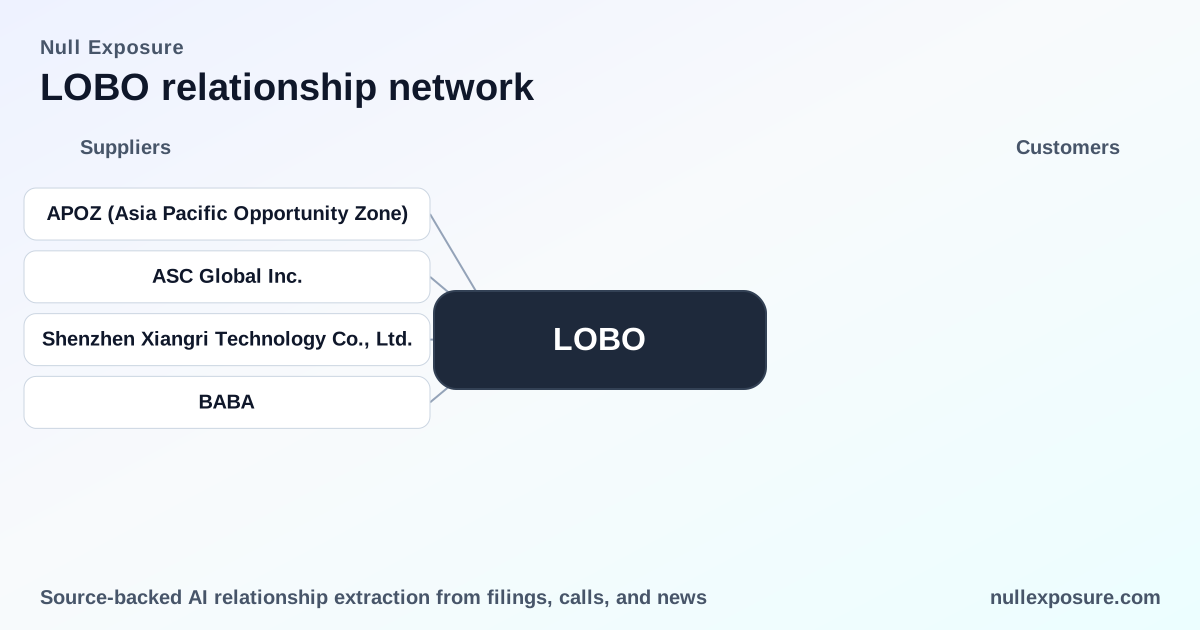
APOZ (Asia Pacific Opportunity Zone)
LOBO has announced plans to enter APOZ Business Park to exploit the park’s dual Qualified Opportunity Zone and Free Trade Zone benefits for local production and market access, positioning APOZ as a production hub to help LOBO “reach their growth target and maximize market potentials.” According to an Accesswire release (July 17, 2025) this is framed as a strategic location play to lower manufacturing friction and tax/regulatory costs.
Source: Accesswire press release, July 17, 2025.
ASC Global Inc.
ASC Global executed an agreement with LOBO to develop a strategic cooperation for setting up a production facility at APOZ, with ASC described as a wholly‑owned subsidiary of Token Communities (OTC: TKCM). The deal frames ASC as the implementation partner for LOBO’s APOZ production expansion and implies reliance on third‑party operators to scale manufacturing outside its Wuxi base.
Source: Accesswire press release, July 17, 2025.
Shenzhen Xiangri Technology Co., Ltd.
Shenzhen Xiangri has supplied energy solutions to Jiangsu LOBO’s solar‑powered electric vehicles, and senior hires from solar teams were integrated into LOBO’s Jiangsu operations to accelerate entry into PV energy storage and power generation offerings. This positions energy suppliers as tactical partners for product differentiation and potential margin improvement through integrated power systems.
Source: GlobeNewswire press release, December 12, 2025.
Alibaba (BABA)
LOBO is increasing its use of Alibaba’s platform and other e‑commerce channels to boost marketing and direct sales, including expanded participation in industry exhibitions and social media-driven campaigns. A Zacks initiation note (FY2024 context) highlighted Alibaba as a primary online channel for LOBO’s commercial expansion and customer reach.
Source: Zacks/SCR initiation note, 2024.
Operating model signals and business‑model constraints investors must price
With no formal constraints disclosed in the supplier relationship dataset, company‑level financial and ownership signals nonetheless paint a clear operating posture.
- Contracting posture: LOBO is operating as a hybrid manufacturer and channel seller; it relies on strategic third‑party partnerships for production expansion, indicating a contracting posture that balances in‑house manufacturing with outsourced facility setups to conserve capital and accelerate footprint.
- Concentration: Insiders own ~41.9% of shares and institutional ownership is nominal (~0.21%), creating a shareholder base dominated by insiders and limiting institutional liquidity. This concentration elevates the governance and exit‑risk profile for public investors.
- Criticality of partners: Suppliers and partners that supply energy systems, turnkey production facilities or platform distribution are operationally critical — failures or delays in APOZ/ASC implementation or energy integration could materially affect unit economics and delivery timelines.
- Maturity and financial resilience: The firm is early stage at public scale — micro‑market capitalization (
$6.66M), negative EBITDA (‑$2.83M), and negative EPS despite positive gross profit indicate limited buffer against execution slippage and dependence on successful scaling or equity/debt raises.
These are company-level signals derived from public filings and reported metrics for fiscal periods ending June 2025 and trailing twelve months data.
Key investment risks and upside pathways
- Risks
- Execution risk on APOZ/ASC production rollout could delay unit cost reductions and revenue expansion.
- Financial runway is constrained by negative operating cash flow and small market capitalization.
- Shareholder concentration reduces passive institutional oversight and increases governance risk.
- Upside
- Channel expansion via Alibaba can accelerate volume and lower customer acquisition cost if conversion improves.
- Energy integration with suppliers like Shenzhen Xiangri offers product differentiation and potential recurring revenue from energy solutions.
If you manage supplier risk or source lists for portfolio due diligence, examine partnership agreements, production timelines and capex commitments — or start with Null Exposure for curated supplier intelligence.
Actionable monitoring checklist for investors
- Track APOZ facility milestones and ASC Global implementation timelines.
- Monitor quarterly cash flow, capex spend and any financing events that change capital structure.
- Watch customer acquisition and channel KPIs from Alibaba and direct sales.
- Verify progress on PV energy integrations and any commercial rollouts from Jiangsu operations.
For ongoing monitoring and deeper supplier network mapping, visit Null Exposure.
Bottom line
LOBO is a product‑centric EV manufacturer pursuing a hybrid route to scale: channel expansion through e‑commerce, outsourced production via strategic partners, and technical differentiation with energy integrations. The company’s path to profitability depends on successful execution of APOZ/ASC production builds, effective monetization of online channels, and conversion of energy integrations into margin improvements. Given the concentrated ownership and constrained financial runway, investors must prize transparency on partner contracts and concrete operational milestones over rhetoric. For a practical supplier risk view and ongoing alerts, see Null Exposure.