Comstock Mining (LODE): How supplier relationships and contractual constraints shape near‑term financing and operational optionality
Comstock Mining operates as an exploration, development and production company focused on Nevada mineral properties and has diversified into fuels through Comstock Fuels. The company monetizes through mineral sales, fee and royalty income tied to licensed fuel technology, and equity capital markets—raising cash through public offerings when operating cash flow is insufficient. Comstock’s business model today is capital‑intensive, reliant on a mix of long‑term real estate commitments, exclusive licensing arrangements for downstream fuel technology, and active engagement with boutique capital markets partners to underwrite equity. Visit https://nullexposure.com/ to explore integrated supplier and counterparty intelligence on LODE.
What the recent capital markets activity tells investors
Comstock used the public markets in January 2026 to raise equity capital. Titan Partners, a division of American Capital Partners, served as the sole bookrunner for the offering, which the company announced as proposed on January 28 and then priced as a $50 million upsized and oversubscribed offering on January 29, 2026. This transaction demonstrates direct access to boutique underwriting and the ability to execute an equity raise when required, reducing immediate liquidity stress but diluting shareholders and increasing dependence on capital markets going forward. (GlobeNewswire, Jan 28–29, 2026.)
Key named counterparties and what they mean for operations
-
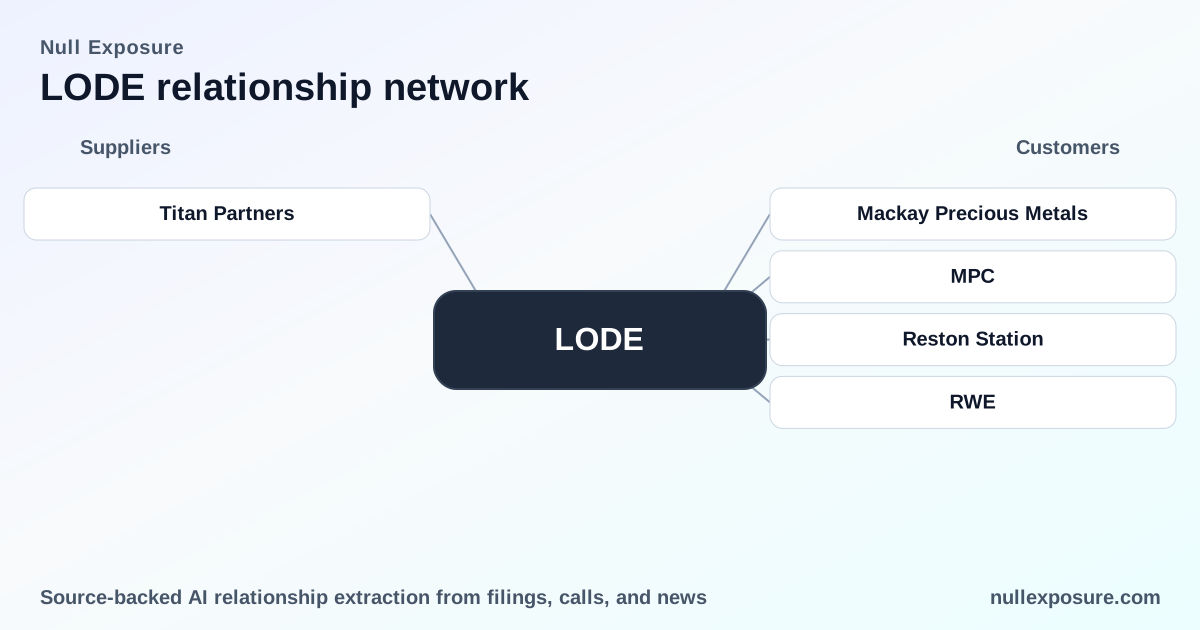
Titan Partners — Titan acted as the sole bookrunner on Comstock’s January 2026 public offering; the deal was reported upsized and oversubscribed at $50 million, signaling investor appetite for the financing round and management’s reliance on specialist underwriters for capital raises (GlobeNewswire, Jan 28–29, 2026).
-
RenFuel — Comstock Fuels secured an exclusive license from RenFuel (signed Oct 11, 2023; amended Dec 22, 2023) to use patented catalytic esterification technology across North, Central and South America in exchange for ongoing royalty fees tied to production and sales, establishing a potential recurring revenue stream through downstream fuel products (company filing, Oct–Dec 2023).
-
AST (Research & Development Pilot Facility agreements) — The company entered into three license agreements with AST that grant full use of the R&D Pilot Facility and associated equipment through April 30, 2025, giving Comstock operational access to pilot‑scale processing capabilities without immediate capital outlay for that infrastructure (company filing).
-
Sierra Clean Processing LLC (SCP) — Comstock signed a real estate and building lease with SCP on August 15, 2023 to lease improvements in Silver Springs, Nevada; the SCP Building Lease is a five‑year term commencing August 1, 2023, with automatic renewal for an additional five years, creating a multi‑year occupancy commitment (company filing, Aug 2023).
These named arrangements collectively show a hybrid operating posture: strategic licensing to capture technology upside, short‑to‑mid term access to processing capability, and long‑term real estate commitments that fix a baseline of operating cost.
How contractual constraints shape Comstock’s operating model and risk profile
Comstock’s disclosed constraints present clear signals about contracting posture, concentration, criticality and maturity:
-
Contracting posture — committed, multi‑year obligations. The SCP lease is a five‑year agreement with automatic renewal, and licensing deals involve ongoing royalty obligations; these are not ephemeral merchant relationships but contractual commitments that limit near‑term flexibility (company filing).
-
Concentration and strategic focus. The RenFuel license is exclusive across the Americas, concentrating Comstock Fuels’ commercial leverage on a single technology provider in its geographic footprint; this creates upside if commercialization succeeds, but intensifies supplier concentration risk while the company scales sales (company filing, Oct–Dec 2023).
-
Criticality of partner access. AST’s license of the R&D Pilot Facility through April 30, 2025 provides necessary technical capacity to advance product qualifications; losing that access would impede commercialization timelines. Access to facilities and licensed IP are operationally critical in the near to medium term (company filing).
-
Maturity and timing. Several obligations are bounded: AST agreements terminate April 30, 2025 (implying a near‑term decision point), whereas SCP lease terms extend longer with automatic renewal. These staggered maturities create a roadmap of events investors should monitor—facility agreements expire earlier while real estate and licensing obligations persist (company filing).
Financial context that matters to counterparties
Comstock’s operating performance and capital structure amplify the importance of these relationships. The company reports TTM revenue of $2.78 million, negative EBITDA (−$38.3 million) and market capitalization of approximately $217 million, while forward P/E metrics indicate market expectations once projects scale. Capital markets access via boutique underwriters (Titan) is therefore a strategic lifeline; if equity raises slow, royalty and licensed‑product commercialization become the primary routes to cash generation. Use supplier mapping to track counterparties and covenant timelines at https://nullexposure.com/.
Practical implications for investors and operators
-
Operational risk is front‑loaded through supplier commitments. Long‑term lease obligations and exclusive licensing create fixed costs and dependency on successful commercialization of fuel technologies. That raises the operational break‑even threshold and increases the importance of execution.
-
Capital risk is mitigated but not eliminated. The January 2026 upsized offering shows capital markets access, but the company’s negative operating cash flow means further rounds or successful royalty commercialization are likely required to sustain development without meaningful dilution.
-
Monitor the near‑term cliff dates. AST’s pilot‑facility agreement and milestones tied to licensing commercialization create specific decision points that will materially influence optionality and valuation.
Explore the full supplier and counterparty picture for LODE at https://nullexposure.com/ to turn these contractual signals into actionable monitoring.
What to watch next and investor action items
- Track any public updates on the RenFuel commercialization schedule and royalty recognition—royalties are the pathway to sustainable revenue growth outside mining cash flow.
- Monitor AST facility extension or replacement — if pilot access lapses, timelines for product qualification will extend.
- Watch for further capital market activity with boutique underwriters; repeat reliance on equity issuance changes dilution and governance dynamics quickly.
For institutional-grade supplier intelligence and event monitoring for Comstock Mining, see https://nullexposure.com/ for ongoing updates and comprehensive relationship maps.
Final takeaway: Comstock’s supplier network reflects a deliberate strategy to outsource key technology and facility capacity while maintaining long‑term property commitments; capital markets remain the immediate lever to fund execution, and the interplay between exclusive licensing, pilot facility access, and lease liabilities will determine whether revenue from fuel technologies can materially de‑risk the equity story.