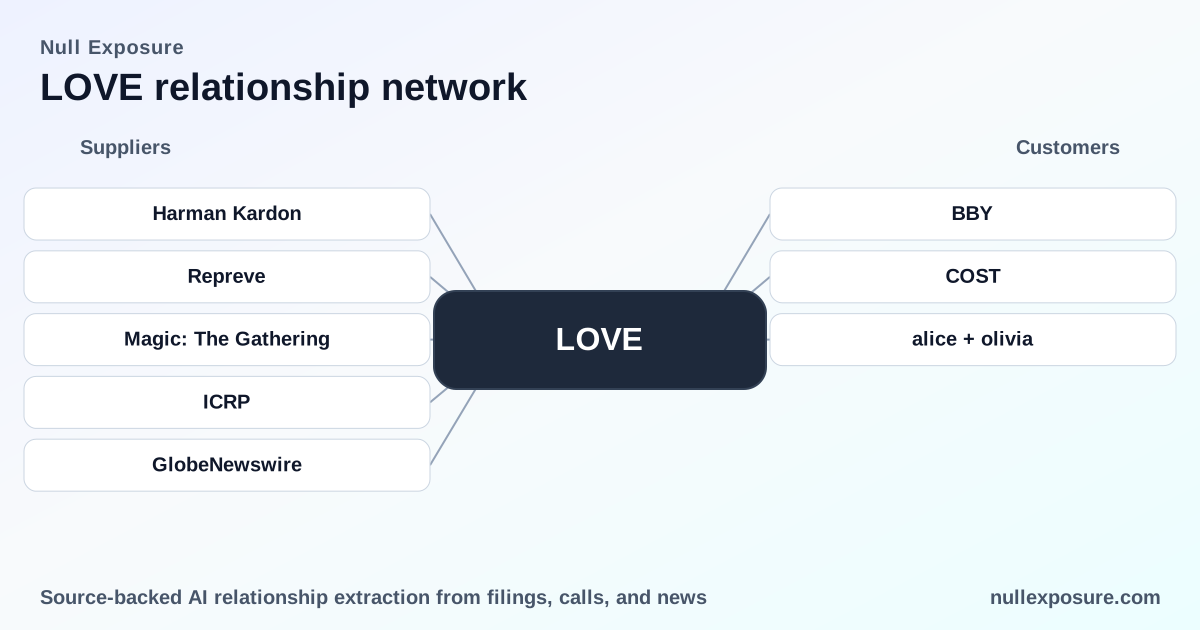
Lovesac (LOVE): supplier relationships that shape product, distribution and brand
The Lovesac Company designs, manufactures and sells modular seating and lifestyle furniture, monetizing through direct retail and wholesale channels and recurring product innovation and co-branded releases. Its business mixes asset-light design and inventory-driven manufacturing with premium pricing and brand collaborations, so supplier relationships determine product quality, sustainability positioning and cost structure. For a full map of supplier exposures and contract signals, see https://nullexposure.com/.
How Lovesac structures its supplier footprint and why it matters to investors
Lovesac operates with a deliberate third‑party manufacturing model: design and distribution are internal, while production is contracted to vetted global manufacturers. The company states it transacts largely on an order‑by‑order basis rather than under long‑term supplier contracts, which creates a flexible sourcing posture but increases exposure to price and capacity volatility. Lovesac also runs a sizeable sustainability program tied to recycled materials, which changes the supplier mix toward specialty fiber and recycling partners.
Operationally this produces four practical characteristics investors should treat as active risk vectors:
- Contracting posture — spot-oriented: the company’s reliance on order-by-order relationships gives purchasing flexibility but limits contractual protection for capacity and price stability.
- Geographic breadth — global plus domestic nodes: production partners span Asia, Mexico, India and the United States; Lovesac also operates two domestic manufacturers in Texas and North Carolina, creating a hybrid footprint that balances cost and near‑market resilience.
- Role concentration — third‑party manufacturers are critical: manufacturing partners are the primary point of operational control for product quality and delivery timing.
- Maturity and governance — vetted but evolving: Lovesac describes a network of “highly vetted and qualified” partners, and sustainability partnerships (e.g., recycled fiber) imply longer‑term programmatic commitments even without long formal purchase contracts.
These signals explain why supplier disruption or raw‑material inflation filters rapidly to gross margin volatility for a company with $690.6M trailing twelve‑month revenue and a business that sells high‑unit‑value modular products.
Explore deeper supplier profiles at https://nullexposure.com/ to assess concentration and counterparty risk.
Who Lovesac is publicly tied to — the relationship inventory
Below I cover every relationship item surfaced in the recent collection of media and release citations. Each entry is a concise, plain‑English description with a publication reference.
Harman Kardon — integrated audio collaboration (product launch coverage)
Lovesac partnered with Harman Kardon to integrate premium audio into a new Sactionals product, positioning the furniture as a multimedia living‑room centerpiece and extending product differentiation beyond fabric and construction. This collaboration was detailed in coverage of the January 2022 product unveiling reported by GeekSpin (FY2023 reporting window). Source: GeekSpin article on Lovesac sofa speakers (FY2023).
Harman Kardon — showroom audio for retail experience (local coverage)
Local reporting from a Connecticut showroom opening reiterated the Harman Kardon relationship, noting the brand supplied sound systems for a large Lovesac showroom to showcase the audio‑integrated product experience and elevate in‑store demos. Source: Patch coverage of a Lovesac showroom (FY2023).
Repreve — recycled‑fiber supply and sustainability program
Lovesac runs an ongoing partnership with Repreve to repurpose plastic bottles into fabric inputs; the company reported repurposing 322 million bottles through the end of fiscal 2025, embedding recycled polyester into its product line and using sustainability as a brand and supply‑chain differentiator. Source: Furniture Today ESG coverage (FY2025).
Magic: The Gathering — branded product collaboration
Lovesac executed a co‑branded release tied to Magic: The Gathering — a MovieSac bundle that packaged a thematic beanbag/seat with trading‑card product — reflecting Lovesac’s strategy to monetize intellectual‑property tie‑ups and limited editions that carry high ASPs. Source: StarCityGames article on the MovieSac bundle (FY2023).
ICR — investor relations services contact in press releases
Investor relations communications list ICR as the media/IR contact for Lovesac press releases, indicating ICR handles a portion of investor and media outreach for financial reporting and events. Source: QuiverQuant republishing of a Lovesac press release (FY2025).
GlobeNewswire — distribution channel for corporate releases
Lovesac’s regulatory and earnings communications are distributed through GlobeNewswire, a standard press‑release distributor used to reach investors and media; QuiverQuant republished a GlobeNewswire‑distributed Lovesac release in late 2025. Source: QuiverQuant/GlobeNewswire press‑release distribution (FY2025).
Operational implications and investor takeaways
The relationship inventory shows a mix of strategic brand partners (Harman Kardon, Magic) and supply/infrastructure partners (Repreve, contract manufacturers, press/distribution partners). That mix informs three investment posture conclusions:
- Brand collaborations drive customer willingness to pay and product differentiation; these partners are more marketing‑critical than operationally critical but raise execution requirements (co‑development timelines, IP licensing).
- Manufacturing and specialty‑material partners are operationally critical; the company’s spot contracting posture increases exposure to raw‑material price swings and capacity constraints. The mention of two domestic manufacturers in Texas and North Carolina is a signal of partial onshore redundancy but also concentration risk because only a small number of domestic plants produce core products.
- Sustainability partnerships matter to margins and brand: Repreve’s role in converting bottles to fiber is both a supply input and a public‑relations asset; failure to scale recycled input at price parity would press margins or brand positioning.
Investors should monitor supplier count and contract evolution, order lead times, and the pace of recycled‑material adoption as leading indicators of margin trajectory.
For a deeper supplier risk assessment and to download the supplier map for LOVE, visit https://nullexposure.com/.
What operators should prioritize
Operators at Lovesac should prioritize three actions that reduce headline risk and protect margin:
- Formalize volume commitments or contingency capacity with key manufacturers to replace pure spot exposure with at least partial term agreements.
- Increase visibility into supplier concentration metrics (units per factory, alternate qualified suppliers) and test surge capacity for high‑ASP co‑brand launches.
- Lock in recycled‑fiber pricing through program contracts with partners like Repreve to stabilize COGS for sustainability‑branded SKUs.
These steps translate directly to reduced gross‑margin volatility for a company with the scale and brand positioning of Lovesac.
Bottom line and recommended next steps for investors
Lovesac’s supplier network blends brand partnerships that boost top‑line pricing with an order‑by‑order manufacturing model that amplifies margin sensitivity. The company’s sustainability relationships strengthen its brand but create new input dependencies. Investors should watch: supplier contract evolution, domestic manufacturing capacity in Texas/North Carolina, and the cadence of co‑brand product launches for clues on margin durability.
To review the full supplier exposure and get an audit‑ready supplier map for LOVE, go to https://nullexposure.com/. For bespoke exposure analysis or operator due diligence support, visit https://nullexposure.com/ and request a detailed supplier breakdown.