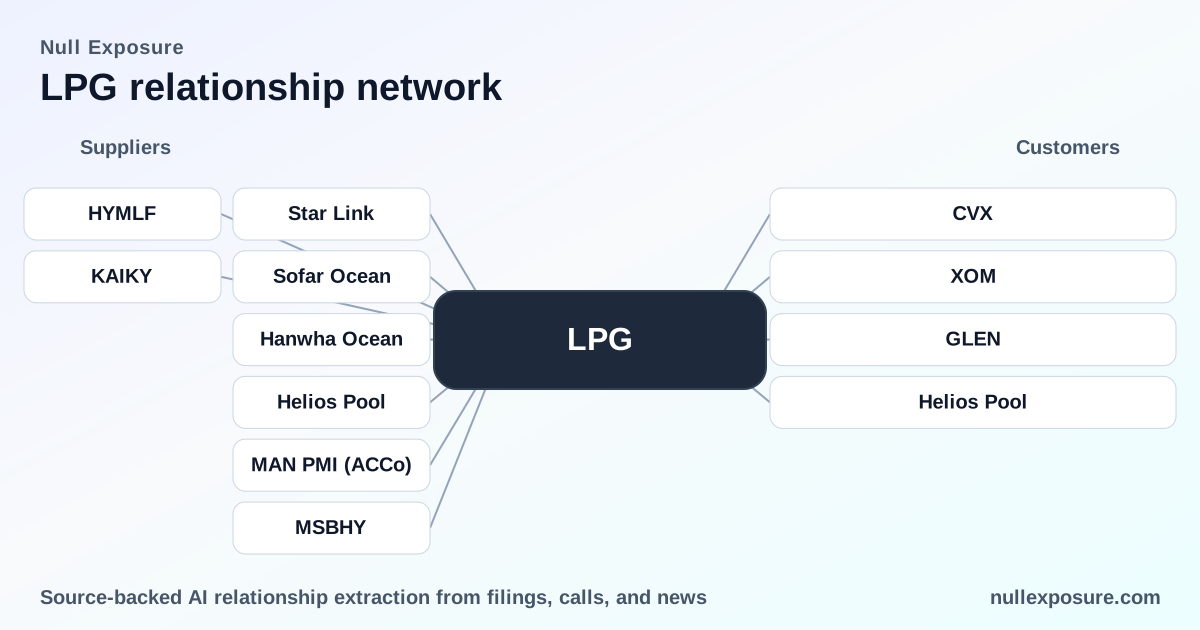
Dorian LPG Ltd — Supplier Map and Operational Implications for Investors
Dorian LPG is a tanker operator that monetizes its fleet through a blend of pooled spot trading and fixed charters, capturing voyage and time-charter revenue from global LPG movements. The company drives margin by optimizing bunker consumption, leveraging routing and engine software, and by participating in pools that centralize spot exposure; revenue accrues from freight and hire, while fleet composition and pool relationships determine the volatility and upside of the cash flow stream. For investors, supplier relationships are not peripheral—they are levers of voyage economics, crew retention, and regulatory compliance. Learn more about supplier exposure and commercial counterparties at https://nullexposure.com/.
What the supplier list reveals about Dorian’s operating model
Dorian’s supplier set clusters into three functional groups: connectivity and voyage analytics (crew welfare and routing), pool operators (spot revenue aggregation), and shipbuilders/engine integrators (fleet origin and fuel efficiency). Together these relationships shape daily fuel expense, schedule reliability, and the realized margin on spot voyages.
- Contracting posture: The presence of multiple pool operators and third-party routing indicates a mixed contracting posture—outsourced operational execution for spot trading, and vendor-driven optimization for fleet performance.
- Concentration and criticality: Pool operators and engine/shipbuilders are critical to revenue realization and vessel uptime; technology partners are operationally critical for bunker savings and crew efficiency.
- Maturity: The suppliers listed are established maritime and industrial names, which signals low supplier immaturity risk but higher negotiation leverage for Dorian given its fleet scale.
These signals support a view that Dorian manages voyage economics through targeted supplier partnerships rather than vertically integrating every function. If you want regular supplier exposure reports and actionable counterparty profiles, visit https://nullexposure.com/ for an investor-focused view.
Supplier-by-supplier: operational implications and source notes
-
Star Link — Dorian rolled out Star Link alongside its VSAT service across owned vessels to improve crew welfare and shore–ship collaboration, an operational step that supports crewing stability and remote operations. Source: Dorian LPG 2024 Corporate Responsibility Report (MarketScreener, cited in March 2026).
-
Sofar Ocean — Dorian implemented Sofar Ocean’s routing algorithm in November 2024, which the company reports delivered materially more accurate weather forecasts and substantial voyage bunker savings through better speed and arrival optimization. Source: Dorian LPG 2024 Corporate Responsibility Report (MarketScreener, FY2025 disclosure).
-
Hanwha Ocean — Hanwha Ocean is listed in Dorian’s fleet/pool notes for FY2026 as a counterparty associated with vessels such as “Cresques,” indicating a pool or commercial relationship tied to specific ships in the fleet table. Source: Dorian LPG Q3 FY2026 financial results (Business Wire / Morningstar, February 2026).
-
Helios Pool — Dorian conducts its entire spot trading program through the Helios Pool; management states Helios’s reported spot results serve as the primary measure of spot chartering performance, making Helios a direct driver of spot revenue volatility. Source: Q2 FY2026 earnings call transcript (InsiderMonkey, FY2025/FY2026 context).
-
MAN PMI (ACCo) — Dorian implemented advanced engine software modifications (MAN PMI / Eco‑Torque) to optimize engine performance and lower fuel consumption, a clear operating expenditure lever to improve voyage-level margins. Source: Dorian LPG 2024 Corporate Responsibility Report (MarketScreener, FY2025).
-
Mitsubishi (MSBHY) — Mitsubishi appears in the fleet summary of Q3 FY2026 results as the builder/operator tie for a listed vessel (e.g., “BW Tokyo”), reflecting the fleet’s construction pedigree and associated maintenance and compliance implications. Source: Dorian LPG Q3 FY2026 financial results (Business Wire / Morningstar, February 2026).
-
Hyundai (HYMLF) — Hyundai-built tonnage (for example, “Comet” 84,000 built 2014) is recorded in Dorian’s pool allocations, linking Hyundai shipyard pedigree to the company’s pool composition and vessel age profile. Source: Dorian LPG Q3 FY2026 financial results (Business Wire / Morningstar, February 2026).
-
Kawasaki (KAIKY) — Kawasaki-built vessels (e.g., “Captain Markos” 84,000, built 2023) are identified in fleet and pool disclosures, informing capex and retrofit timing as well as potential fuel-efficiency baselines for newer vessels. Source: Dorian LPG Q3 FY2026 financial results (Business Wire / Morningstar, February 2026).
Constraints and what’s not captured in the supplier feed
No supplier-specific contractual constraints were captured in the relationship dataset supplied. As a company-level signal, the absence of disclosed supplier constraints suggests there are no flagged contractual restrictions or unique encumbrances surfaced by the sources used for this mapping; investors should nonetheless validate contract length, termination rights, and cost pass-throughs directly from filings and management commentary for material counterparties.
Investment takeaways: what investors should watch
- Operational alpha from vendors: Technology and engine software partners (Sofar Ocean, MAN PMI, Star Link) directly improve voyage economics; continued rollout and measurement of bunker savings will be a leading indicator of margin capture.
- Pool concentration risk: Helios Pool is the conduit for all spot trading—this centralization increases operational efficiency but creates dependency; any pool performance variation feeds directly into spot P&L.
- Fleet origin matters: Multiple shipyard relationships (Hyundai, Kawasaki, Mitsubishi) imply a mixed-age fleet; younger Kawasaki tonnage will likely outperform older vessels on fuel and emissions metrics, affecting relative voyage economics.
- Valuation context: Dorian’s market capitalization (~$1.33B), EV/EBITDA (~7.4), and high dividend yield (~8.4%) suggest the market prices a stable cash-generative midstream operator with visible cyclical exposure—supplier-driven cost improvements are therefore material to both earnings stability and dividend sustainability. Source: company fundamentals (latest fiscal metrics through FY2025/2026).
If you want a tailored supplier-risk brief or a counterparty exposure heatmap for Dorian LPG, start with a focused report at https://nullexposure.com/.
Final recommendation
For investors evaluating Dorian LPG, supplier relationships are core operational levers—routing algorithms, engine software, and pool partners directly translate into fuel cost, schedule reliability, and realized freight. Monitor Helios Pool performance metrics, the rollout impact of Sofar Ocean routing, and fuel-efficiency gains from MAN PMI upgrades to forecast margin improvements. For continuous monitoring and supplier-focused intelligence that supports position sizing and risk controls, visit https://nullexposure.com/ for investor-grade counterparty analytics.