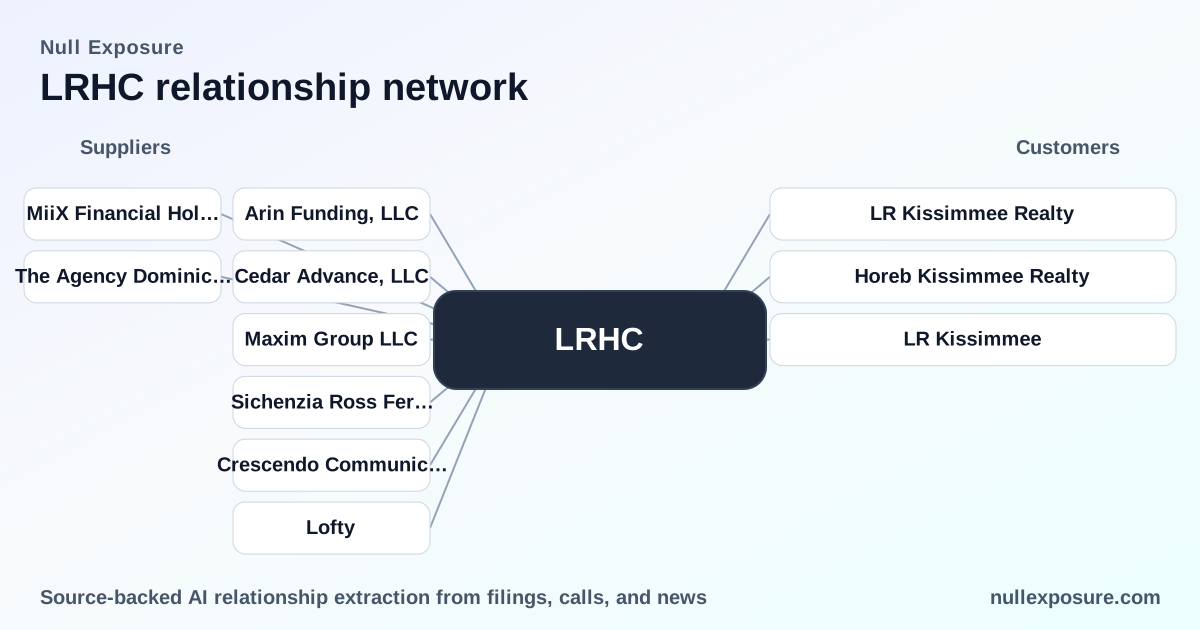
La Rosa Holdings (LRHC) — Supplier and advisor relationships that matter for investors
La Rosa Holdings operates as a vertically integrated real estate services and brokerage platform that monetizes through property brokerage commissions, development project participation, and strategic M&A into adjacent services (now expanding into AI infrastructure). Revenue is driven by transaction volume and selective acquisitions; cash management is driven by occasional short-term financing and legacy merchant cash-advance repayments. For investors and operators evaluating LRHC supplier relationships, the balance between short-term finance, advisory engagements, and service partners is the best lens to judge near-term runway and strategic pivot execution. For a consolidated view of supplier relationships and contract posture, visit https://nullexposure.com/.
How to read LRHC’s supplier map in plain English
La Rosa’s filings and recent press releases show a mix of short-term financing cleanups, financial and legal advisors hired for M&A, IR and PR retainers, and strategic commercial partners to support growth initiatives (brokerage expansion, financing pilots, and a nascent AI data-center push). The pattern is typical of a small-cap consolidator: reliance on short-term capital, outsized influence of a few advisors, and a distributed set of operating partners for market expansion.
Supplier and advisor relationships you need to know
Arin Funding, LLC
La Rosa disclosed a cash payment of $340,421 to satisfy the remaining balance of a merchant cash advance with Arin Funding, LLC in its 2024 Form 10‑K, indicating the company eliminated a specific short-term merchant financing obligation in FY2024. (10‑K, FY2024)
Cedar Advance, LLC
The 2024 10‑K also reports $354,450 paid to satisfy the remaining balance of merchant cash advance agreements with Cedar Advance, LLC, consistent with a one-time cleanup of legacy advance facilities. (10‑K, FY2024)
Maxim Group LLC
Maxim Group is serving as La Rosa’s exclusive financial advisor for the company’s announced acquisition of Consensus Core Technologies, reflecting an investment-banking engagement to execute M&A and capital strategy. (CityBiz report, March 2026)
Sichenzia Ross Ference Carmel LLP
Sichenzia Ross Ference Carmel LLP is listed as legal counsel to La Rosa in multiple news releases about strategic initiatives and acquisitions, confirming the use of outside counsel for transactional and regulatory work. (CityBiz and Benzinga coverage, March 2026)
Crescendo Communications, LLC
Crescendo Communications is the company’s investor relations contact across a suite of press releases and shareholder letters, demonstrating an outsourced IR/communications function active throughout early 2026 announcements. (GlobeNewswire and Yahoo Finance, Feb–Mar 2026)
Lofty
La Rosa references Lofty as a partner supporting its national expansion strategy in press distribution and market positioning, showing a commercial services relationship tied to growth initiatives. (Finviz/GlobeNewswire summary, March 2026)
MiiX Financial Holdings
La Rosa signed a letter of intent with MiiX Financial Holdings to explore a credit-free home financing program, signaling collaboration on consumer financing products that could extend La Rosa’s sales funnel. (Finviz/GlobeNewswire summary, March 2026)
The Agency Dominican Republic
La Rosa Realty LLC entered a strategic agreement with The Agency Dominican Republic to co-broker and secure exclusive rights on a Caribbean development, indicating international brokerage partnerships to drive project sales. (Finviz/GlobeNewswire summary, March 2026)
What the relationships imply about LRHC’s operating model
- Contracting posture: La Rosa’s public disclosures show a mix of short-term financial obligations and transactional advisory retainers rather than long-term supplier contracts. The 10‑K references short‑term promissory notes and merchant cash-advance settlements, which reflect a posture focused on working-capital flexibility.
- Concentration and criticality: A small set of advisors (Maxim, Sichenzia, Crescendo) perform mission‑critical roles—M&A execution, legal clearance, and investor communications—making these relationships operationally critical for strategic initiatives and external-facing credibility.
- Maturity and lifecycle: Many relationships are transactional and event-driven (M&A, press releases, financing cleanups) rather than long-standing retainer models, implying that vendor continuity risk is manageable but execution risk is concentrated during deal periods.
- Spend profile signal: Contract evidence includes small-scale equity and commission programs (RSU equivalents around $10k) and merchant advance repayments; collectively these indicate sub‑$100k spend bands for many supplier engagements, consistent with a low‑base-cost operating footprint.
Mid-read analysis and further supplier intelligence are available if you want an investor-focused supplier scorecard — visit https://nullexposure.com/ for a structured briefing.
Risk and opportunity takeaways for investors
- Cash flow sensitivity: The company’s use of merchant cash advances and short‑term promissory notes historically increased cash‑flow variability; elimination of specific advances reduces near-term legacy drag but does not remove the need for disciplined working‑capital management. (10‑K, FY2024)
- Execution risk around M&A: Maxim Group and Sichenzia are in place to execute the pivot toward AI infrastructure and the Consensus Core acquisition; these advisory relationships are essential to integration and regulatory navigation. (CityBiz, Benzinga, March 2026)
- Strategic diversification: Partnerships with MiiX Financial and The Agency Dominican Republic show deliberate moves to diversify revenue channels—consumer financing and international brokerage—which can broaden margins if executed at scale. (GlobeNewswire / Finviz summaries, March 2026)
- Communications and perception: Crescendo’s IR role is active across multiple announcements in early 2026, which helps manage narrative and investor expectations during a transitionary period. (GlobeNewswire / Yahoo Finance, Feb–Mar 2026)
Practical implications for supplier diligence
- Prioritize verification of advisory engagement terms (fee structures, exclusivity, termination) with Maxim and Sichenzia because they are gating factors for deal success.
- Confirm the finality and cost of legacy financing exits (Arin, Cedar) to understand residual off‑balance commitments. The 10‑K indicates full settlements in FY2024.
- For commercial pilots (MiiX, Lofty), assess revenue share economics and the timeline to realize incremental commission revenue versus upfront integration costs.
What investors should do next
- Request a concise supplier map from management that lists active retainers, their fees, and termination provisions; use that to stress-test runway under conservative revenue scenarios.
- Monitor execution milestones tied to Maxim/Sichenzia support for the Consensus Core transaction and watch for subsequent disclosures on financing and regulatory approvals.
- Track IR communications from Crescendo for changes in message cadence and disclosure transparency.
For a deeper supplier-risk briefing tailored to LRHC’s capital plan and operating pivot, see our investor tools at https://nullexposure.com/. If you want a custom analysis tying these supplier relationships to cash‑flow models or scenario planning, start with a supplier audit on our platform: https://nullexposure.com/.
Bold final point: LRHC’s supplier footprint is lean and event-driven—clearing legacy short‑term finance and relying on a handful of advisors for strategic pivots—so investors should treat advisory continuity and execution milestones as primary investment triggers.