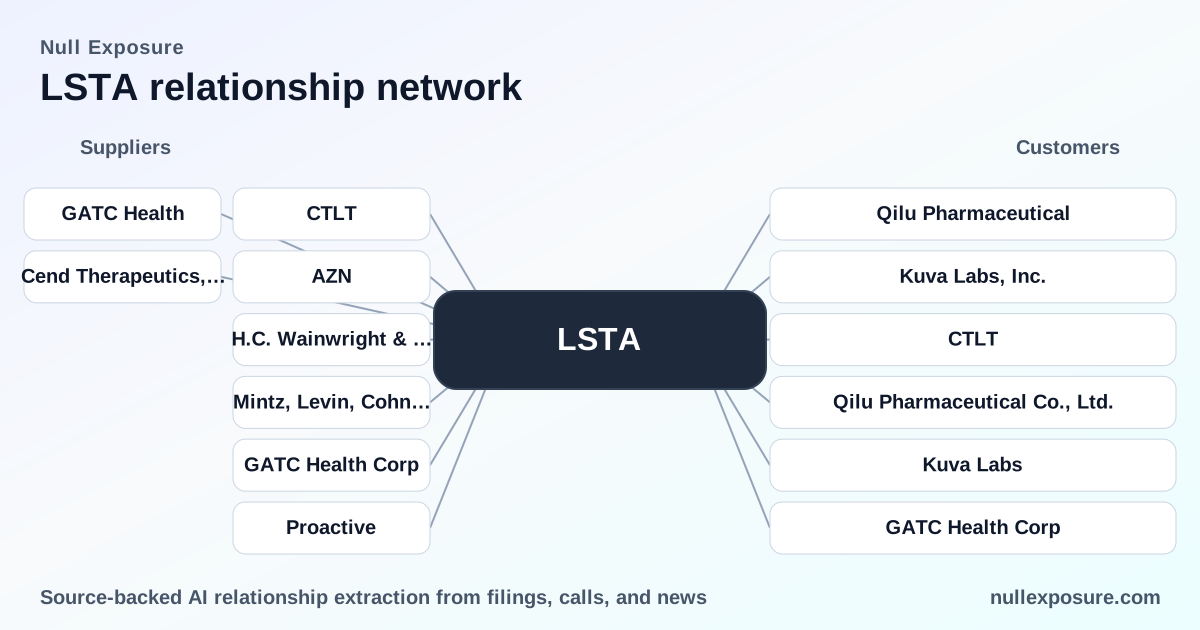
Lisata Therapeutics (LSTA) — Supplier and Partner Map for Investors
Lisata Therapeutics monetizes by advancing its lead peptide platform, certepetide, through a mix of clinical development partnerships, licensing agreements and targeted collaborations that extend the molecule into antibody‑drug conjugates (ADCs), combination oncology trials and multi‑omics optimization services. Revenue and value creation are realized through licensing deals, milestone and commercialization pathways with partners, and strategic corporate transactions supported by financial and legal advisors. For investors assessing counterparty risk and operational leverage, the partner roster signals a hybrid model: development‑heavy, outsourcing‑dependent, and strategically licensed. For a fast read on supplier exposure and partner concentration, visit https://nullexposure.com/.
What these relationships mean for valuation and operational risk
Lisata’s partner list shows a clear commercialization and de‑risking strategy: outsource manufacturing and platform integration, license core payload rights, and run combination trials with larger oncology players. That structure reduces capex but increases counterparty concentration and operational dependency on CDMOs, ADC integrators and specialized AI service vendors. The company’s contracting posture is license‑centric with a licensor stance for IP, a reliance on third‑party manufacturers and an active use of specialist service providers for trials and bioinformatics.
- Contracting posture: License and non‑exclusive research agreements dominate, which preserves upside while enabling rapid external integration.
- Concentration and criticality: A small number of platform partners (notably Catalent and AstraZeneca) are operationally critical to the ADC and clinical combination strategy.
- Maturity: Relationships are early to mid‑stage—research agreements, pilot ADC licensing and ongoing clinical collaborations rather than long‑dated supply contracts.
If you want structured partner-risk intelligence and mapping for portfolio diligence, learn more at https://nullexposure.com/.
Relationship roll call — each partner, plain English and source
Catalent / Catalent, Inc. (CTLT)
Lisata has both a research agreement and a non‑exclusive global license with Catalent to use certepetide as a payload for Catalent’s SMARTag ADC platform, positioning Catalent as a principal integrator for ADC development. This relationship is described in Lisata’s 2025 earnings calls and company press communications in FY2025–Q3 2025. (Lisata 2025 Q2 and Q3 earnings calls; FY2025 press releases.)
AstraZeneca (AZN)
AstraZeneca is a clinical collaborator in an Australian trial that tests certepetide combined with the checkpoint inhibitor durvalumab and standard chemotherapy arms, making AstraZeneca a co‑sponsor of clinical combination work that directly impacts Lisata’s pivotal data readouts. This was disclosed on Lisata’s 2025 Q3 earnings call covering the trial design and partners. (Lisata 2025 Q3 earnings call.)
GATC Health / GATC Health Corp
Lisata entered a strategic alliance with GATC to apply GATC’s MAT AI multi‑omics platform to analyze and optimize certepetide for new indications and combination hypotheses, intended to accelerate target selection and de‑risk development. The collaboration was announced in a GlobeNewswire release in March 2025 and discussed in investor coverage through FY2025–FY2026. (GlobeNewswire March 5, 2025; RTTNews coverage in FY2026.)
H.C. Wainwright & Co.
H.C. Wainwright acted as financial advisor to Lisata in the definitive acquisition agreement with Kuva Labs in FY2026, a transaction role that guided the corporate sale and valuation process rather than operational supply. This advisory role is cited in the March 2026 press release announcing the acquisition agreement. (GlobeNewswire / QuiverQuant March 2026.)
Mintz, Levin, Cohn, Ferris, Glovsky & Popeo, P.C.
Mintz Levin served as legal counsel to Lisata for the acquisition by Kuva Labs, providing transaction legal services during the FY2026 deal process; this is a clear corporate‑advisory relationship rather than a manufacturing or clinical supply link. The role is detailed in the March 2026 company announcement. (GlobeNewswire March 6, 2026.)
Cend Therapeutics, Inc.
Cend shows up in Lisata’s lineage and prior collaboration history: a historical investment and collaboration preserved development momentum before corporate restructuring, including a reported $10 million investment tied to collaborative work in 2022. This is drawn from a 2022 GlobeNewswire business update that references funding tied to Cend’s programs. (GlobeNewswire FY2022.)
Proactive
Proactive has published interviews and PR material for Lisata and is disclosed as a paid client relationship in FY2025, reflecting an investor‑communications and media distribution arrangement rather than a technical supplier role. This is noted in Proactive’s FY2025 filings and Lisata press interactions. (Proactive FY2025 press material.)
How supplier constraints shape the operating model
Company‑level signals in Lisata’s disclosures show a licensing posture, licensor role on IP, dependence on third‑party manufacturers and reliance on external service providers for trials and IT systems. Lisata states it will rely on CDMOs for clinical and commercial production and flags finite CDMO capacity as a constraint on growth. Those excerpts indicate Lisata is deliberately asset‑light: outsourced manufacturing reduces fixed cost but concentrates operational risk in a small vendor set and elevates the importance of contract terms and capacity access.
- Licensing and IP posture: Lisata operates as a licensor with non‑exclusive deals that preserve partnering flexibility.
- Manufacturing dependency: Third‑party production is core to going‑forward plans; capacity constraints at CDMOs are an explicit business constraint.
- Service provider reliance: Clinical, IT and bioinformatics services are outsourced, which distributes operational execution risk across partners.
Practical investor takeaways and risk checklist
- Catalent is the primary operational counterparty for ADC integration; its performance and timelines directly affect Lisata’s pathway to an ADC product.
- AstraZeneca provides clinical validation and combination data that materially change the value of certepetide if trial outcomes are positive.
- GATC Health is a strategic bet on AI/multi‑omics to expand indications and accelerate development—value creation is asymmetric but execution‑dependent.
- Advisors (H.C. Wainwright, Mintz) handled the FY2026 transaction process and are not operational suppliers; they reduce M&A execution risk but do not mitigate clinical or manufacturing risk.
- Historical ties to Cend reflect capital and program continuity; confirm any residual obligations or earnouts in deal documents.
- Communications vendors (Proactive) indicate active investor outreach; treat media relationships as PR channels, not technical mitigants.
If you’re mapping counterparty exposure across a portfolio or running supplier diligence, see our partner intelligence resources at https://nullexposure.com/ for standardized scoring and concentration dashboards.
Final assessment and action items
Lisata’s partner footprint is strategically consistent: license core IP, outsource manufacturing, and partner for clinical validation and analytics. That reduces capital intensity but concentrates execution risk in a few specialized suppliers—Catalent and AstraZeneca are the two names whose operational performance matters most to near‑term value realization. For investors, focus diligence on contract terms with Catalent (licenses, exclusivity windows, supply commitments), clinical milestones with AstraZeneca, and CDMO capacity commitments.
For tailored partner‑risk reports or to request a supplier concentration analysis, visit https://nullexposure.com/ and request Lisata (LSTA) coverage.