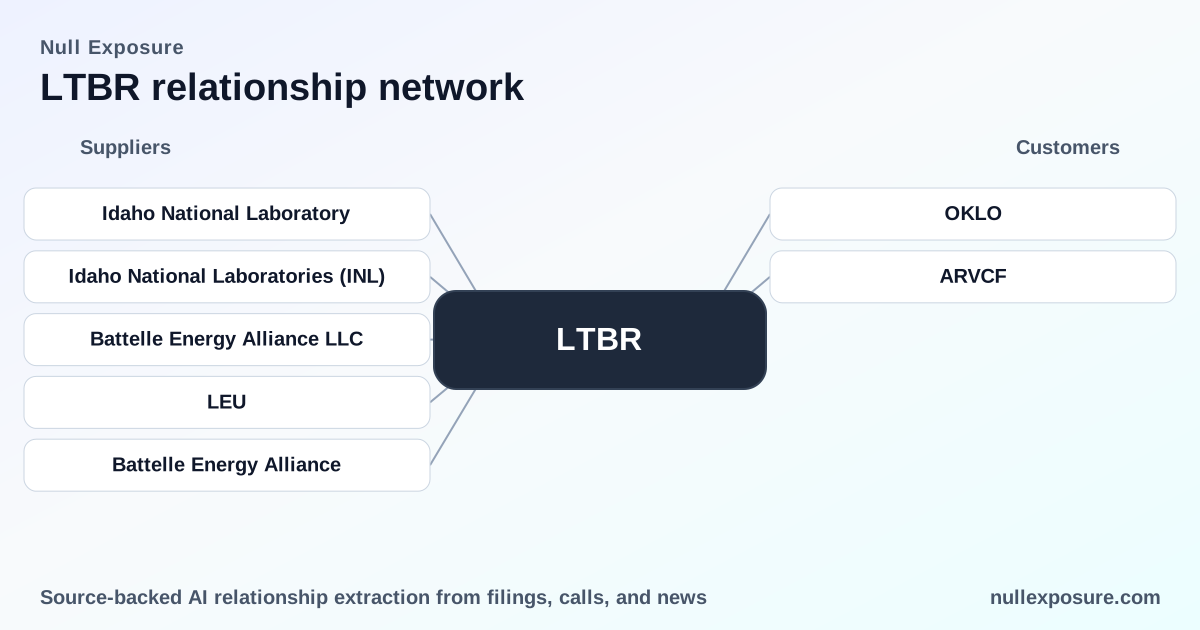
Lightbridge (LTBR): supplier relationships that shape commercialization of advanced metallic fuel
Lightbridge develops an advanced uranium‑zirconium metallic fuel and monetizes through phased R&D contracts with national labs and vendors, followed by engineering, licensing and ultimately fuel fabrication and sales via a pilot plant and commercial partners. The company converts government‑led irradiation and qualification work into intellectual property and licensing optionality while preparing a feeder supply chain for HALEU fabrication and pilot production. For investors, the core value driver today is progress through government test programs and select FEED studies that materially de‑risk later commercialization.
Explore more background and relationship mapping at https://nullexposure.com/.
How LTBR’s supplier posture shapes execution risk and upside
Lightbridge operates as an R&D‑centric supplier/customer hybrid: it is both a buyer (it will procure HALEU and zirconium in a commercial phase) and a service customer today, contracting external test and engineering services. Company disclosures describe umbrella framework agreements and Project Task Statements (PTS) that create a long‑dated, modular contracting posture—useful for predictable R&D sequencing but concentrated on a small set of partners. Company filings and disclosures also signal material supplier concentration for HALEU and other key inputs and show an early spend profile consistent with mid‑single‑digit millions per partner in the initial releases. This structure produces a clear path to commercialization if testing succeeds, but it concentrates program risk across a handful of counterparties and government channels.
The counterparties investors should track now
Idaho National Laboratory
Lightbridge has begun irradiation testing of enriched uranium‑zirconium alloy samples in INL’s Advanced Test Reactor, which is a core element of fuel qualification and performance data gathering. According to a Lightbridge press release, irradiation testing started in November 2025 and the samples were manufactured at INL for ATR exposure (GlobeNewswire / Nov 19, 2025).
Source: https://www.globenewswire.com/news-release/2025/11/19/3190779/24486/en/Lightbridge-Announces-Start-of-Irradiation-Testing-of-its-Enriched-Uranium-Zirconium-Alloy-Samples-in-Advanced-Test-Reactor-at-Idaho-National-Laboratory.html (FY2025).
Idaho National Laboratories (INL) — expanded project scope
Lightbridge has expanded its INL scope to include fuel qualification plan review, RELAP5‑3D and Python code development and post‑irradiation examination of coupon samples, reflecting deeper multi‑discipline test support at the laboratory. Management discussed these expanded projects on the company earnings call and in related disclosures in FY2026 (InsiderMonkey transcript / FY2026).
Source: https://www.insidermonkey.com/blog/lightbridge-corporation-nasdaqltbr-q4-2025-earnings-call-transcript-1708791/ (FY2026).
Battelle Energy Alliance LLC
Lightbridge has executed two long‑term framework agreements with Battelle Energy Alliance (BEA), the DOE’s operating contractor for INL, establishing an umbrella SPPA and CRADA structure with initial seven‑year duration and PTS‑driven tasking. Company announcements and financial updates explicitly reference these framework deals as the contracting vehicle for INL work (Lightbridge business update / FY2025–FY2026).
Source: https://www.globenewswire.com/news-release/2025/05/12/3078975/24486/en/Lightbridge-Provides-Business-Update-and-Announces-First-Quarter-2025-Financial-Results.html (FY2025); https://finance.yahoo.com/news/lightbridge-hold-business-fiscal-2025-133000705.html (FY2026).
Battelle Energy Alliance (alternate naming)
Coverage outlets and industry publications refer to the same BEA relationship using a slightly different name string; reporting reiterates two long‑term framework agreements that route LTBR’s R&D through BEA via Project Task Statements. NEI Magazine and other trade publications documented the BEA agreements in FY2025 reporting.
Source: https://www.neimagazine.com/news/lightbridge-fuel-prepared-for-testing/ (FY2025).
Centrus Energy (LEU / FEED study partner)
Lightbridge contracted Centrus to conduct a FEED study evaluating a pilot fuel fabrication facility to manufacture Lightbridge Fuel using HALEU at the American Centrifuge Plant in Piketon, Ohio; that engagement was referenced in the company’s FY2025 financial commentary as a completed FEED element and part of prior workstreams. The QuiverQuant coverage and company statements list Centrus involvement in FEED and related study work (FY2025).
Source: https://www.quiverquant.com/news/Lightbridge+Corporation+Reports+Strong+Financial+Results+and+Progress+in+Advanced+Nuclear+Fuel+Development+for+Second+Quarter+2025 (FY2025).
(Each relationship above reflects one or more distinct entries in LTBR’s supplier reporting; the company has multiple references to INL/BEA and to the Centrus FEED engagement across FY2025–FY2026 news and filings.)
Explore a consolidated view of LTBR counterparties and risk indicators at https://nullexposure.com/.
What the relationships and constraints reveal about the business model
- Contracting posture: LTBR relies on long‑term framework agreements and PTS tasking with BEA/INL, which creates predictable R&D throughput and control over sequencing without up‑front large CAPEX commitments. Company disclosures describe an umbrella SPPA/CRADA with an initial seven‑year structure for task releases.
- Concentration and criticality: The company explicitly warns of reliance on a limited number of suppliers for HALEU and key components, a company‑level signal of concentration risk that elevates supply chain criticality during the commercial ramp.
- Role dynamics: LTBR functions as both service customer (paying BEA/INL for R&D and testing) and future buyer (it will procure enriched uranium and zirconium in commercial operations); the duality affects counterparty leverage and procurement timing.
- Maturity and stage: The relationship stage is active R&D with irradiation testing underway in INL’s ATR and FEED activity for a pilot plant completed in study form, indicating a near‑term transition from qualification to scale‑up dependending on test results.
- Spend profile: Initial task releases and modifications to PTS under BEA suggest mid‑single‑million dollar cash flows per partner in early phases; the company estimated approximately $6.5 million in cash payments to BEA under initial releases on a cost‑reimbursable basis. This spend band aligns with an R&D‑heavy, low‑CAPEX arrangement for the near term.
Investment implications — risk and optionality
- Positive: Government lab access and BEA framework agreements deliver a credible path to critical irradiation and post‑irradiation data that will underpin regulatory filings and licensing; irradiation testing at INL ATR is a material technical milestone reported in Nov 2025. (GlobeNewswire / NEI Magazine).
- Negative: Reliance on a small number of specialized partners and HALEU suppliers creates supply and timing risks that can delay commercialization even if technical results are favorable; company filings explicitly call out supplier concentration as material.
- Neutral to positive for valuation: The Centrus FEED engagement signals a tangible route to a pilot fabrication capability, which converts R&D into potential manufacturing optionality if paired with secured HALEU supply and regulatory progress.
Key takeaways:
- Government R&D partnerships are LTBR’s primary value‑creation engine today.
- BEA/INL engagements materially de‑risk technical qualification but concentrate counterparty exposure.
- Centrus’s FEED study is the clearest signal of a pathway to pilot fabrication and eventual revenue capture.
For a deeper map of LTBR’s counterparties, procurement posture and supplier risk scoring, visit https://nullexposure.com/.
Final recommendation for operators and investors
Monitor three data points closely: (1) ATR irradiation results and subsequent post‑irradiation examination reports from INL/BEA, (2) progress and outcomes of any follow‑on PTS task releases under the BEA framework, and (3) commercial HALEU supply commitments beyond FEED studies. These will determine whether LTBR’s current supplier structure is sufficient to support an orderly scale‑up or whether additional strategic partnerships and supply diversification are required.
If you want structured intelligence or ongoing alerts on LTBR counterparties and supplier risk, start here: https://nullexposure.com/.