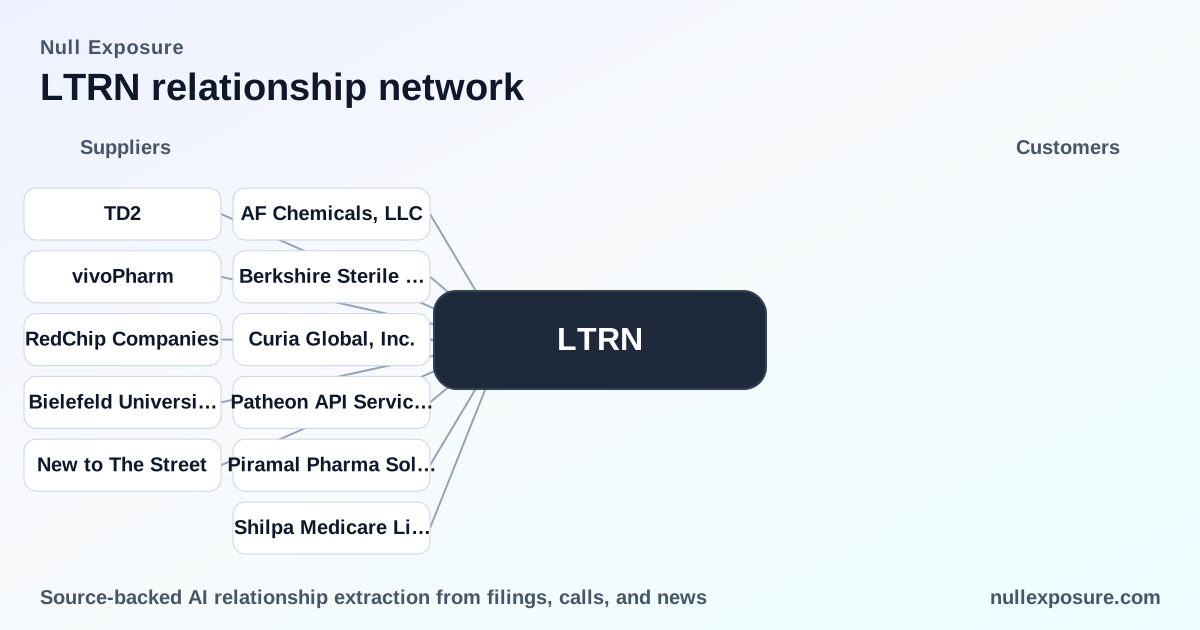
Lantern Pharma (LTRN): Supplier Relationships and What They Mean for Investors
Lantern Pharma is a clinical-stage biotech that builds a precision oncology pipeline by in‑licensing clinical-stage compounds and advancing them with AI-driven target selection and genomics. The company currently has no product revenues and monetizes through research and development progress toward regulatory milestones and—if a program succeeds—future commercial sales or licensing receipts; today the economic model is heavily dependent on third‑party partners to execute development and manufacturing. Investor focus should be on execution risk tied to outsourced manufacturing and CRO spend, plus the strategic value of technology licenses and academic options. Learn more or track supplier exposures at https://nullexposure.com/.
How Lantern operates with suppliers: a concise operating thesis
Lantern does not own manufacturing assets. It runs a lean R&D organization and contracts out manufacturing (CMOs), preclinical studies, and CRO services on a project‑by‑project basis. The company’s 2024 filings state that supply relationships are generally short‑term and non‑redundant, and Lantern is substantially dependent on third parties for clinical and potential commercial supplies—an operational posture that concentrates execution risk in a handful of external suppliers. The company also secures intellectual property options from academic partners to expand its ADC and molecule pipeline. For a supplier‑focused risk view and relationship mapping, visit https://nullexposure.com/.
Relationship-by-relationship: who does what (plain English, sourced)
AF Chemicals, LLC
Lantern holds an exclusive technology license from AF Chemicals for the patent rights to LP‑100 (Irofulven) and LP‑184 for human cancer treatment, positioning AF Chemicals as a foundational IP licensor to Lantern’s pipeline. This is documented in Lantern’s 2024 Form 10‑K describing the January 2015 license agreement (FY2024 10‑K).
Berkshire Sterile Manufacturing
Berkshire supports technical transfer and GMP drug product manufacturing for LP‑300; Lantern expensed material amounts to Berkshire in 2023–2024 as part of its clinical supply program, indicating active CMO engagement. This is described in Lantern’s 2024 Form 10‑K (FY2024 10‑K).
Curia Global, Inc.
Curia provides cGMP manufacture of LP‑300 API and supporting activities, with recurring expenses recognized in 2023–2024 and expectations of further spend as work progresses. Lantern’s 2024 Form 10‑K lists Curia as an active manufacturing partner (FY2024 10‑K).
Patheon API Services, Inc.
Patheon was contracted to manufacture and supply cGMP material to support Lantern’s Phase 2 LP‑300 trial, a supplier role tied directly to the company’s clinical timeline. This arrangement is recorded in the 2024 Form 10‑K (FY2024 10‑K).
Piramal Pharma Solutions
Piramal was engaged for fill‑and‑finish manufacture of LP‑300 drug product at its Lexington, Kentucky site to support future Phase 2 clinical testing, reflecting Lantern’s use of third‑party fill‑finish capacity. The contract is cited in Lantern’s 2024 Form 10‑K (FY2024 10‑K).
Shilpa Medicare Limited (and Shilpa Pharma Lifesciences)
Shilpa was retained for fit‑to‑purpose process development and cGMP synthesis of key starting materials and API for LP‑184 (and LP‑284), with significant R&D expense recognized in 2023–2024—evidence of deep manufacturing development work outsourced to a specialized CMO. See Lantern’s 2024 Form 10‑K (FY2024 10‑K).
Translational Drug Development, LLC (TD2)
TD2 served as the lead CRO for the LP‑300 Phase 2 trial under a 2021 Statement of Work, but Lantern terminated its TD2 agreements in 2023 when it engaged Fortrea, indicating an active shift in CRO providers. The termination and replacement are disclosed in Lantern’s 2024 Form 10‑K (FY2024 10‑K).
vivoPharm (RDDT, a vivoPharm Company Pty Ltd)
Lantern’s Australian subsidiary contracted vivoPharm for IND‑enabling preclinical and animal studies for LP‑184, with amendments and additional agreements across 2022–2024 and material expenses recorded in those periods—an example of Lantern outsourcing preclinical execution internationally. The activity is described in Lantern’s 2024 Form 10‑K (FY2024 10‑K).
RedChip Companies
RedChip provides investor relations and media services to Lantern; press releases in FY2025 and FY2026 report RedChip hosting webinars and acting as a media client for Lantern (FY2025–FY2026 press coverage).
Bielefeld University
Lantern secured an exclusive worldwide option to license IP from Bielefeld University related to ADC collaboration work, signaling a strategic academic partnership that feeds Lantern’s ADC efforts and IP pipeline expansion. This collaboration was reported in industry press coverage in FY2023 and summarized in a biospace article (FY2023 press).
New to The Street
New to The Street entered a comprehensive media partnership with Lantern to support national media and investor roadshows, as reported in FY2025 press releases that describe the firm’s role in Lantern’s investor and public relations strategy (FY2025 press).
What the constraints tell investors about Lantern’s operating model
Lantern’s public disclosures and the supplier evidence together paint a clear operational profile:
- Contracting posture: short‑term and project‑by‑project. Lantern obtains supplies from CMOs on a project basis and leases space month‑to‑month in some locations, implying flexible but non‑committal supplier ties.
- Critical dependency: manufacturing and CROs are material to operations. The company explicitly states it is substantially dependent on third parties for clinical supplies and will continue to rely on CMOs for any commercial supply; several CMOs are named in the filing as active manufacturers.
- Concentration and limited redundancy. Lantern does not currently maintain redundant supply arrangements—this concentrates operational risk if a supplier fails or capacity is constrained.
- Maturity of relationships: a mix of active, amended, and terminated ties. Several manufacturing and CRO agreements were active and expensed through 2023–2024; TD2 was terminated in 2023 and Fortrea has been engaged to replace some CRO functions, showing active contract management and occasional churn.
- Cost profile and cash flow implications. Lantern expensed six‑ to seven‑figure amounts to specific partners in 2023–2024 and expects substantial near‑term payments to Fortrea tied to Phase 2 activity, highlighting a near‑term cash burn tied to outsourced services.
These characteristics translate to a clear tradeoff: speed and capital efficiency gained through outsourcing versus execution and supply concentration risk that could delay trials or increase costs.
For an investor‑grade supplier exposure dashboard and monitoring, visit https://nullexposure.com/.
Bottom line: what to watch and next steps
Lantern’s strategy of in‑licensing and advancing candidates with AI and external partners keeps overhead low and upside concentrated in clinical success, but outsourced manufacturing and CRO reliance is a material operational risk that directly affects timelines and costs. Key near‑term signals for investors are supplier expense trends, confirmation of redundant supply lines for critical APIs and drug substance, and progress on the Bielefeld ADC option and other licensing milestones.
If you track biotech supplier risk, assess Lantern’s disclosures for contract terms (run‑rates, termination rights, and contingency plans) and monitor press releases for any supply interruptions or new manufacturing partnerships. To stay current on supplier relationships and analytics, visit https://nullexposure.com/.