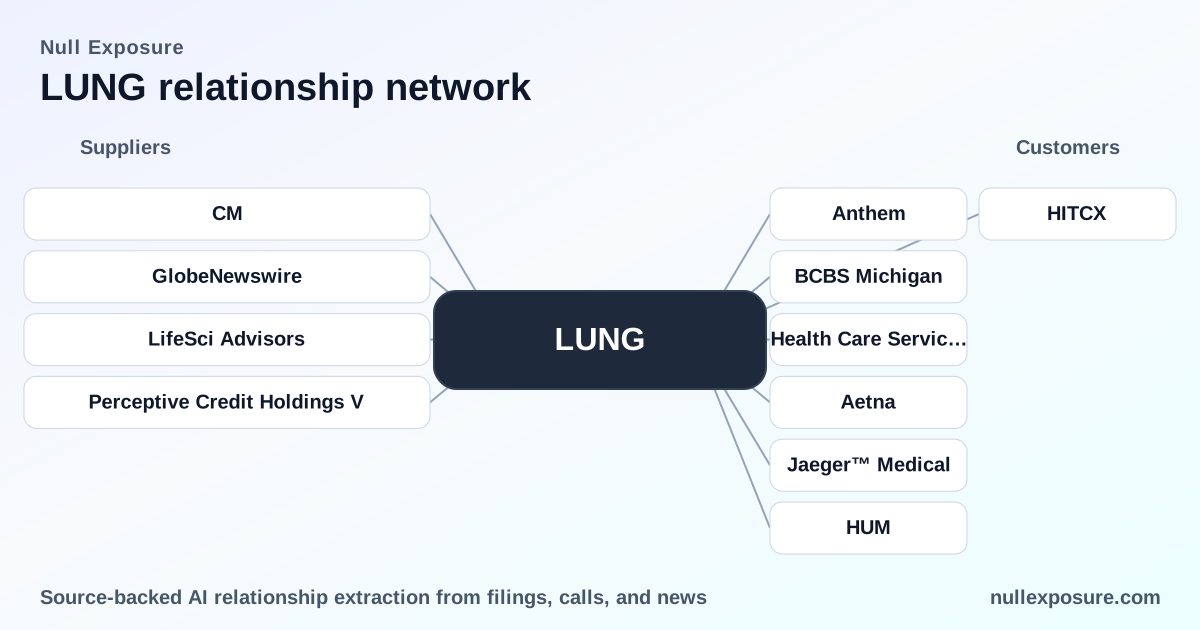
Pulmonx (LUNG) supplier landscape: financing partners, PR distributors, and what it means for operators
Pulmonx monetizes by selling minimally invasive devices and software to interventional pulmonology practices and hospitals, generating product revenue from device sales and recurring revenue via procedure adoption and associated digital services. Recent financing activity reshapes the company’s capital structure while the supplier footprint shows concentration in critical, single-source manufacturing and reliance on third-party service providers for platform hosting and cybersecurity. Investors should view Pulmonx as a growth-oriented medtech with financing-driven liquidity buffers and a supplier model that requires active management of concentration and single-source risk.
Explore broader supplier intelligence at https://nullexposure.com/ for deeper diligence and alerts.
The counterparties on record today — who Pulmonx is working with
-
Canadian Imperial Bank of Commerce (CM) — TradingView reported that in the refinancing transaction Pulmonx repaid and terminated its prior facility with CIBC without fees, consolidating liquidity under a larger, longer-dated financing structure in FY2026. This indicates a deliberate replacement of one lender relationship with a new lender-led facility to simplify the capital stack (TradingView, March 10, 2026).
-
Perceptive Credit Holdings V — Pulmonx entered a new senior secured term loan facility of up to $60 million with Perceptive Credit Holdings V, drawing $40 million at closing and gaining access to two additional $10 million tranches tied to revenue milestones; the facility is senior secured and directly supports near-term working capital and growth investments (TradingView, March 10, 2026).
-
GlobeNewswire — A company press release distributed via GlobeNewswire was republished through QuiverQuant in FY2025, reflecting Pulmonx’s investor communications channels and standard market-facing disclosure practice; this is a distribution relationship rather than a strategic supplier for operations (QuiverQuant distribution of GlobeNewswire, FY2025).
-
LifeSci Advisors — The company lists an investor contact at LifeSci Advisors within a FY2025 investor communication, signalling the use of external investor-relations and life-science media advisory services for outreach and investor engagement (QuiverQuant referencing LifeSci Advisors contact, FY2025).
What the relationships imply about Pulmonx’s operating posture
Pulmonx’s public record shows two distinct supplier classes in play: financing counterparties that dictate liquidity terms and non-operational service providers used for communications. The company-level constraints produce additional operational signals:
-
Contracting posture: The company operates with a hybrid approach — most materials are procured on a purchase-order basis, but the firm maintains supply agreements with a limited set of critical suppliers. That combination delivers flexibility for non-critical inputs while locking in terms for components that are essential to product assembly.
-
Concentration and criticality: Pulmonx relies on single-source suppliers for certain components and sub-assemblies, a high-concentration posture that elevates operational risk if a single supplier experiences disruption. The constraints explicitly label these suppliers as critical.
-
Service relationships and platform dependency: The LungTraX platform is made available through a third-party cloud service provider, and Pulmonx contracts with external cybersecurity and professional services firms to manage risk and compliance—this reflects outsourced infrastructure and security dependencies rather than fully insourced capability.
-
Maturity and lifecycle: The supplier footprint should be classified as active but concentrated; relationships necessary for manufacturing are established and critical, not nascent proxies. Financing activity in FY2026 indicates a transition toward longer-dated capital supporting commercial scaling.
Key takeaway: Pulmonx’s supplier model is optimized for flexibility where possible but structurally concentrated for critical components, increasing the importance of contingency planning and supplier performance oversight.
(If you want a consolidated supplier risk brief or ongoing monitoring, visit https://nullexposure.com/ to request a tailored report.)
Risk and opportunity vectors for investors and operators
-
Liquidity and strategic optionality: The Perceptive loan provides an immediate liquidity cushion ($40 million drawn) with contingent tranches tied to revenue, which aligns financing availability with commercial performance and reduces dilution from equity raises. Investors should weigh the trade-off between secured debt claims and runway extension.
-
Single-source supplier risk: The disclosed reliance on single-source suppliers for components and sub-assemblies is a material operational constraint that can affect production ramp and margins if a supplier fails to meet quality or delivery expectations. Operators must prioritize dual-sourcing or validated substitutes where feasible.
-
Third-party service dependency: Hosting LungTraX on a third-party cloud provider and engaging outside cybersecurity advisors is consistent with modern medtech practice, but it transfers systemic availability and compliance risks to external vendors; governance should include contractual SLAs and breach remediation commitments.
-
Communications and market signaling: Use of GlobeNewswire and LifeSci Advisors for investor outreach indicates professionalized investor communications, reducing information friction to the market and helping manage investor expectations through scheduled disclosures.
Relationship-by-relationship implications and recommended actions
-
Canadian Imperial Bank of Commerce — The termination of the prior CIBC facility without fees removes a legacy counterparty from the capital stack and simplifies lender negotiations; operators should confirm any remaining covenants or intercreditor mechanics that survive the termination (TradingView, March 10, 2026).
-
Perceptive Credit Holdings V — The $60 million facility with $40 million drawn and revenue-tied tranches creates a performance-linked capital runway, which both disciplines near-term execution and preserves upside for the lender; management should track milestone triggers and covenant headroom closely (TradingView, March 10, 2026).
-
GlobeNewswire — Professional press distribution keeps investor channels open and predictable; ensure PR cadence aligns with earnings and material corporate events to prevent surprise liquidity or supplier disclosures (QuiverQuant / GlobeNewswire, FY2025).
-
LifeSci Advisors — External investor-relations support improves market reach; institutional investors should read IR materials and investor contacts for clarity on the company’s supplier risk mitigation and post-financing capital deployment strategy (QuiverQuant / LifeSci Advisors, FY2025).
Final verdict for relationship managers and investors
Pulmonx combines targeted external financing and concentrated supplier dependencies. The immediate financing activity reduces short-term liquidity pressure and aligns capital availability with commercial milestones, but single-source manufacturing and outsourced platform dependencies require operational mitigation to sustain scale. For investors, the balance is between growth-funded by secured debt and the execution risk embedded in supplier concentration.
For ongoing monitoring, scenario planning, and supplier risk remediation playbooks, see our intelligence portal at https://nullexposure.com/. If you need a bespoke supplier-concentration analysis tied to your investment diligence, submit a request through https://nullexposure.com/ and our team will prepare a focused briefing.