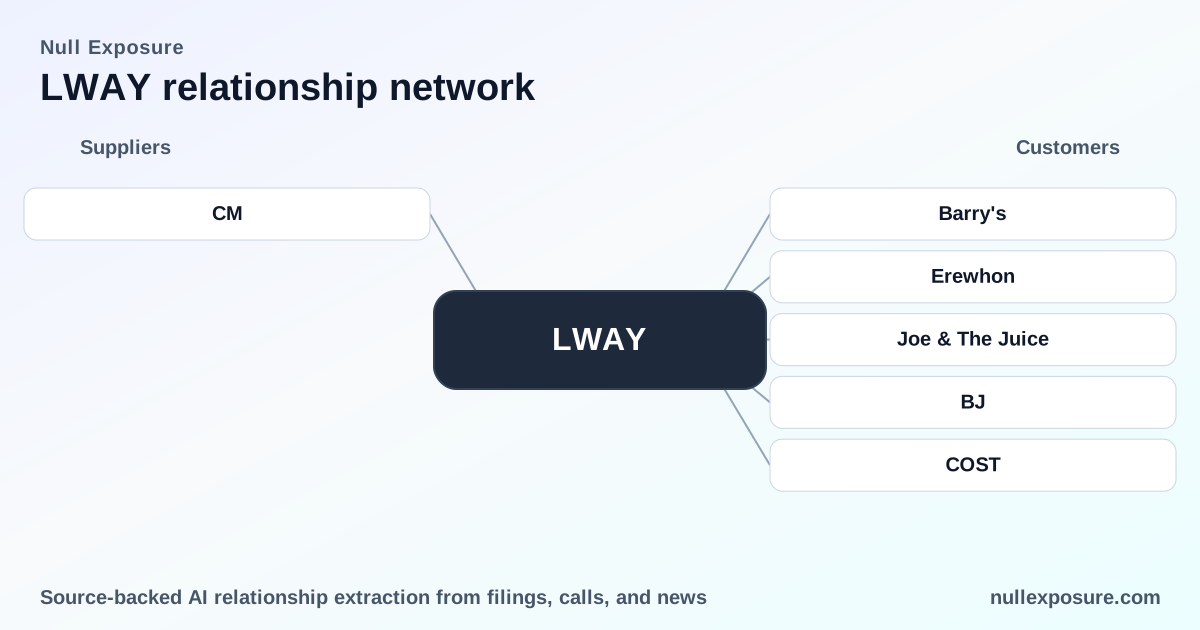
Lifeway Foods (LWAY) — supplier relationships and what they signal to investors
Lifeway Foods operates as a branded producer and marketer of probiotic dairy products, monetizing through retail and foodservice sales of kefir, cultured dairy drinks, and related consumer-packaged goods in the United States and internationally. The company combines in-house manufacturing with targeted co‑packing for international coverage, and funds operations through traditional bank credit—both elements that shape supplier and counterparty risk. For a concise supplier-risk monitor and further supplier profiles, visit the NullExposure homepage: https://nullexposure.com/.
How Lifeway structures manufacturing and distribution at a glance
Lifeway produces the bulk of its products in company-controlled facilities while using independent co‑packers for a modest but strategic share of volumes. Company disclosures show that co‑packers accounted for approximately 6% of revenue in 2024 and 7% in 2023, indicating outsourced production is material but not dominant to the business model. The firm also maintains external bank credit relationships that influence liquidity and covenant posture.
This hybrid model creates a predictable, low‑beta operating profile (Lifeway’s reported beta is 0.14) while exposing the company to a limited set of supplier and counterparty risks: co‑packer availability and contract terms for international distribution, and bank covenant/financing terms that affect working capital flexibility. Lifeway’s public financials (Revenue TTM ~$204m; Market Cap ~$315m as of the latest reporting) frame these supplier relationships against a modest scale where single counterparty actions can have outsized operating impact.
Detailed supplier and counterparty relationships you need to know
Below are the relationships surfaced in public reporting and media that directly affect Lifeway’s supplier posture and financial flexibility.
- CIBC Bank USA — Lifeway executed a Sixth Modification to its Amended and Restated Loan and Security Agreement with CIBC Bank USA in FY2025, reflecting an ongoing lender relationship and negotiated credit amendments. A TradingView news post reported the loan modification on March 10, 2026, highlighting the active management of Lifeway’s bank financing.
What the co‑packing signals say about operational risk
Lifeway’s disclosures include a direct excerpt: “We have a co‑packer agreement to manufacture drinkable kefir in Ireland, to serve our European markets.” This is a clear, named operational arrangement for EMEA distribution. Separately, the company notes: “In addition to the products manufactured in our own facilities, independent manufacturers (‘co‑packers’) manufacture some of our products… During 2024 and 2023, approximately 6% and 7% of our revenue, respectively, was derived from products manufactured by co‑packers.”
From an investor perspective these statements translate into several firm‑level signals:
- Contracting posture: Lifeway relies on contractual co‑packer relationships rather than owning all international manufacturing capacity, which reduces fixed asset intensity but increases reliance on third‑party service levels and logistics.
- Concentration: Co‑packed volumes represent a modest slice of revenue, so the company is not unduly concentrated on outsourced production—yet the named EMEA co‑packer for Irish production is strategically important for European market access.
- Criticality: The Ireland co‑packing arrangement is functionally critical for EMEA distribution; interruption would disproportionately affect international sales despite the small absolute revenue share.
- Maturity: The company’s multi‑year reporting of co‑packer percentage (2023/2024) indicates these are established, not ad‑hoc, supplier relationships—supportive of operational continuity but still dependent on external partner health and contracts.
Why the CIBC loan modification matters for supplier exposure
Banking relationships operate as financial suppliers: they supply liquidity, and their covenant stance governs working capital and capital expenditures. Lifeway’s Sixth Modification with CIBC Bank USA signals active credit management. A lender amendment can release short‑term pressure or tighten covenants; either outcome has direct implications for the company’s ability to pay co‑packers, fund inventory, and sustain trade terms. The TradingView item dated March 10, 2026 reported the modification, confirming the company’s negotiation of its credit facility in FY2025.
Risk and opportunity map for investors
- Operational risk is concentrated but manageable. With co‑packers producing ~6% of revenue, a failure at a single partner would be material to EMEA flows but unlikely to destabilize total revenue. The Ireland co‑packer is a single point of failure for European distribution.
- Counterparty and liquidity risk are active monitoring items. The CIBC loan modification is a live signal about financing posture; investors should track covenant language and maturity schedules for implications on vendor payments and capital allocation.
- Scale and governance tilt in favor of insiders. Lifeway reports high insider ownership (~64% insiders), which shortens decision cycles but concentrates governance—relevant when reading supplier negotiations and strategic outsourcing choices.
- Margins and market positioning support resiliency. Lifeway’s operating margin and profit margins indicate a healthy gross structure for a branded packaged foods player, cushioning temporary supplier disruptions.
If you want a supplier‑level scorecard and evolution of these relationships over time, visit NullExposure for supplier-centric analytics and tracking: https://nullexposure.com/.
Practical investor takeaways
- Monitor the Ireland co‑packer relationship for contract length, renewal terms, and contingency manufacturing plans. Disruption there hits EMEA revenue disproportionally.
- Track bank covenant disclosures and loan maturity dates following the CIBC modification; tighter banking covenants will directly constrain payments to suppliers and co‑packers.
- Treat outsourced manufacturing as strategic insurance, not a primary cost center. Co‑packing reduces capital intensity but introduces vendor risk that is already visible in public filings.
For a deeper supplier-risk profile and rolling updates on Lifeway’s third‑party relationships, see the NullExposure resource hub: https://nullexposure.com/.
Closing assessment
Lifeway’s supplier footprint is lean and strategic: a majority of production remains in‑house while targeted co‑packing in Ireland secures EMEA distribution, and bank finance amendments demonstrate active credit management. For investors, the key chores are routine monitoring of the Irish co‑packer contract terms and the covenant status of the CIBC credit facility—these are the levers that most directly affect operational continuity and near‑term cash flow.