Lixiang Education (LXEH): Exchange Warning Sharpens Supplier and Counterparty Risk
Lixiang Education Holding Co., Ltd. operates primary and secondary schools in China (grades 1–9) and monetizes through tuition, ancillary student services, and local school operations. The company’s revenue base is modest—roughly $32.9 million trailing twelve months—while profitability is deeply negative (TTM EBITDA -$26.8 million; EPS -$2.17), which constrains capital access and elevates counterparty risk for suppliers and commercial partners. Investors and operators should treat LXEH as a financially stressed education services provider with limited public float and liquidity, and adapt contracting terms accordingly. For a rapid supplier-risk primer, visit https://nullexposure.com/.
The headline risk: Nasdaq notice and what it means for counterparties
On February 11, 2026, Lixiang disclosed it received a Nasdaq notice dated February 9, 2026, indicating the company no longer meets Nasdaq Global Market’s minimum US$5 million market value of publicly held shares requirement for FY2026. This is a formal exchange compliance action and signals heightened governance and market-access risk that changes how counterparties should price and protect exposure. The Globe and Mail covered the company disclosure and the exchange action in March 2026.
Why a listing warning matters to suppliers and buyers
A Nasdaq deficiency notice is not only a regulatory headline; it translates into commercial consequences. Delisting risk reduces tradable liquidity, raises financing costs, and weakens the firm’s negotiating leverage with vendors, landlords, and service providers. Suppliers that rely on receivable securitization, factoring, or steady cash collection should revise payment terms and require stronger credit protection when contracting with LXEH.
All disclosed relationships you need to know
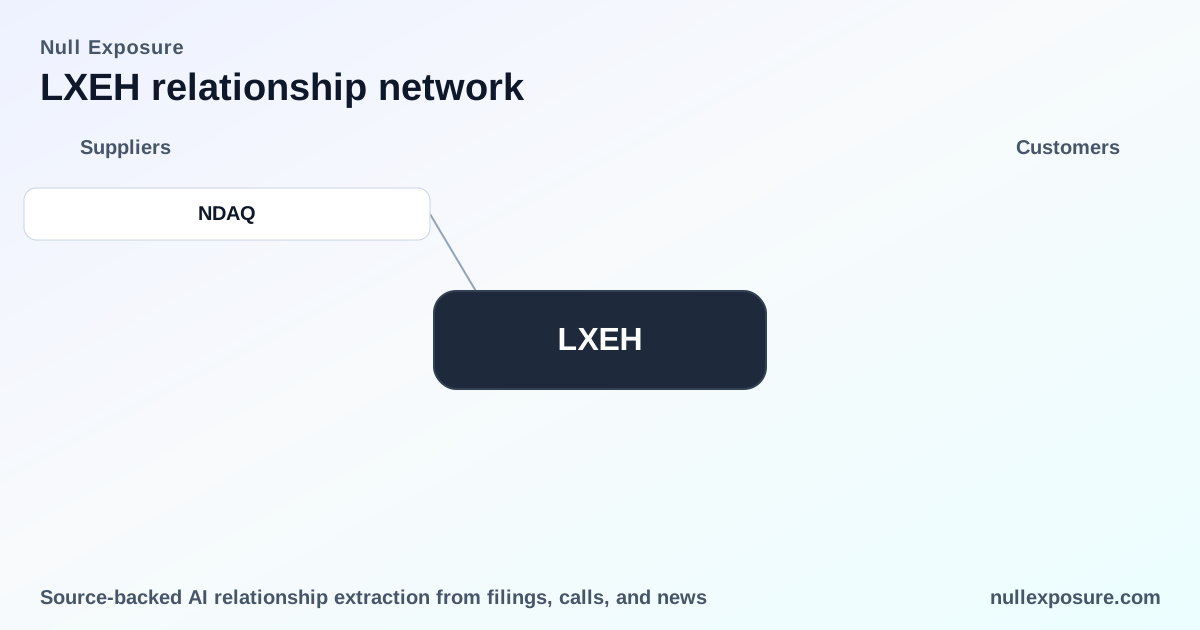
- Nasdaq — Lixiang received a formal Nasdaq notice on February 9, 2026 that it “no longer meets the exchange’s minimum US$5 million market value of publicly held shares requirement” for the Nasdaq Global Market; the company disclosed the notice on February 11, 2026 and the item was reported publicly in March 2026. (Source: company disclosure reported in The Globe and Mail, FY2026)
This article covers every relationship returned in the supplier-scope results: a single, material exchange compliance interaction that directly affects capital markets access and indirectly affects supplier negotiating posture.
What the company financials and ownership signals tell suppliers
Lixiang’s market capitalization is approximately $4.24 million, revenue TTM is $32.85 million, and profitability metrics are negative across the income statement (TTM gross profit negative and operating margin roughly -97.8%). Institutional ownership is reported at 0.93%, with insiders at 6.285%. These characteristics shape practical supplier decisions:
- Contracting posture: Defensive. Expect the company to prioritize cash conservation and renegotiate payment schedules. Suppliers should assume LXEH will seek extended payment terms when under stress.
- Counterparty concentration and criticality: Moderate operational criticality—education services have stable demand fundamentals—but financial concentration is high, given small market cap and constrained liquidity. Suppliers dependent on LXEH revenue should limit customer concentration.
- Maturity and predictability: Low financial maturity. Operations deliver revenue, but negative margins and poor EBITDA create cash flow volatility that limits long-term commitments and increases the risk of abrupt supplier disputes.
No explicit third-party constraints were provided in the record; the items above are company-level signals derived from public financial and ownership metrics.
Practical playbook for investors and commercial operators
For investors and vendors evaluating supplier relationships with LXEH, the path is straightforward: treat exposure as credit-risk sensitive and take contractual steps to protect cash flows.
- Tighten payment mechanics. Move to shorter payment cycles, require advance deposits for new contracts, or implement milestone-based billing for larger engagements.
- Demand stronger credit support. Insist on letters of credit, parent guarantees (where available), or escrow arrangements for material contracts.
- Stress-test recoverability. Model scenarios where the company experiences delisting or constrained capital access; quantify receivable aging and the impact on supplier liquidity.
- Limit customer concentration. Cap exposure to LXEH relative to supplier working-capital capacity and diversify counterparties in the China primary/secondary education sector.
- Monitor corporate disclosures daily. Exchange notices and filings (like the February 2026 Nasdaq notice) provide immediate signals that should trigger pre-planned contract-protection actions.
For a targeted supplier-risk screening platform that aggregates these signals, see https://nullexposure.com/.
Near-term watch items and risk timeline
- Listing status: If Nasdaq escalates to delisting proceedings, LXEH will face materially reduced access to U.S. capital and secondary liquidity, increasing operational stress.
- Cash runway: Negative EBITDA and negative margins indicate limited internal cash generation; watch quarterly cash and liquidity disclosures closely.
- Contract renegotiation activity: Expect renegotiations or delays in supplier payments; procurement teams should treat LXEH as a high-probability source of disputes or restructuring.
Key takeaway: the Nasdaq notice is the proximate event, but the underlying problem is poor profitability and thin market capitalization—this combination escalates supplier credit risk and requires pre-emptive contractual safeguards.
Final recommendations: immediate actions for evaluation teams
- Update counterparty risk ratings on LXEH to a stressed category and tighten exposure limits.
- Implement contractual protections for all new or renewed supplier agreements: shorter terms, security, or cash-in-advance.
- Monitor regulatory filings and market notices daily and trigger contingency plans on any escalation of exchange compliance actions.
For a deeper supplier-risk assessment and daily monitoring of exchange and filing signals, consult resources and tools at https://nullexposure.com/.
Lixiang Education is an operating school group with stable core demand but structurally weak financials and an active exchange compliance notice that changes the calculus for investors and suppliers. Treat contracts with LXEH as credit-sensitive engagements and prioritize protection of cash flow and receivable recoverability.