MAA-P-I: What Mid-America’s Series I Preferred Reveals About Sourcing, Development, and Supplier Footprint
Mid-America Apartment Communities (MAA) runs a capital-intensive, asset-management business: it acquires, develops, and operates apartment communities across the Southeast and Southwest and monetizes through rental cash flow, portfolio appreciation, and capital markets issuance. The 8.50% Series I cumulative redeemable preferred (MAA‑P‑I) sits structurally above common equity to provide fixed-income-like cash yields to investors while the parent REIT executes its growth and value-creation play in real estate markets.
For investors evaluating MAA‑P‑I exposure, the company’s supplier and counterparty relationships illuminate how MAA sources land, executes development transactions, and files growth opportunities into its pipeline—factors that influence asset backing and long-term credit resilience. Learn more about supplier intelligence and relationship mapping at https://nullexposure.com/.
One concrete supplier relationship on the public record and why it matters
A Richmond BizSense article from August 2024 reports that an entity tied to Mid‑America Apartment Communities purchased a development site from Vatex Corp., an embroidery firm that had owned the property since 1985. The deal converts an industrially owned parcel into a planned five-story, 314‑unit apartment development that MAA will control through a purchase entity. According to Richmond BizSense (Aug 26, 2024), this transaction shows MAA’s preference for acquiring land directly from legacy owners for purpose-built multifamily projects. https://richmondbizsense.com/2024/08/26/future-apartment-development-site-near-diamond-district-sells-for-nearly-9m/
Key takeaway: Direct land purchases from single-owner sellers like Vatex demonstrate MAA’s hands-on acquisition approach to feeding its development pipeline and capturing neighborhood-level value uplift.
What the Vatex transaction signals about MAA’s operating model
The Vatex sale is a narrow data point but it points to several company-level operating characteristics that matter to preferred-holders and creditors:
- Contracting posture — transactional and direct. MAA executes land buys through affiliate entities rather than relying solely on brokers or long-term master developers, implying control over entitlement and project timing rather than outsourcing critical early-stage work.
- Supplier concentration — low vendor concentration at the land-acquisition stage. Purchases from legacy single-owner firms do not suggest dependence on a single supplier; instead, they reflect opportunistic sourcing across owners and parcels.
- Criticality — high for select counterparties, low for most. Individual land sellers are not typically “mission critical” counterparties in the same sense as construction lenders or property managers, but single large parcel acquisitions can materially affect a given asset’s return profile and the balance sheet composition when they represent sizable development lots.
- Maturity — transaction-level relationships rather than long-term supply contracts. Land sellers and one-off vendors are transactional partners; the maturity of these ties is limited to the deal lifecycle rather than ongoing supplier dependency.
These signals are company-level and not tied to any constraint document. Because no formal supplier constraints were provided in the record, the above characteristics function as operational signals derived from observed transaction behavior.
Supplier relationships in the public record (complete list)
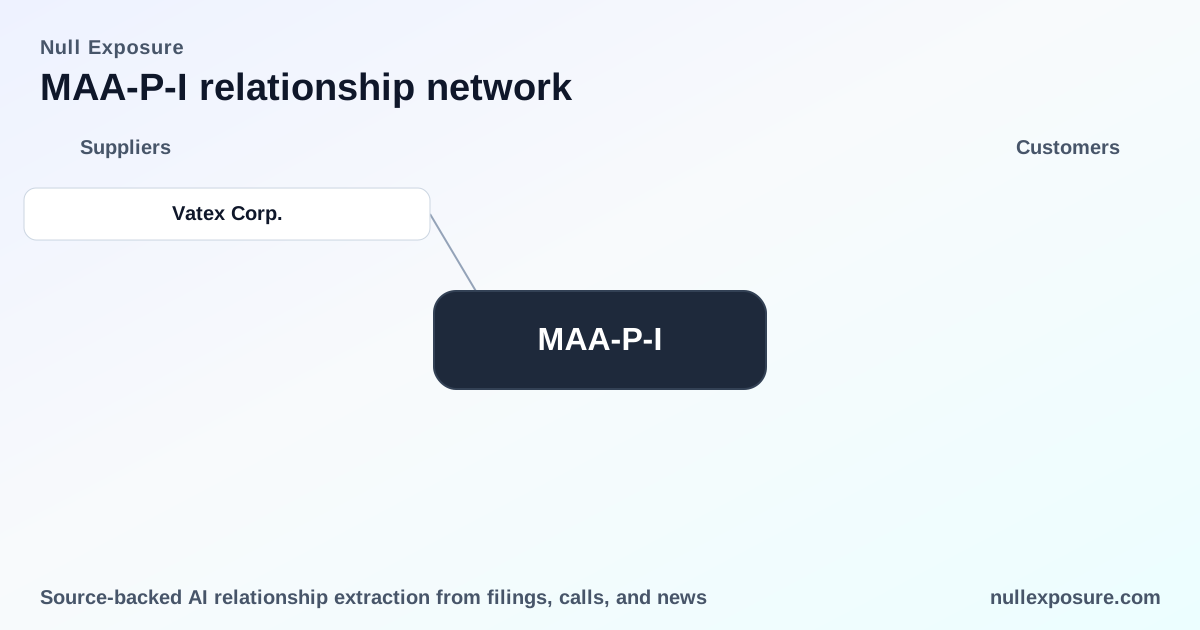
- Vatex Corp. — Mid‑America bought a parcel from Vatex Corp., an embroidery firm that had held the site since 1985; the parcel is intended for a five-story, 314‑unit apartment project. This direct acquisition illustrates MAA’s land-led sourcing for development. (Richmond BizSense, Aug 26, 2024) https://richmondbizsense.com/2024/08/26/future-apartment-development-site-near-diamond-district-sells-for-nearly-9m/
This article includes the entire set of supplier relationships surfaced in the available records for MAA‑P‑I; there are no other supplier ties listed in the dataset.
How these supplier patterns influence credit and capital dynamics for MAA‑P‑I holders
Investors in preferred instruments evaluate both coupon security and the issuer’s operational runway. The Vatex-style transaction supports two practical investment implications:
- Asset-backed upside for preferred-holders is indirect but present. Converting legacy owned parcels to apartment developments increases the underlying enterprise value over time, improving the REIT’s asset base that backs equity claims and supports overall creditworthiness.
- Execution and timing risk concentrate in development phases. While land purchases are accretive in the long run, developers face entitlement, construction, and leasing cycles that influence near-term cash flows. Preferred dividends are cumulative, but sustained pressure on operating cash can elevate refinancing or redemption risk over stressed cycles.
If you want a deeper read on how individual supplier and acquisition transactions feed into preferred security risk, explore our analysis tools at https://nullexposure.com/.
Practical risks and operational red flags investors should watch
- Concentration of sizable, bespoke land purchases. A string of large single‑parcel acquisitions can concentrate project risk and capital deployment into discrete markets; investors should watch geographic mix and parcel scale relative to the REIT’s total market capitalization.
- Execution slippage in entitlement and construction. Transactional suppliers like land sellers reduce ongoing vendor dependency, but development partners and general contractors become the critical counterparties once a project progresses; monitoring contractor credentials and financing commitments is essential.
- Market-cycle sensitivity. Multifamily returns hinge on rent growth and occupancy; preferred coupons are exposed indirectly to these cyclical dynamics via the issuer’s ability to service preferred dividends from available cash.
How investors should act on this supplier intelligence
- For yield-seeking investors, MAA‑P‑I’s 8.50% coupon is attractive only to the extent MAA demonstrates steady portfolio cash generation and disciplined development execution. The Vatex purchase illustrates strategic land acquisition—confirm that such purchases are balanced by stabilized yield assets in the portfolio.
- For credit-focused allocators, monitor subsequent public filings and local permitting notices that track entitlement progress and construction lender commitments; these will be more informative on whether the value from land converts into operating cash.
- For research teams, integrate transaction-level supplier tracking into quarterly diligence so that episodic land purchases do not create hidden concentration between reporting cycles.
If you want structured, deal‑level supplier intelligence tied to REIT counterparties and development activity, see our platform overview at https://nullexposure.com/.
Final read: what MAA‑P‑I investors should put on the dashboard
- Direct land acquisitions from legacy owners are an operational choice that supports organic growth. They expand asset base and future cash generation but introduce cyclical execution risk during development.
- Supplier relationships for land are transactional and low in long-term dependency, but post-acquisition counterparties (contractors, lenders, property managers) will determine project outcomes.
- No formal supplier constraints were identified in the available record, so investor diligence should prioritize forward-looking indicators—permit filings, construction financing, and leasing velocity—over historical vendor lists.
For ongoing coverage and deeper supplier mapping of REITs and their capital instruments, visit https://nullexposure.com/ and sign up for alerts that connect land acquisitions and vendor exposure to security-level risk assessments.