MAIA Biotechnology: supplier relationships that shape a small-cap oncology play
MAIA Biotechnology operates as a clinical-stage oncology developer that monetizes progress through clinical milestones, licensing and capital markets, not product sales. The company advances ateganosine and other candidates through outsourced manufacturing and partner-supplied checkpoint inhibitors, funding development with equity raises and strategic collaboration economics. For investors, the core commercial thesis is simple: value will be realized if MAIA executes its clinical program using cost-effective supplier arrangements that preserve cash and accelerate trials. Learn more about supplier intelligence and relationship risk at https://nullexposure.com/.
What investors need to know up front
MAIA is a cash-burning, pre‑revenue biotech (TTM revenue: $0; EPS: -0.74) with a market capitalization around $90M as of the latest quarter. Its operating model is deliberately asset-light: MAIA sponsors trials and relies on third‑party manufacturers and partner-supplied checkpoint inhibitors to run combination studies. That posture directly affects timeline execution, R&D capital efficiency, and dilution risk for shareholders. Key takeaways: MAIA is highly dependent on external suppliers for drug supply and CRO/CMO services, and it offsets cost through in-kind contributions and equity raises.
Explore MAIA supplier profiles and relationship scoring at https://nullexposure.com/.
Supplier relationships on the record
Below are every supplier relationship surfaced in public reporting for the FY2026 cycle, with concise, plain-English summaries and source references.
-
Roche — MAIA has a master agreement to combine its investigational agent with Roche’s atezolizumab for checkpoint‑inhibitor combination trials, positioning Roche as a clinical supply partner for atezolizumab and enabling multiple future combination studies. According to a GlobeNewswire release (Jan 20, 2026) and subsequent Yahoo Finance reporting (March 2026), that master agreement is central to MAIA’s combination strategy. (GlobeNewswire, Jan 20, 2026; Yahoo Finance, Mar 2026)
-
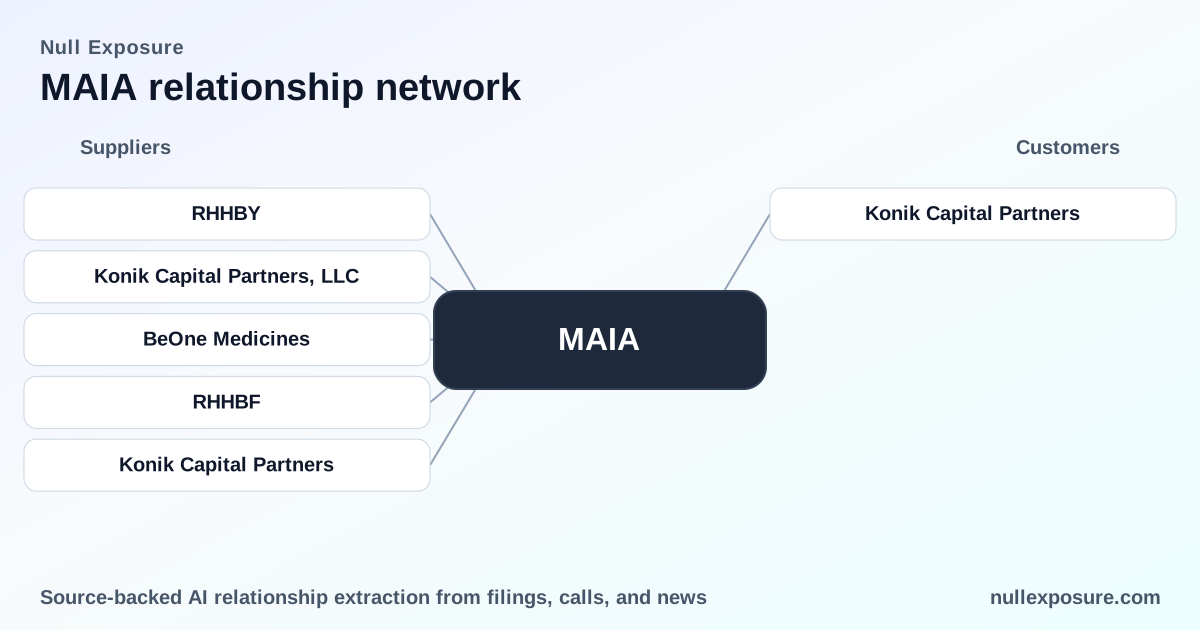
BeOne Medicines — MAIA announced a clinical supply agreement with BeOne Medicines to provide tislelizumab for planned combination studies, giving MAIA access to an alternative PD‑1/PD‑L1 agent for its THIO program. This arrangement was reported alongside MAIA’s 2026 clinical milestones (Yahoo Finance and GlobeNewswire, early 2026). (Yahoo Finance, Mar 2026; GlobeNewswire, Jan 20, 2026)
-
Konik Capital Partners, LLC — Konik acted as the sole book‑running manager for a $30 million underwritten public offering that closed in March 2026; MAIA executed an underwriting agreement with Konik to raise development capital. The closing and underwriting agreement were disclosed in SEC‑filed materials and media coverage (GlobeNewswire, Mar 4, 2026; TradingView/Reuters SEC filing summary, Mar 2026). (GlobeNewswire, Mar 4, 2026; Reuters via TradingView, Mar 2026)
What the constraint signals tell investors about MAIA’s operating model
The extracted constraint evidence delivers a consistent portrait of a small, externally‑dependent developer:
-
Contracting posture — long‑term supply commitments. Regulatory filings state that certain supply agreements remain in force until study obligations are completed or terminated by either party, indicating MAIA negotiates multi‑year clinical supply terms rather than one-off deliveries. This reduces short‑term supply uncertainty but creates execution dependencies over the life of a program.
-
Cost and materiality — supplier in‑kind contributions reduce cash burn. MAIA disclosed that Regeneron supplied cemiplimab at no cost to prior studies, which the company classified as a meaningful cost saving; that is a precedent for securing in‑kind drug supply to preserve capital. (Company filing language describing Regeneron’s contribution and cost impact.)
-
Role concentration — MAIA is a buyer of manufacturing and clinical services, not an owner. The company explicitly stated it does not own manufacturing facilities and depends on CMOs and CROs for API, raw materials and trial conduct, making third‑party vendors critical to both operational continuity and quality compliance.
-
Relationship maturity and stage — active clinical collaborations. The firm’s public disclosures place multiple supplier relationships in an active stage: a December 2024 clinical supply agreement with BeiGene for tislelizumab and a February 2021 clinical supply arrangement with Regeneron for cemiplimab are cited as ongoing precedents for MAIA’s operations. These show MAIA has operational experience managing long-running supply and collaboration agreements. (Company filings referencing December 2024 BeiGene and February 2021 Regeneron arrangements.)
Together these constraints paint an operating model that is outsourced, partnership-driven, and dependent on supplier cost concessions and timely deliveries.
If you are benchmarking supplier exposure across small‑cap biotechs, we maintain a centralized index of counterparty events at https://nullexposure.com/.
Risk and opportunity vectors tied to suppliers
- Execution risk: Outsourced manufacturing and external checkpoint inhibitors accelerate trial launch but transfer operational risk — manufacturing delays, quality holds, or partner supply decisions can stall enrollment or force protocol changes.
- Cash efficiency: In‑kind supply (e.g., Regeneron’s prior contribution) materially reduces cash burn and delays dilution, creating asymmetric upside if MAIA secures repeat arrangements.
- Concentration and counterparty governance: MAIA’s reliance on a handful of suppliers and underwriters concentrates negotiation leverage; any single partner failing to perform would be material given the company’s pre‑revenue status.
- Commercial optionality: Access to multiple checkpoint inhibitors (Roche’s atezolizumab and BeOne’s tislelizumab as reported) expands trial design flexibility and potentially improves clinical readthroughs across indications.
Investment implications and what to watch next
For investors, MAIA’s value is a function of scientific progress and the stability of supplier channels that enable program execution. Monitor the following operational milestones and disclosures:
- Confirmation of drug supply timelines and lot releases from CMOs for each planned study.
- Amendment language in master agreements (Roche) or supply contracts that could alter termination rights, cost allocation, or IP carve‑outs.
- Cash runway after the March 2026 public offering and any contingent milestone payments or in‑kind commitments tied to development partners.
Take action: review MAIA relationship tracking and supplier risk dashboards at https://nullexposure.com/ to model dilution and timeline scenarios.
Final assessment
MAIA’s supplier ecosystem is a strategic strength when managed tightly: partner-supplied checkpoint inhibitors and clinical supply agreements reduce near‑term cash needs and accelerate trial designs. However, that same model concentrates operational risk in external manufacturers and single-source clinical suppliers, making supplier performance a principal determinant of shareholder returns. For investors prioritizing execution certainty, the company’s next supplier updates and CMO quality disclosures will be decisive catalysts.
For deeper supplier intelligence and ongoing alerts on MAIA and comparable small‑cap biotechs, visit https://nullexposure.com/.